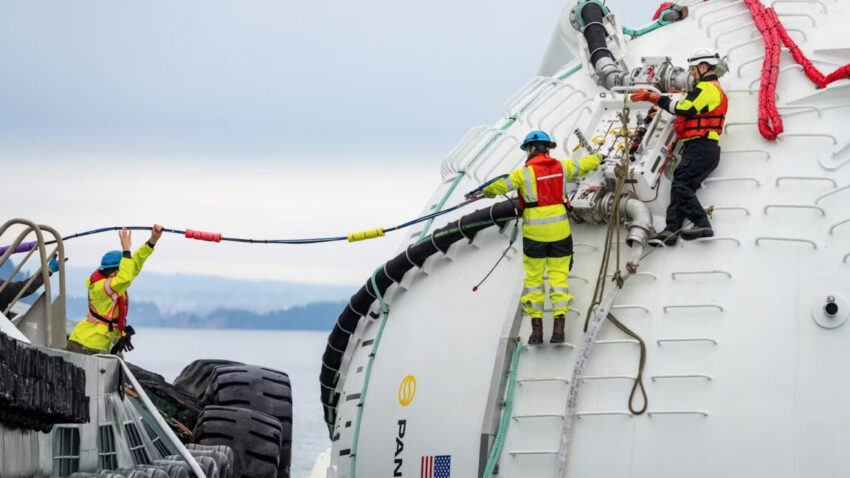
silicon valley bets 200m on ai data Silicon Valley investors are making significant financial commitments to the development of AI data centers that will float in the ocean, powered by renewable energy from ocean waves.
silicon valley bets 200m on ai data
Investment Overview
In a groundbreaking move, prominent Silicon Valley investors, including Palantir co-founder Peter Thiel, have collectively invested hundreds of millions of dollars into a novel initiative aimed at deploying AI data centers in the ocean. This investment comes at a time when tech companies are grappling with numerous challenges related to building traditional land-based AI data centers. The latest funding round, which raised $140 million, is directed towards the company Panthalassa, which is working on creating floating data centers that harness the power of ocean waves.
Funding Details and Objectives
The recent investment will enable Panthalassa to complete a pilot manufacturing facility located near Portland, Oregon. The funds will also expedite the deployment of innovative wave-riding “nodes” that are designed to generate electrical power directly from ocean waves. This approach not only addresses the growing demand for energy to power AI computations but also seeks to mitigate some of the environmental concerns associated with traditional data centers.
According to a press release dated May 4, the floating nodes will not only generate renewable energy but will also directly power onboard AI chips. This setup allows for the transmission of inference tokens—representing the outputs of AI models—directly to customers worldwide via satellite links. This innovative model shifts the paradigm of energy transmission, transforming it into a data transmission problem, as noted by Benjamin Lee, a computer architect and engineer at the University of Pennsylvania.
Challenges Facing Traditional Data Centers
The push for floating AI data centers is largely a response to the mounting challenges faced by traditional land-based data centers. These challenges include:
- Energy Consumption: AI computations are notoriously energy-intensive, leading to increased operational costs and environmental concerns.
- Land Scarcity: As urban areas expand, finding suitable land for new data centers has become increasingly difficult.
- Environmental Regulations: Stricter regulations aimed at reducing carbon footprints are making it harder for companies to build new facilities.
- Cooling Requirements: Traditional data centers require extensive cooling systems to manage heat generated by servers, further increasing energy consumption.
By moving data centers offshore, companies like Panthalassa aim to alleviate these issues while leveraging the abundant energy resources available in the ocean.
Technological Innovations
The concept of floating AI data centers is not merely a theoretical exercise; it involves several technological innovations designed to make the idea feasible. Key components of this initiative include:
Wave-Riding Nodes
The wave-riding nodes are central to Panthalassa’s strategy. These nodes are designed to harness the kinetic energy of ocean waves, converting it into electrical power. This energy will then be used to power AI chips onboard the floating platforms. The design of these nodes must account for the harsh marine environment, ensuring durability and reliability.
AI Computation at Sea
Performing AI computations on floating platforms presents unique challenges. According to Benjamin Lee, the process involves transferring AI models to the ocean-based nodes and responding to user prompts and queries. This requires robust data transfer protocols to ensure that the models can be accessed and utilized efficiently, even in remote ocean locations.
Satellite Communication
To facilitate global access to the AI outputs generated by these floating data centers, Panthalassa plans to employ satellite communication technologies. This will allow for real-time data transmission between the ocean-based nodes and customers on land, ensuring that businesses and individuals can utilize AI services without latency issues.
Environmental Implications
The environmental implications of deploying AI data centers in the ocean are significant. Traditional data centers contribute to carbon emissions and environmental degradation, while floating data centers aim to utilize renewable energy sources. The use of ocean waves as a power source can potentially reduce the carbon footprint associated with AI computations.
However, there are concerns regarding the ecological impact of such installations. The construction and operation of floating data centers could disrupt marine ecosystems. It is crucial for companies like Panthalassa to conduct thorough environmental assessments and engage with marine biologists to mitigate any negative effects.
Stakeholder Reactions
The initiative has garnered mixed reactions from various stakeholders, including environmentalists, tech industry leaders, and investors. Some view the project as a revolutionary step towards sustainable computing, while others express skepticism about its feasibility and potential ecological consequences.
Support from the Tech Community
Many in the tech community are optimistic about the potential of floating AI data centers. The ability to harness renewable energy from ocean waves aligns with broader trends towards sustainability in technology. Investors like Peter Thiel see this as a forward-thinking investment that could reshape the landscape of AI computing.
Concerns from Environmentalists
Conversely, environmentalists are cautious about the implications of deploying large-scale infrastructure in the ocean. They argue that while the intention to use renewable energy is commendable, the potential disruption to marine life and ecosystems must be carefully considered. Engaging with environmental experts and conducting comprehensive studies will be essential to address these concerns.
Future Prospects
The future of floating AI data centers is still uncertain, but the initial investments and technological advancements indicate a growing interest in this innovative approach. As Panthalassa progresses with its pilot facility and begins deploying wave-riding nodes, the industry will closely monitor the outcomes.
Should the initiative prove successful, it could pave the way for a new era of computing that is not only more sustainable but also capable of meeting the increasing demands for AI processing power. The implications for industries ranging from finance to healthcare could be profound, as businesses seek to leverage AI technologies without the environmental costs associated with traditional data centers.
Conclusion
The investment in floating AI data centers represents a significant shift in how the tech industry approaches the challenges of energy consumption, land scarcity, and environmental sustainability. As the world increasingly turns to AI solutions, innovative approaches like those being developed by Panthalassa could play a crucial role in shaping the future of technology. The journey ahead will require careful navigation of technological, environmental, and regulatory challenges, but the potential rewards are substantial.
Source: Original report
Was this helpful?
Explore more: DevOps Services More Cloud & DevOps Tech News
Last Modified: May 6, 2026 at 3:36 am
16 views