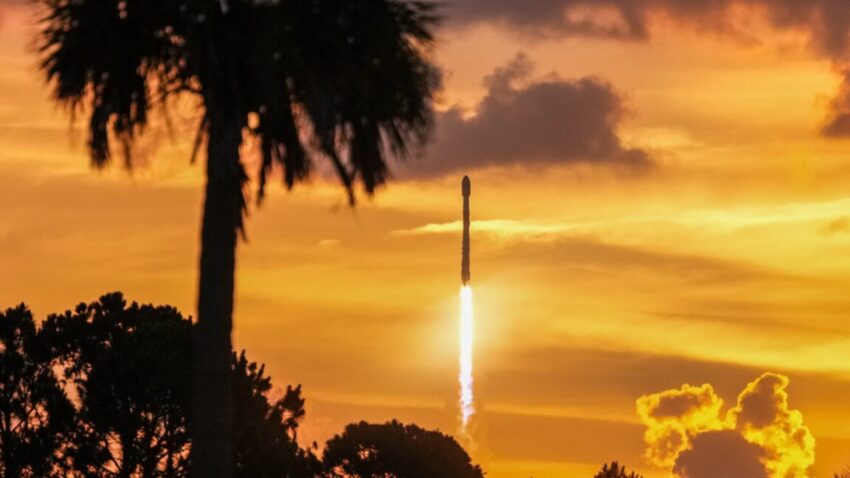
Blue Origin’s New Glenn pad explosion continues to ripple across the commercial launch market, pushing NASA to consider alternatives for Blue Moon, complicating Amazon’s launch plans, and adding new urgency to broader debates about reusable rockets and launch-site safety. At the same time, Impulse Space has raised a major new funding round, Canada is putting real money behind a sovereign launch capability, and Chinese rocket developers are moving ahead with another wave of reusable launch attempts.
Canada commits more money to a sovereign launch effort
Canada’s push for independent access to space is moving from policy talk to construction. The federal government previously announced a budget of 182.6 million Canadian dollars, or $131 million, over three years to establish a sovereign launch program. In March, it also said it would lease a dedicated launch pad at a commercially developed spaceport in Nova Scotia for national defense purposes, a deal worth 200 million Canadian dollars, or $144 million.
That agreement is a major boost for Maritime Launch Services, which has spent years developing Spaceport Nova Scotia at a coastal site with slow progress. According to SpaceQ, the first phase of work will focus on civil infrastructure, including road construction, utility connections, and a “central hub” linking key commodities to the launch pads.
Stephen Matier, CEO of Maritime Launch Services, said design work on the spaceport’s first launch vehicle integration facility should be finished in July, with construction tendering expected to begin before the end of August. Canada has also awarded federal grants to three domestic launch startups, but the country still has little launch experience and faces an open question about whether significant private capital will follow the government’s spending.
China adds another reusable rocket to the mix
China’s race to field a reusable orbital launcher remains active, but less predictable than the U.S. competition that unfolded a decade ago. The latest entrant is Long March 12B, which completed its first successful launch on Monday. Engineers did not attempt to recover the booster, but the rocket flew with grid fins and landing legs, and Chinese officials have described eventual plans to land and reuse the first stage.
The Long March 12B follows two earlier Chinese efforts to recover orbital-class boosters in December: the Zhuque-3 and Long March 12A. Both reached orbit, but neither landed successfully. Another partially reusable rocket, Tianlong-3 from Space Pioneer, failed on its first launch in April.
Long March 12B is the largest of China’s current crop of reusable-rocket candidates. It was developed by China Commercial Rocket Co. Ltd., or CACL, an opaque business venture tied to China’s state-owned aerospace system. Chinese state media says engineers took just 21 months to design and develop the rocket, a timeline that would be striking if accurate.
Impulse Space passes the $1 billion mark
Impulse Space announced Tuesday that it has raised $500 million in Series D funding, bringing total capital raised since its founding five years ago to more than $1 billion. The company was founded by SpaceX veteran Tom Mueller and focuses on improving space mobility.
“Timing is everything,” Mueller said in an interview about the new round. Impulse has already flown three missions with Mira, a small spacecraft first launched in 2023 using a propulsion system powered by nitrous oxide and ethane, both non-toxic propellants.
The company says demand has grown beyond its original expectations. After unveiling its larger Helios kick stage, commercial interest increased, and the US Space Force has also shown more attention to satellite mobility. Impulse now believes it can offer landing services in the “1-ton-class” to NASA for its new Moon Base initiative.
Amazon’s Atlas V launches keep shrinking in number
United Launch Alliance launched another batch of Amazon Leo broadband satellites aboard an Atlas V on May 29, despite adverse weather, according to Spaceflight Now. The mission carried 29 satellites from Cape Canaveral Space Force Station and marked the seventh batch of production satellites ULA has launched for Amazon.
It was also the penultimate Amazon mission on Atlas V. Amazon bought 47 launches from ULA in total: 38 Vulcan rockets and nine Atlas V rockets. So far, Amazon has used eight Atlas V launches and none of the Vulcans, which remain grounded after a solid rocket booster anomaly on a US Space Force mission in February.
Amazon has ordered more than 100 launches overall to deploy more than 3,200 satellites for its first-generation constellation. The two rockets it plans to rely on most — ULA’s Vulcan and Blue Origin’s New Glenn — are both currently unavailable, tightening an already complicated launch schedule.
Blue Origin says it will rebuild and relaunch
Blue Origin’s Dave Limp said Monday night that the company expects to fly again before the end of 2026, following the New Glenn explosion at LC-36 in Florida last week. After a preliminary site survey, Limp said the propellant farm, oxygen, liquid hydrogen, and LNG tanks were all in good condition, as was the water tower. He also said the company will rebuild the LC-36A launch site, which is designed for the 7×2 variant of New Glenn.
Blue Origin had also been considering a larger pad, LC-36B, for the 9×4 variant of the rocket. Limp said the company plans to replace the transporter-erector that moves New Glenn from the integration hangar to the pad, after the current system was damaged beyond repair in the May 28 test failure.
The timeline, however, appears ambitious. Ars spoke with former SpaceX employees who worked through the 2016 Falcon 9 pad explosion and the long rebuild that followed. None of them considered Blue Origin’s “by the end of the year” target realistic. Twelve months was viewed as a best-case scenario, while 18 months was seen as more likely.
Methane data from the blast could influence future launch rules
The New Glenn explosion is also becoming a significant data point for safety officials at Cape Canaveral. Most rockets expected to launch from the spaceport in the 2030s will use methane or liquified natural gas with liquid oxygen. The US Space Force has been cautious about methalox rockets because there is limited information on how the propellants behave in an accident.
For now, officials are treating methalox vehicles as having “100 percent TNT blast equivalency” and are maintaining large keep-out zones when they are loaded with propellant. NASA, the Space Force, and SpaceX have already conducted subscale tests to measure methane’s explosive yield. The New Glenn failure has now provided real-world blast-wave and overpressure data from what Ars described as the most powerful explosion in Cape Canaveral history.
NASA wants Blue Moon to fly without New Glenn
Blue Origin had expected its Blue Moon Mark 1 cargo lander to launch on New Glenn sometime this fall, but that is no longer possible this year. NASA now wants to decouple the lander from Blue Origin’s damaged launch system, according to comments from NASA Administrator Jared Isaacman in an interview with Fox Business on Thursday.
“We are also decoupling the lander from the launch vehicle and the pad itself,” Isaacman said, adding that NASA is focused on returning astronauts to the Moon before 2028. A NASA spokesperson confirmed the agency would like to see both Blue Moon Mark 1 and potentially the crewed Blue Moon Mark 2 move to a non-New Glenn launcher.
For Mark 1, the only realistic near-term alternative appears to be SpaceX’s Falcon Heavy, though technical hurdles remain. NASA also wants the lander development to continue so it can support a test mission in 2027 and potentially meet landing objectives in 2028.
Artemis III hardware continues moving to Florida
Even as lunar landing timelines shift, work continues on NASA’s Artemis III rocket. Northrop Grumman began shipping the remaining solid rocket booster segments for the mission from Utah on June 2, according to NASASpaceflight. The eight segments will travel by Union Pacific train to Kennedy Space Center, where other booster components are already in place.
Chris Cianciola, NASA’s deputy SLS program manager, said at the Utah departure ceremony that stacking on the mobile launch platform is expected to begin this summer. NASA is aiming to have the rocket ready as early as March 2027, though the mission will not launch until at least one lunar lander is ready for a demonstration mission in low Earth orbit. Officials have said that likely will not happen until later in 2027.
Union Pacific locomotive 4547, which is hauling the booster segments, has drawn online attention because of its patriotic paint scheme and the “45 47” marking. In response, Isaacman said the railroad chose the design to celebrate America’s 250th birthday while transporting NASA hardware and to recognize the sitting president during the anniversary year. Union Pacific has previously honored Presidents Abraham Lincoln and George H.W. Bush in its presidential locomotive series; President Donald Trump is the first to receive the honor while still in office.
Source: Original report
Was this helpful?
Explore more: DevOps Services More Cloud & DevOps Tech News
Last Modified: July 7, 2026 at 9:30 pm
22 views