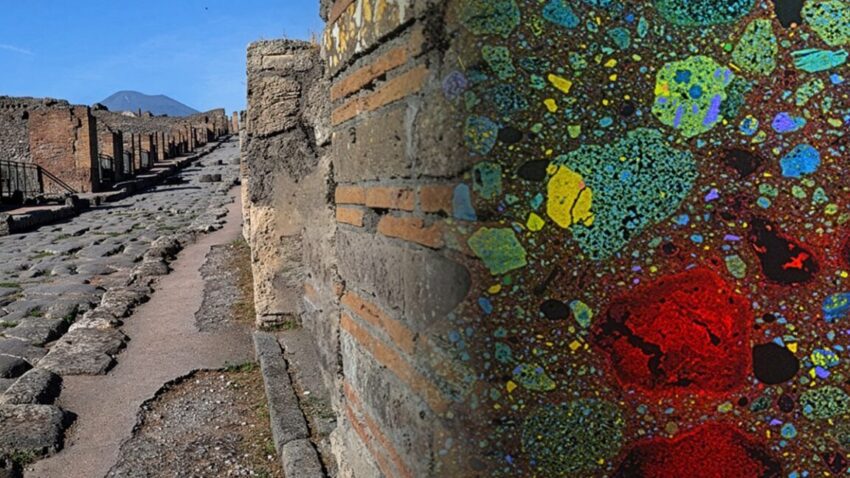
pompeii construction site confirms recipe for roman A recent analysis of concrete samples from a Pompeii construction site has confirmed that ancient Romans utilized a process known as “hot mixing” to create their renowned concrete, a finding that aligns with earlier research but also raises questions about historical recipes.
pompeii construction site confirms recipe for roman
Background on Roman Concrete
Roman concrete, known for its durability and longevity, has fascinated scientists and historians alike. Unlike modern concrete, which primarily uses Portland cement, Roman concrete was a composite material made from a mixture of volcanic ash, lime, and aggregate materials such as stones or bricks. This unique combination not only contributed to its strength but also endowed it with self-healing properties, allowing structures to endure for centuries.
The key ingredient in modern Portland cement is clinker, which is produced by heating limestone and clay in a kiln. The resulting material is then ground into a fine powder, often with the addition of gypsum to improve its workability. In contrast, Roman concrete’s aggregate was typically composed of fist-sized pieces of stone or brick, which were bound together with a mortar made from hydrated lime and volcanic tephra.
Hot Mixing: A Revolutionary Technique
In 2023, a team of scientists from the Massachusetts Institute of Technology (MIT) published findings suggesting that the ancient Romans employed a technique known as “hot mixing.” This process involves the use of quicklime, which, when mixed with water, generates heat and can enhance the properties of the resulting concrete. The MIT researchers posited that this method contributed to the self-healing capabilities of Roman concrete, allowing it to repair itself over time.
However, the initial findings raised questions regarding the historical accuracy of the recipes described in ancient texts. The discrepancies between the scientific analysis and historical documentation prompted further investigation into the actual practices of Roman builders.
New Findings from Pompeii
In a recent study published in the journal Nature Communications, the same MIT team revisited the topic with fresh analyses of concrete samples collected from a newly discovered construction site in Pompeii. This site, which dates back to the first century CE, provided a unique opportunity to examine the materials and techniques used by Roman builders firsthand.
The researchers employed advanced analytical techniques, including scanning electron microscopy and X-ray diffraction, to analyze the mineral composition of the concrete samples. Their findings confirmed that the Romans indeed utilized hot mixing in their concrete production, validating the earlier hypothesis and providing a clearer understanding of the materials and methods employed by ancient builders.
Implications of the Findings
The confirmation of hot mixing as a technique used by the Romans has significant implications for both historical understanding and modern construction practices. By understanding the techniques that contributed to the durability of Roman concrete, modern engineers and architects can explore the potential applications of these ancient methods in contemporary construction.
One of the most notable aspects of Roman concrete is its ability to withstand environmental stressors, including seismic activity and harsh weather conditions. This durability is attributed to the unique chemical reactions that occur during the mixing process, particularly when hot lime is used. The heat generated during the mixing process can enhance the bonding between the aggregate and the mortar, resulting in a more resilient material.
Historical Context: Vitruvius and Roman Engineering
The significance of these findings is further underscored by the writings of Vitruvius, a Roman architect and engineer who lived around 30 CE. In his treatise, De architectura, Vitruvius outlined various construction techniques, including the use of concrete for building durable structures. He emphasized the importance of using quality materials and proper techniques to ensure the longevity of buildings.
Vitruvius recommended that concrete walls for funerary structures be at least two feet thick and constructed using squared red stone, brick, or volcanic rock. He also advocated for the use of mortar made from hydrated lime and volcanic tephra, which contributed to the strength and durability of the structures. His insights provide a valuable historical context for understanding the methods and materials employed by Roman builders.
Stakeholder Reactions
The recent findings have garnered attention from various stakeholders, including historians, archaeologists, and engineers. Many in the academic community have expressed enthusiasm over the confirmation of hot mixing as a technique used by the Romans, viewing it as a significant contribution to the understanding of ancient construction practices.
Archaeologists working in Pompeii have also noted the importance of these findings in contextualizing the site’s historical significance. The ability to confirm the use of advanced construction techniques adds another layer of understanding to the engineering prowess of the Romans, who were known for their innovative approaches to building and infrastructure.
On the engineering front, professionals are increasingly interested in how ancient methods can inform modern construction practices. The durability of Roman concrete, particularly in the context of climate change and the need for sustainable building materials, has prompted discussions about the potential for incorporating ancient techniques into contemporary construction projects.
Future Research Directions
The confirmation of hot mixing as a technique used by the Romans opens up new avenues for research. Future studies may focus on the specific chemical processes involved in hot mixing and how they contribute to the material properties of Roman concrete. Additionally, researchers may explore the potential for replicating these ancient techniques in modern construction, particularly in regions prone to seismic activity or extreme weather conditions.
Moreover, further archaeological excavations in Pompeii and other ancient Roman sites could yield additional samples for analysis, providing a more comprehensive understanding of the materials and methods used by Roman builders. Such research could also shed light on regional variations in concrete production across the Roman Empire, revealing how local resources influenced construction practices.
Conclusion
The recent confirmation of hot mixing as a technique employed by ancient Romans to produce concrete represents a significant advancement in our understanding of Roman engineering and construction practices. By bridging the gap between historical texts and scientific analysis, researchers are uncovering the sophisticated methods that contributed to the durability of Roman structures, many of which still stand today.
As modern engineers and architects look to the past for inspiration, the lessons learned from Roman concrete may play a crucial role in shaping the future of sustainable construction. The enduring legacy of Roman engineering continues to influence contemporary practices, reminding us of the ingenuity and resourcefulness of ancient builders.
Source: Original report
Was this helpful?
Explore more: More General Technology Tech News Blog
Last Modified: December 9, 2025 at 10:38 pm
9 views