perseverance s radar revealed ancient subsurface river The Perseverance rover has made a groundbreaking discovery on Mars, revealing the presence of an ancient subsurface river delta that could provide insights into the planet’s past.
perseverance s radar revealed ancient subsurface river
Background on Perseverance’s Mission
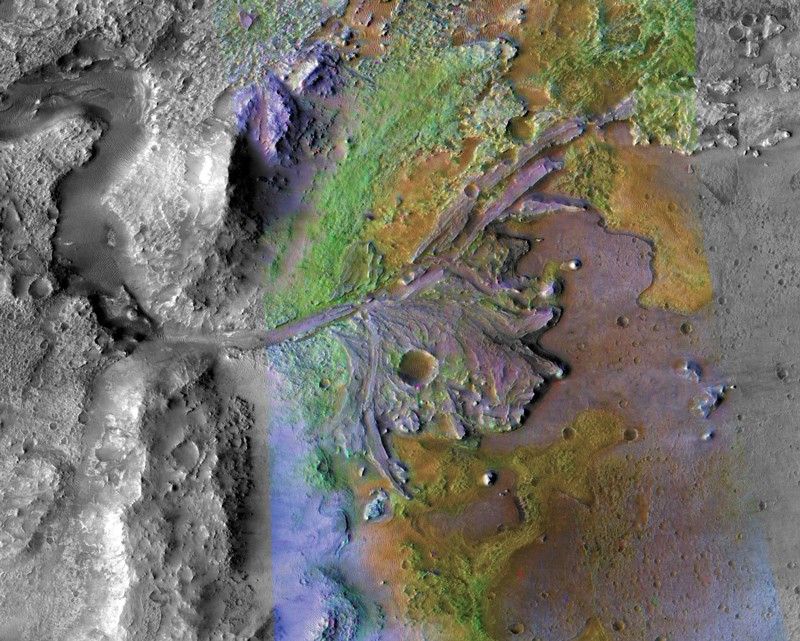
NASA’s Perseverance rover, which landed in Jezero Crater in February 2021, was designed with a clear mission: to explore the remnants of a dried-up lakebed for signs of ancient life. Jezero Crater, which is approximately 45 kilometers (28 miles) wide, is believed to have once housed a large lake, making it a prime location for astrobiological research. The crater’s geological features, including its Western Delta, have drawn significant attention from scientists eager to understand the planet’s history and the potential for past life.
The Western Delta is a fan-shaped geologic formation created by sediment deposited by a river that flowed into the crater billions of years ago. This delta is not only visually striking but also scientifically significant, as it holds clues about the environmental conditions that existed when water was abundant on Mars. The exploration of this area has been a focal point for researchers hoping to uncover biosignatures—indicators of past life—within the Martian soil.
Discovery of the Subsurface River Delta
Recently, Perseverance’s ground-penetrating radar, known as RIMFAX (Radar Imager for Mars Subsurface Experiment), made a remarkable discovery beneath the surface of Jezero Crater. The radar detected what is likely an even older river delta buried tens of meters below the current surface. This finding has significant implications for our understanding of Mars’ geological history and the potential for ancient life.
How RIMFAX Works
RIMFAX operates by continuously firing radar waves into the Martian ground as the rover moves. Specifically, it acquires soundings every 10 centimeters. When these radar waves encounter boundaries between different types of rock, ice, or sediment layers, some of the signal is reflected back to the rover. By analyzing the timing and intensity of these reflections, scientists can construct a two-dimensional vertical slice of the subsurface, akin to a sonogram of the Martian crust.
This technology allows researchers to visualize the geological layers beneath the surface, providing insights into the planet’s past environments. The ability to peer underground is particularly valuable in regions like Jezero Crater, where the surface features may not fully represent the historical conditions that prevailed when water was present.
Implications of the Discovery
The detection of an ancient river delta buried beneath the surface opens new avenues for exploration and research. Emily L. Cardarelli, an astrobiologist at the University of California, Los Angeles, and the lead scientist interpreting the RIMFAX imagery, emphasized the significance of this discovery. “I think it’s a promising place to look for signs of biosignatures at depth,” she stated. “Microbial life could have potentially developed in those types of environments.”
This statement underscores the potential for finding evidence of past life in areas that were once rich in water and nutrients. The presence of a subsurface delta suggests that there may have been more extensive and varied aquatic environments on Mars than previously understood. This could enhance the prospects for astrobiological research, as scientists can now target specific locations for further investigation.
Potential for Biosignatures
Biosignatures are indicators that provide evidence of past life, and their discovery on Mars has been a long-standing goal for scientists. The ancient river delta detected by RIMFAX may have created conditions conducive to microbial life. If such life existed, it could have left behind traces that modern technology might detect.
Research into biosignatures often focuses on specific types of minerals and organic compounds that are associated with biological processes. The geological features of the subsurface delta could harbor these materials, making it a prime target for future missions. The potential for finding biosignatures in this area adds urgency to ongoing and future explorations of Mars.
Future Exploration Plans
As scientists continue to analyze the data collected by Perseverance, plans for future exploration are already taking shape. The rover’s findings will inform the design of subsequent missions, including those aimed at sample collection and return to Earth. The identification of the ancient river delta will likely influence the selection of specific sites for drilling and analysis.
NASA’s Mars Sample Return mission, which aims to bring Martian soil and rock samples back to Earth for detailed study, is particularly relevant in this context. The samples collected from the subsurface delta could provide critical insights into the planet’s history and the potential for past life. Scientists are eager to analyze these samples using advanced laboratory techniques that are not feasible on Mars.
Collaboration and International Interest
The discovery of the subsurface river delta has garnered attention not only from NASA but also from the global scientific community. International collaborations are becoming increasingly important in the exploration of Mars. Various space agencies, including the European Space Agency (ESA) and the Indian Space Research Organisation (ISRO), are developing their own missions to explore the Martian surface and atmosphere.
These collaborative efforts may lead to a more comprehensive understanding of Mars’ geological history and the potential for life. By sharing data and expertise, scientists can build on each other’s findings and accelerate the pace of discovery.
Challenges Ahead
Despite the exciting prospects presented by the discovery of the ancient river delta, challenges remain in Mars exploration. The harsh environment of the Martian surface poses significant obstacles for rovers and landers. Dust storms, extreme temperatures, and radiation exposure can all impact the functionality of scientific instruments.
Moreover, the complexity of analyzing geological features from a distance can lead to uncertainties in interpretation. While RIMFAX provides valuable data, it is essential to corroborate these findings with direct sampling and analysis. Future missions will need to address these challenges to ensure that the potential of the subsurface delta is fully realized.
Public Interest and Education
The discoveries made by Perseverance and other Mars missions have sparked significant public interest in space exploration. The potential for finding evidence of past life on Mars captivates the imagination and encourages educational initiatives aimed at inspiring the next generation of scientists and engineers.
NASA has actively engaged the public through various outreach programs, including virtual tours, educational resources, and interactive platforms that allow people to follow the rover’s journey. This engagement is crucial for fostering a sense of connection to the ongoing exploration of Mars and the broader universe.
Conclusion
The detection of an ancient subsurface river delta by NASA’s Perseverance rover marks a significant milestone in our understanding of Mars. This discovery not only enhances our knowledge of the planet’s geological history but also opens new avenues for the search for past life. As scientists continue to analyze the data collected by RIMFAX, the implications for future exploration and research are profound. The potential for finding biosignatures in the subsurface delta underscores the importance of ongoing missions to Mars and the collaborative efforts of the global scientific community.
Source: Original report
Was this helpful?
Explore more: More Hardware & Devices Tech News Blog
Last Modified: March 20, 2026 at 10:36 pm
14 views