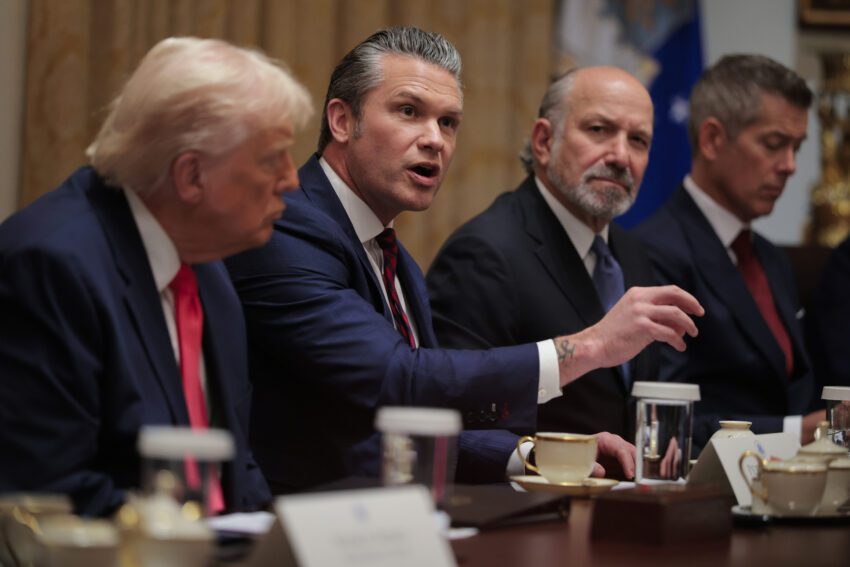
pentagon s signalgate report finds pete hegseth The Pentagon’s inspector general has released a report detailing violations of military policies by Defense Secretary Pete Hegseth regarding the use of a messaging application to discuss classified military intelligence.
pentagon s signalgate report finds pete hegseth
Background of the Investigation
The investigation stems from an incident involving a Signal group chat created by officials from the Trump administration. This chat was intended for discussing classified military intelligence in the lead-up to a military strike in Yemen. However, the situation escalated when a journalist was inadvertently added to the conversation. This breach raised significant concerns about the handling of sensitive information and the adherence to Department of Defense (DoD) protocols.
In March 2022, the Pentagon’s inspector general, Steven Stebbins, initiated an eight-month investigation into the matter. The inquiry aimed to determine whether Hegseth had violated any regulations by using a non-approved messaging application to share nonpublic DoD information. The findings of this investigation have now been made public in an 84-page report.
Key Findings of the Report
Violations of DoD Policies
The report concluded that Hegseth did not comply with DoD policies by utilizing a commercially available messaging application for official communications. Specifically, it stated that his actions risked the potential compromise of sensitive DoD information. The report emphasized the importance of adhering to established protocols to safeguard classified information, particularly in an era where digital communications are prevalent.
Despite the serious nature of the findings, the inspector general recommended only a review of classification procedures rather than any punitive measures against Hegseth. This recommendation suggests that while the violations were acknowledged, the consequences were deemed manageable through corrective actions rather than disciplinary action.
Hegseth’s Response
In response to the investigation, Hegseth issued a statement in July, asserting that he had shared only “nonspecific general details” about the military strike. He declined to participate in interviews during the investigation, which limited the inspector general’s ability to gather firsthand accounts of the communications that took place in the Signal chat.
Hegseth’s assertion of sharing only general details raises questions about the nature of the information exchanged in the chat. The distinction between general and specific details can be subjective, and the implications of sharing even nonspecific information in a classified context can be significant.
Challenges in the Investigation
The investigation faced challenges in retrieving complete records of the communications due to the auto-delete function of the Signal application. This feature automatically removes messages after a set period, complicating the efforts of investigators to obtain a full account of the discussions that occurred in the chat.
To supplement the limited data retrieved from Hegseth’s personal cell phone, the investigation relied on reporting from Jeffrey Goldberg, the editor-in-chief of The Atlantic, who was the journalist inadvertently included in the chat. Goldberg’s insights and the transcript of the chat that The Atlantic published were crucial in piecing together the context of the discussions.
Reactions from Stakeholders
Hegseth’s Public Statements
Following the release of the report, Hegseth took to social media to assert that the findings amounted to “no classified information” being shared, claiming “total exoneration.” His interpretation of the report has sparked debate over the implications of the findings and whether they truly exonerate him from wrongdoing.
Political Reactions
Reactions from political figures have varied. Senator Mark Kelly of Arizona, a member of the Armed Services Committee, expressed skepticism about Hegseth’s claims of exoneration. He pointed out that the report explicitly stated Hegseth was in violation of some DoD regulations. Kelly’s comments highlight the complexity of interpreting the report’s findings and the potential legal ramifications of Hegseth’s actions.
Kelly’s statement underscores the ongoing discussions about accountability within the military and government. The implications of the report extend beyond Hegseth, raising questions about the broader culture of information sharing and the potential risks associated with using non-approved communication channels.
Implications for Military Protocols
The findings of the report have significant implications for military protocols regarding the handling of classified information. As technology continues to evolve, the methods of communication used by military personnel must adapt to ensure compliance with established regulations. The use of commercially available messaging applications poses inherent risks, particularly when sensitive information is involved.
The recommendation for a review of classification procedures suggests that the DoD recognizes the need to reassess its policies in light of modern communication tools. This review could lead to updated guidelines that better address the challenges posed by digital communication platforms, ensuring that military personnel are equipped with the knowledge and resources to safeguard sensitive information effectively.
Future Considerations
As the Pentagon moves forward in addressing the findings of the report, several considerations will likely come into play. First, there may be an increased emphasis on training and education for military personnel regarding the use of communication tools. Ensuring that individuals understand the risks associated with non-approved applications will be crucial in preventing future violations.
Additionally, the DoD may explore the development of secure communication platforms tailored specifically for military use. By providing personnel with reliable and secure options for communication, the risks associated with using commercially available applications can be mitigated.
Conclusion
The release of the Pentagon’s inspector general report regarding Pete Hegseth’s use of a messaging application has brought to light significant concerns about compliance with military policies. While the report acknowledges violations, the recommended corrective actions suggest a focus on procedural improvements rather than punitive measures. As the military navigates the complexities of modern communication, the implications of this incident will likely resonate throughout the Department of Defense and beyond.
Source: Original report
Was this helpful?
Explore more: Application Audit & Review More Cybersecurity Tech News
Last Modified: December 5, 2025 at 3:38 am
17 views