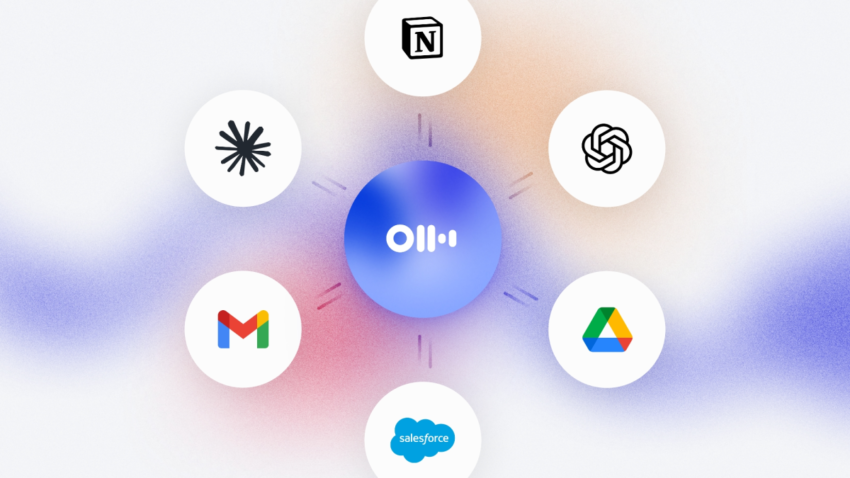
Otter.ai has landed a $320 million commitment from General Catalyst’s Customer Value Fund, a financing structure that gives startups capital without taking an equity stake in the traditional sense. The company says the money will help it push deeper into enterprise growth, sharpen its go-to-market strategy, expand internationally, and accelerate product development for its meeting tool.
Otter.ai raises $320 million through a different kind of funding
The deal is notable not just for its size, but for how it is structured. General Catalyst’s Customer Value Fund, or CVF, is designed to back startups while avoiding equity dilution, with returns tied to the performance of marketing spend. In Otter’s case, the funding is meant to support growth initiatives rather than serve as a standard venture round.
Otter.ai, which has been operating for nearly a decade, has raised $50 million in total funding so far, according to PitchBook data cited in the source material. Its last round was in 2021. The new commitment therefore stands out as a major vote of confidence in the company’s business, even though it is not framed as a conventional fundraising event.
What Otter.ai says it will do with the money
Otter says the capital will go toward several priorities at once. Those include enterprise expansion, go-to-market execution, international growth, and continued product innovation. The company is also positioning itself to strengthen the way it serves teams that rely on meetings as a core part of their workday.
That focus makes sense in a market where meeting intelligence tools are increasingly being sold as workflow products, not just transcription services. Otter has been moving in that direction over the past few years, building features that aim to turn meeting content into something more actionable for employees and organizations.
- Enterprise growth
- Go-to-market strategy
- International expansion
- Product innovation
Otter.ai’s growth story and the numbers it shared
Otter reported a key milestone last year when it crossed $100 million in annual recurring revenue, or ARR. The company says it is now approaching new milestones, though it did not disclose updated revenue figures. That leaves the business trajectory partly visible and partly unquantified, even as the company talks up momentum.
The user base appears to have grown as well. Otter said 40 million users have used the product to date, up from 25 million last year. That suggests meaningful adoption, but the company did not provide monthly active user numbers or churn data, which makes it difficult to assess retention in a crowded market.
That omission matters because the meeting-notetaker category is packed with rivals. These products are often easy to try, but harder to keep sticky if users do not find them essential to daily workflows. For Otter and its competitors, long-term value depends less on downloads and more on sustained usage across teams.
The competitive race in AI meeting notes
Otter is far from alone in trying to own the meeting intelligence category. The field now includes well-funded players such as Fireflies.ai, Granola, and Read AI, alongside newer entrants including Calendly and Wispr. Superhuman also joined the race after acquiring Fathom, and other notetakers like Circleback, Talat, and Quill are part of the mix.
Many of these products are pursuing a similar vision: capture meeting data, connect it to enterprise systems, and automate workflows based on what is said in conversations. In that model, the meeting itself becomes a source of structured business insight rather than an endpoint.
For Otter, the challenge is not just to keep pace with competitors, but to stand out in how it transforms notes into operational value. That means competing on transcription quality, search, integrations, and the usefulness of the AI features layered on top of the core meeting experience.
Otter.ai is pushing beyond transcription
Otter has already been extending its product beyond basic note-taking. Over the last few years, it introduced a meeting assistant, added search that works across apps, and built integrations with other AI tools. Those moves reflect a broader industry shift toward assistants that can help users prepare for meetings, summarize them, and surface follow-up actions afterward.
The company’s new chief marketing officer, Alex Gay, who joined from Superhuman, told TechCrunch at the HumanX conference last month that Otter sees a major opportunity in converting transcripts into a practical roadmap for people stuck in back-to-back meetings. That is especially relevant in roles where conversations are the work itself, such as sales and customer-facing teams.
Gay described a familiar pain point: people often spend the first part of a meeting catching each other up on what happened before, which makes the meeting less efficient. In Otter’s view, AI can reduce that friction by bringing the right context into the room before the meeting starts and by helping teams act on what was discussed afterward.
Pre-meeting, in-meeting, and post-meeting assistance
Otter is now experimenting with a broader set of features designed to help before, during, and after meetings. One test involves sending users a pre-brief with background details and context drawn from prior conversations across surfaces. Another is Live Assist, which would let users ask the AI assistant questions during a meeting to retrieve knowledge on the spot.
Those experiments point to a more ambitious product direction. Instead of simply recording what happened, Otter wants to be present throughout the full meeting lifecycle, helping users prepare, participate, and follow through. If successful, that could make the product feel less like a passive recorder and more like an active work companion.
Why the CVF investment matters
General Catalyst’s Pranav Singhvi, partner and co-founder of CVF, said voice is one of the biggest untapped opportunities in enterprise AI and described Otter as being at the forefront of that trend. He said the conviction has deepened as Otter has grown. In his view, the value comes from capturing critical voice data and turning it into actionable business insights that help teams move faster and make sharper decisions.
That framing is important because it positions Otter within a larger enterprise AI narrative. The company is no longer just a transcription utility; it is trying to become a system that extracts value from spoken conversations in a way that can influence workflows, strategy, and productivity across organizations.
Whether that ambition translates into durable market share will depend on how well Otter can keep users engaged, integrate with enterprise software, and prove that its AI features save time rather than simply add another tool to the stack. The newly announced funding gives it more room to do that, but it does not remove the pressure of competition.
Source: Original report
Was this helpful?
Explore more: AI Automation Services More Business & Startups Tech News
Last Modified: October 20, 2026 at 10:32 pm
0 views