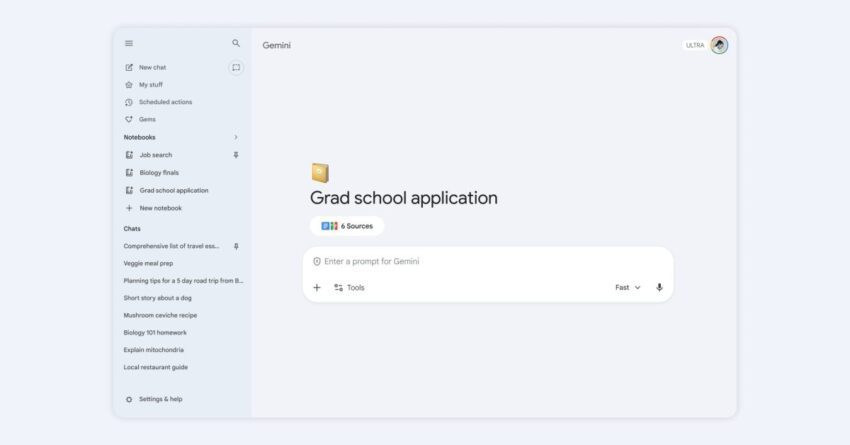
notebooks are now available for free gemini The Gemini app has expanded its offerings by making notebooks available to free users, following a successful rollout to Google AI subscribers earlier this month.
notebooks are now available for free gemini
Introduction to Gemini Notebooks
The Gemini app, developed by Google, has been at the forefront of AI-driven applications, providing users with a versatile platform for various tasks. The introduction of notebooks marks a significant enhancement in its functionality, allowing users to engage in more complex projects and utilize the app’s capabilities to their fullest potential. Notebooks are designed to facilitate a more interactive and organized approach to working with AI, making it easier for users to document their processes, share insights, and collaborate with others.
Features of Gemini Notebooks
The notebooks feature a range of tools and functionalities that cater to both casual users and professionals. Key features include:
- Interactive Coding Environment: Users can write and execute code in real-time, allowing for immediate feedback and iterative development.
- Rich Text Support: Notebooks support various formatting options, enabling users to create visually appealing documents that combine text, code, and multimedia elements.
- Collaboration Tools: Users can easily share their notebooks with others, facilitating teamwork and collaborative projects.
- Integration with Google Services: The notebooks seamlessly integrate with other Google services, such as Google Drive and Google Sheets, enhancing productivity and workflow.
Implications of Free Access
The decision to make notebooks available to free users is a strategic move by Google, aimed at broadening the user base and encouraging more individuals to explore the capabilities of the Gemini app. This shift has several implications:
Increased Accessibility
By offering notebooks for free, Google is lowering the barrier to entry for users who may have been hesitant to invest in a subscription. This accessibility can lead to a more diverse user base, including students, hobbyists, and professionals who may not have previously engaged with AI tools. As more users gain access, the potential for innovative uses of the platform increases, fostering a community of creators and thinkers.
Encouraging Learning and Experimentation
The availability of notebooks encourages users to experiment with AI technologies without the financial commitment associated with subscriptions. This environment of exploration can lead to a deeper understanding of AI concepts and applications, ultimately benefiting the tech ecosystem as a whole. Users can learn at their own pace, trying out different coding techniques and applications, which can enhance their skills and knowledge in the field.
Potential for User-Generated Content
As users create and share their notebooks, a wealth of user-generated content will likely emerge. This content can serve as a valuable resource for others, providing examples, tutorials, and inspiration for various projects. Google may benefit from this influx of content, as it can enhance the overall value of the Gemini app and attract even more users.
Stakeholder Reactions
The rollout of free notebooks has elicited a range of reactions from stakeholders, including users, educators, and industry experts.
User Feedback
Initial feedback from users has been largely positive, with many expressing excitement about the new features. Users appreciate the ability to create and share notebooks without the constraints of a subscription. Some have highlighted the interactive coding environment as a particularly valuable addition, noting that it allows for a more hands-on approach to learning and experimentation.
Educators’ Perspective
Educators have also reacted favorably to the introduction of free notebooks. Many see the potential for incorporating the Gemini app into their teaching methodologies, using it as a tool for teaching coding, data analysis, and AI concepts. The collaborative features of the notebooks can facilitate group projects and peer learning, making it an attractive option for classrooms.
Industry Experts’ Insights
Industry experts have weighed in on the implications of this move for the broader tech landscape. Some believe that Google’s decision to offer free notebooks could set a precedent for other tech companies, encouraging them to adopt similar strategies to attract users. Others caution that while free access can drive user engagement, it is essential for Google to maintain a balance between free offerings and premium features to ensure the sustainability of the platform.
Comparative Analysis with Other Platforms
The introduction of free notebooks positions the Gemini app in direct competition with other platforms that offer similar functionalities. Notably, platforms like Jupyter Notebook, Microsoft Azure Notebooks, and IBM Watson Studio have established themselves as popular choices for users looking to work with code and data. Here’s how Gemini notebooks compare:
Jupyter Notebook
Jupyter Notebook is widely used in academic and research settings, providing a robust environment for data analysis and visualization. While it is open-source and free to use, it requires users to set up their own servers or use third-party hosting services. In contrast, Gemini notebooks offer a more user-friendly setup, with seamless integration into the Google ecosystem.
Microsoft Azure Notebooks
Microsoft Azure Notebooks also provides a cloud-based environment for coding and data analysis. However, it often requires users to navigate a more complex interface and may involve costs for additional features. Gemini’s decision to offer free notebooks could attract users seeking a simpler, more accessible alternative.
IBM Watson Studio
IBM Watson Studio offers a comprehensive suite of tools for data scientists and AI developers. While it provides powerful capabilities, it is primarily targeted at enterprise users and may not be as accessible for individual users or small teams. Gemini notebooks, with their free access, may appeal to a broader audience, particularly those new to AI and coding.
Future Developments and Expectations
Looking ahead, the introduction of free notebooks is likely just the beginning of a series of enhancements for the Gemini app. Users can expect ongoing updates and improvements as Google seeks to refine the user experience and expand the app’s capabilities. Potential future developments may include:
- Enhanced Collaboration Features: Google may introduce more robust tools for real-time collaboration, allowing multiple users to work on the same notebook simultaneously.
- Advanced AI Integration: As AI technology continues to evolve, Gemini notebooks may incorporate more advanced AI features, enabling users to leverage machine learning models and data analysis tools directly within their notebooks.
- Community Engagement Initiatives: Google may implement programs to encourage community engagement, such as competitions or challenges that motivate users to create and share innovative projects using the notebooks.
Conclusion
The launch of free notebooks for Gemini app users represents a significant milestone in Google’s efforts to democratize access to AI tools. By making these resources available to a broader audience, Google is fostering an environment of learning, collaboration, and innovation. As users begin to explore the capabilities of the notebooks, the potential for new ideas and applications will likely flourish, contributing to the ongoing evolution of AI technology.
Source: Original report
Was this helpful?
Explore more: AI Automation Services More AI & Automation Tech News
Last Modified: April 18, 2026 at 12:35 pm
10 views