neanderthal brains measure up to ours-literally A recent study reveals that Neanderthal brains may have been more similar to those of modern humans than previously thought, challenging long-held assumptions about cognitive abilities between the two species.
neanderthal brains measure up to ours-literally
Comparative Anatomy: Neanderthal vs. Modern Human Skulls
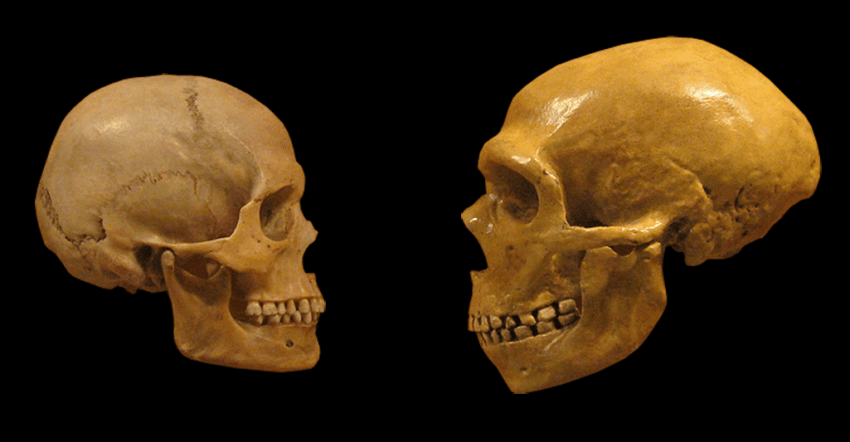
When examining the skulls of Neanderthals and Homo sapiens, distinct differences are immediately apparent. Neanderthal skulls are characterized by a lower and longer shape, while modern human skulls tend to be rounder and more globular. These anatomical differences have historically led researchers to speculate about the cognitive capabilities of each species. However, a recent study suggests that these physical variations may not accurately reflect the underlying brain functions.
The Study’s Methodology
The study utilized advanced MRI technology to analyze the brains of contemporary humans, comparing them with casts of the inner structures of Neanderthal skulls. This innovative approach allowed researchers to gain insights into the brain’s morphology without the need for invasive techniques. The endocasts created from Neanderthal skulls provide a unique window into the brain’s shape and size, offering a more nuanced understanding of how these ancient humans may have thought and interacted with their environment.
Findings on Brain Size and Cognitive Capability
One of the most striking findings of the study is that there is greater variation in brain size among modern humans than there is between Neanderthals and Pleistocene Homo sapiens. This suggests that brain size alone is not a reliable indicator of cognitive ability. In fact, researchers have long recognized that brain size does not correlate directly with intelligence or adaptability. The implications of this finding are profound, as they challenge the notion that modern humans were inherently more intelligent or capable than Neanderthals.
Revisiting Neanderthal Intelligence
The idea that Neanderthals were less intelligent has been a persistent narrative in both scientific literature and popular culture. However, this new research indicates that Neanderthals may have possessed cognitive abilities comparable to those of early modern humans. This aligns with archaeological evidence that suggests Neanderthals engaged in complex behaviors, such as tool-making, art creation, and possibly even social structures.
Archaeological Evidence Supporting Cognitive Parity
Numerous archaeological findings support the idea that Neanderthals were not merely primitive beings. For instance, Neanderthals created sophisticated stone tools, utilized fire, and even buried their dead, indicating a level of social and cultural complexity. Additionally, discoveries of Neanderthal art, such as carvings and pigments, suggest they had an appreciation for aesthetics and possibly even symbolic thought.
Implications for Human-Neanderthal Interaction
If Neanderthals were cognitively similar to modern humans, it raises questions about the dynamics between the two species. The traditional narrative posits that Homo sapiens out-competed Neanderthals due to superior intelligence and adaptability. However, this study suggests that the competition may not have been as clear-cut. Instead, it is possible that environmental factors, disease, and interbreeding played significant roles in the eventual extinction of Neanderthals.
Understanding Endocasts and Their Significance
Endocasts are crucial for understanding the evolution of brain morphology. When an organism dies, the inner vault of its skull retains the shape of its brain. Over time, sediment can fill the skull, creating a natural mold that preserves the contours of the brain. This process has provided researchers with invaluable data about the brain structures of various hominin species, including Neanderthals.
Historical Context of Endocast Research
Research on endocasts has a long history, dating back to the early 20th century. Early paleontologists utilized endocasts to infer the cognitive abilities of extinct species. For example, the endocast of an Australopithecus africanus child, which dates back approximately 2.8 million years, has provided insights into early hominin brain development. The combination of fossil evidence and endocast analysis has allowed scientists to piece together a more comprehensive picture of human evolution.
Challenges in Interpreting Endocasts
Despite their value, interpreting endocasts is not without challenges. The process of creating an endocast can introduce distortions, and the relationship between brain size and cognitive function is complex. Researchers must consider various factors, including the environment, social structures, and cultural practices, when drawing conclusions about cognitive abilities based on endocast data.
Broader Implications of the Study
The findings of this study have broader implications for our understanding of human evolution and the relationship between Neanderthals and modern humans. If cognitive abilities were similar, it suggests that the extinction of Neanderthals was not solely a result of competition but may have involved a range of factors, including climate change and habitat loss.
Reassessing Human Evolution
This research prompts a reevaluation of the evolutionary narrative that has often portrayed modern humans as the pinnacle of cognitive development. Instead, it highlights the complexity of human evolution, where multiple hominin species coexisted and interacted in intricate ways. Understanding these dynamics can provide valuable insights into our own species’ development and the factors that contribute to survival and extinction.
Future Research Directions
As technology advances, future research may further illuminate the cognitive capabilities of Neanderthals and other hominins. Techniques such as advanced imaging and genetic analysis could provide deeper insights into brain function and structure. Additionally, interdisciplinary approaches that combine archaeology, anthropology, and neuroscience may yield a more comprehensive understanding of the cognitive landscape of our ancient relatives.
Conclusion
The recent study comparing Neanderthal and modern human brains challenges long-standing assumptions about cognitive differences between the two species. By revealing that Neanderthal brains fit within the modern human range and that brain size is not a reliable predictor of intelligence, the research opens new avenues for understanding human evolution. As we continue to explore our shared history with Neanderthals, it becomes increasingly clear that the story of human evolution is far more complex than previously imagined.
Source: Original report
Was this helpful?
Explore more: More General Technology Tech News Blog
Last Modified: April 28, 2026 at 6:37 pm
11 views