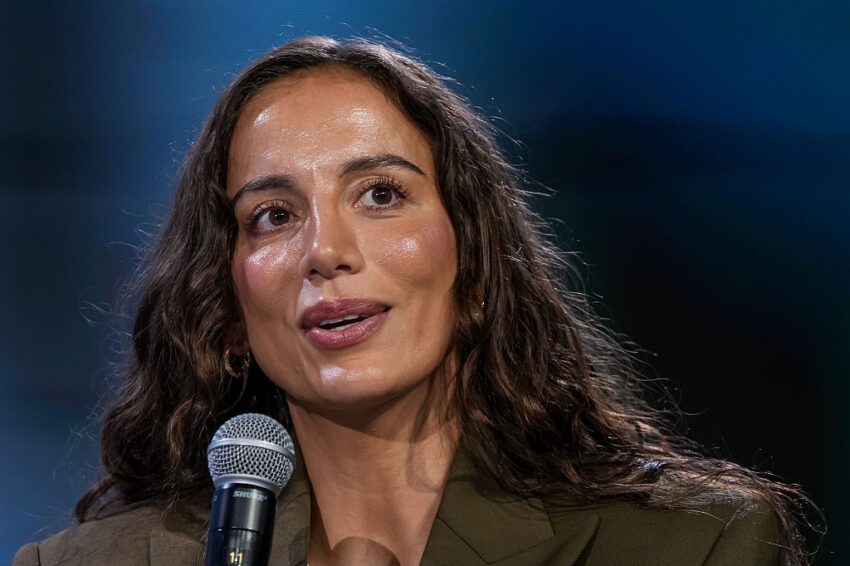
Mira Murati is not usually a headline-seeking executive, but on Thursday she made a carefully managed return to the public stage. In a Bloomberg interview in San Francisco, the CEO of Thinking Machines Lab offered a rare look at her company’s plans, reflected on OpenAI’s turbulent 2023 leadership crisis, and warned that the future of AI will depend less on lofty rhetoric than on governance and control.
A rare public appearance
The appearance mattered in part because it was Murati’s first major media interview in roughly 18 months. As OpenAI’s CTO, she was visible but rarely the company’s public face. At Thinking Machines Lab, she has been even less visible while the startup has spent the past year and a half raising capital, hiring researchers and shipping only one product so far: Tinker, an API for fine-tuning open source AI models.
That low-profile approach had advantages when the company was building in the background. But the AI market has become increasingly loud, with rivals dominating the conversation. OpenAI remains a constant presence in the news cycle, Anthropic has gathered significant momentum, and xAI, Elon Musk’s AI venture, has been folded into SpaceX ahead of an expected large public offering. In that environment, attention can become a competitive resource. Murati’s Bloomberg interview seemed designed to remind the market that Thinking Machines is still in the race.
Thinking Machines’ next move
Murati used the interview to tease what the company is calling “interaction models,” which she described as a new kind of AI interface. Instead of the familiar prompt-and-response format used by most AI systems today, she said the models are built to process continuous streams of audio, text and video in 200-millisecond intervals.
The goal, according to Murati, is to better capture how humans actually communicate: interruptions, corrections in mid-thought and even pauses to think. She framed the idea as an early step rather than a finished product and did not offer a release date.
What she emphasized
- A different interface model, not just a faster chatbot.
- Continuous processing of audio, text and video.
- Intervals of 200 milliseconds.
- No launch date and no claim that the system is complete.
Revisiting the OpenAI “blip”
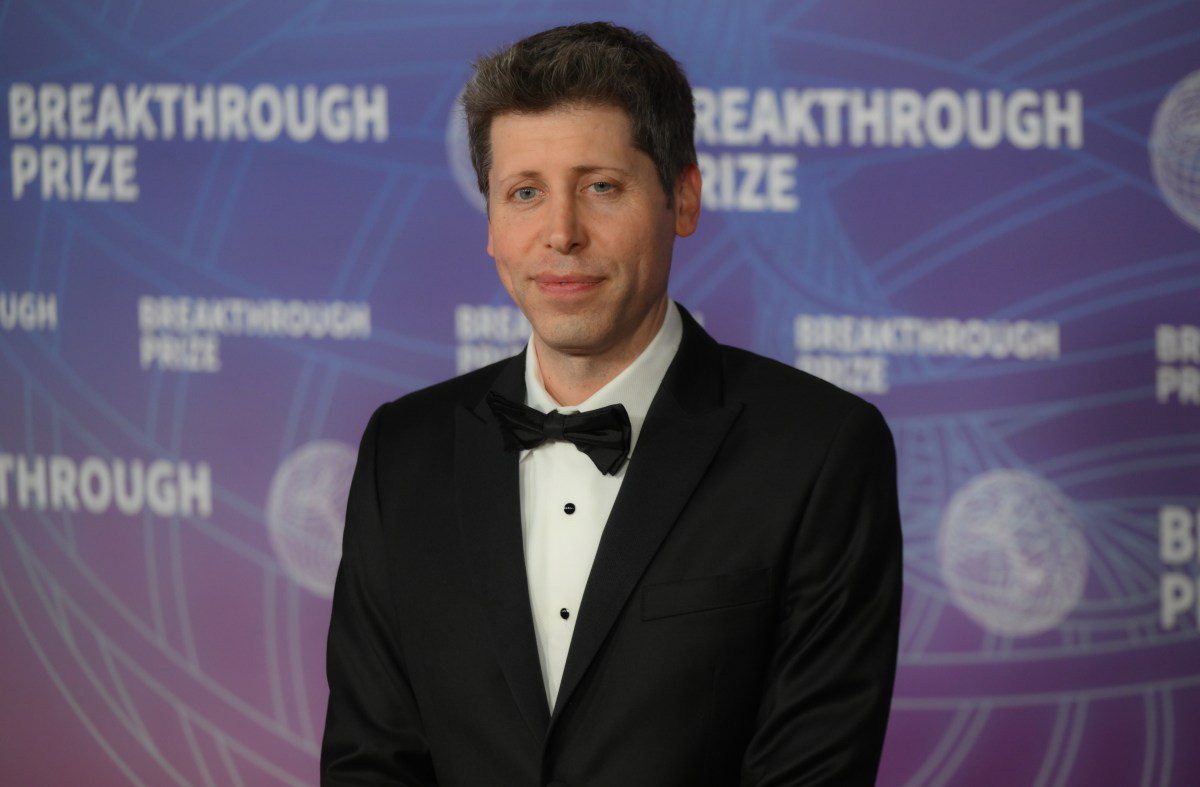
Murati also addressed one of the most public chapters of her career: the chaotic week in November 2023 when OpenAI’s board fired Sam Altman and she became interim CEO. The episode was so brief and so unstable that people inside OpenAI referred to it as “the blip.”
She said she felt clear about her decisions at the time and believed the mission and the team had to come first. From her perspective, that clarity made her choices seem obvious even as the situation looked like it was collapsing from the outside. Murati said the company would have “imploded” without her involvement during that five-day stretch and its immediate aftermath.
At the same time, she acknowledged that knowing what you are trying to protect is not the same as knowing the consequences of every decision. Looking back, she said she would have pushed harder for more information and for a real transition plan. She did not directly say whether she thinks the outcome was good.
Governance, not just personalities
When asked whether she still trusts Altman, Murati sidestepped the question. Instead, she broadened the discussion to a concern she returned to repeatedly: the concentration of consequential decisions in too few hands, not only at OpenAI but across the AI industry.
Her argument was that the problem is not simply whether individual leaders are good or bad people. Organizations can drift even when run by well-intentioned executives, and good people can still make poor decisions. In her view, too much attention has been paid to personal virtue and too little to structural checks and governance.
Hiring pressure and talent churn
Bloomberg also asked about reports of several high-profile researchers leaving Thinking Machines in recent months, an issue Murati has mostly avoided in public. She downplayed the departures, saying that building a frontier AI lab from scratch compresses years of normal organizational volatility into a much shorter period.
She also acknowledged the role of compensation in the AI talent market, including the nine-figure packages that have become common in the fight for researchers. But she suggested money is not the whole story. To some audience laughter, she said of her competitive instincts, “When I wake up in the morning, I am not thinking about how to kill the competitor.”
Murati on AI’s broader direction
Chang also pressed Murati on what comes next for AI, including the social and safety concerns that have intensified as the technology spreads. Companies once sold AI as a productivity boost for workers. More recently, public discussion has shifted toward mass job displacement and the risk that AI could be used to build chemical weapons.
Murati’s response was measured. She pushed back on the idea that AI must lead inevitably to either a utopia or a dystopia. In her view, neither outcome is predetermined, and the current period will shape which path wins out.
Still, she warned that if humans “take their hands off the wheel too soon,” the future will look very different, and not better. The message was consistent with the rest of her interview: AI’s direction is still being decided, but only if people remain actively involved in deciding it.
Source: Original report
Was this helpful?
Explore more: AI Automation Services More AI & Automation Tech News
Last Modified: July 7, 2026 at 9:20 pm
12 views