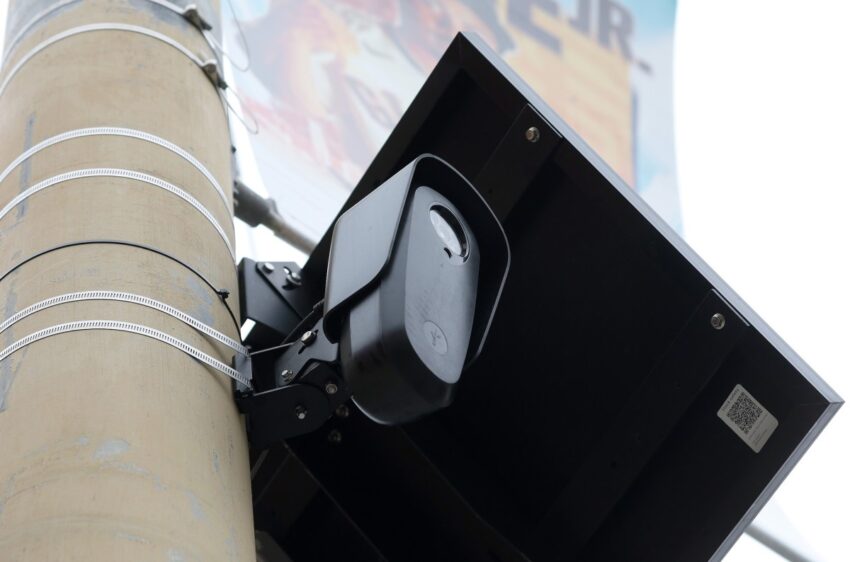
More Americans now oppose police license plate cameras than support them, according to a new YouGov survey that points to a widening backlash against surveillance technology and the companies that sell it. The findings come as Flock Safety, one of the best-known vendors in the space, faces mounting criticism over how its systems are used by police agencies and the privacy risks they can create.
Survey finds opposition has overtaken support
The survey, which polled 20,000 people across the U.S. and was shared exclusively with The Washington Post, found that 46% of respondents opposed license plate reader cameras in their communities, while 38% supported them. That marks a reversal from last year, when a majority of respondents said they were in favor of the technology.
The latest result suggests that public sentiment around automated vehicle surveillance may be shifting quickly. The survey also found that more respondents said the cameras would not make them feel any safer, undercutting one of the central arguments law enforcement agencies and vendors use to justify their deployment.
Flock and the rise of automated plate readers
Flock is one of the most visible companies in the license plate reader market, with more than 120,000 cameras deployed across the U.S., according to the source material. These systems can track the whereabouts of vehicles, creating a network of roadside sensors that can be queried by police and, in some cases, other authorities.
That scale has helped make Flock a prominent player in public safety technology, but it has also put the company at the center of a broader debate over how much surveillance is acceptable in everyday life. License plate readers are often pitched as crime-fighting tools, yet they also generate detailed records about where people drive and when they pass by specific locations.
Backlash has grown as police use cases come under scrutiny
According to the report, the backlash intensified after stories emerged about police abusing access to the cameras’ surveillance capabilities. Those reports contributed to dozens of U.S. communities rejecting Flock’s cameras or canceling contracts over privacy concerns.
That pattern matters because it shows the debate is no longer limited to privacy advocates or civil liberties groups. Local governments, neighborhood groups, and residents have increasingly questioned whether the benefits of the systems outweigh the risks, especially when data access and retention policies are not clearly understood by the public.
Flock says support exists, but not without limits
When TechCrunch reached out, Flock said there was broad support for its surveillance technology. At the same time, the company acknowledged that “support isn’t unconditional” and pointed to the rollout of new safeguards it says are meant to address concerns.
That response reflects the difficult position many surveillance vendors now face. They are under pressure to prove that their products can be used responsibly, while critics argue that even with guardrails, the core technology creates an unacceptable level of monitoring.
Critics say safeguards do not go far enough
The American Civil Liberties Union has argued that Flock’s new safeguards amount to little, according to the source material, and continues to see the company as a significant threat to civil liberties. That criticism centers on a familiar issue in surveillance policy: rules can limit certain abuses, but they do not eliminate the underlying capacity to track people on a large scale.
For opponents, that distinction is crucial. If a system can be used to build a detailed picture of where vehicles travel, then the question is not just whether the tool is secure, but whether the existence of the tool itself should be tolerated in a community.
Why the public mood may be changing
The new numbers suggest several forces may be converging. First, the technology has become more visible, and not always in a positive way. Second, local reporting about misuse and overreach has made the consequences easier for the public to imagine. Third, residents may be more sensitive to the idea that routine movement can be logged and reviewed by law enforcement or other entities.
There is also a broader cultural shift underway around digital privacy and surveillance. People have become more aware of how data collection works in consumer technology, and that awareness may be influencing views of public-sector tools that operate at street level and affect whole neighborhoods.
What the numbers mean for police and cities
For police departments and municipalities, the survey adds another complication to an already contentious policy area. License plate readers are often sold as a force multiplier, allowing agencies to identify vehicles tied to investigations more quickly than manual patrol work would permit. But if public support is eroding, elected officials may become less willing to approve contracts or renewals.
That could have practical consequences for vendors such as Flock. A technology that is politically easier to adopt may become harder to defend once communities begin weighing surveillance concerns against claimed safety gains. Cities that already use the systems may also face greater pressure to disclose policies on access, auditing, retention, and oversight.
Key takeaways from the survey and reporting
- 46% of respondents opposed police license plate cameras in their communities.
- 38% supported them, according to the YouGov survey.
- The survey covered 20,000 people across the U.S. and was shared exclusively with The Washington Post.
- Opposition has now overtaken support, reversing last year’s majority in favor.
- Flock says support for its technology is broad, but not unconditional.
- Critics, including the ACLU, say the company’s safeguards do little to address civil liberties concerns.
Flock CEO calls for a compromise
Amid the intensifying backlash, Flock CEO Garrett Langley last week called for a “compromise” between surveillance and privacy. That appeal came as vandalism targeting Flock cameras has increased, adding another layer of tension around the technology.
The compromise Langley is seeking may prove difficult to define. Supporters of license plate readers tend to emphasize crime prevention and investigative value, while opponents argue that privacy and civil liberties should not be negotiated away in exchange for uncertain safety benefits.
A debate likely to keep growing
The latest survey does not settle the dispute over license plate readers, but it does show that public opinion is not standing still. As more people learn how these systems work and how they have been used, support may continue to soften, especially if local controversies keep surfacing.
For now, Flock and similar companies are left navigating a difficult balance: defending a product marketed as a public safety tool while responding to a public that appears increasingly wary of being watched.
Source: Original report
Was this helpful?
Explore more: Application Audit & Review More Cybersecurity Tech News
Last Modified: August 29, 2026 at 1:52 am
8 views