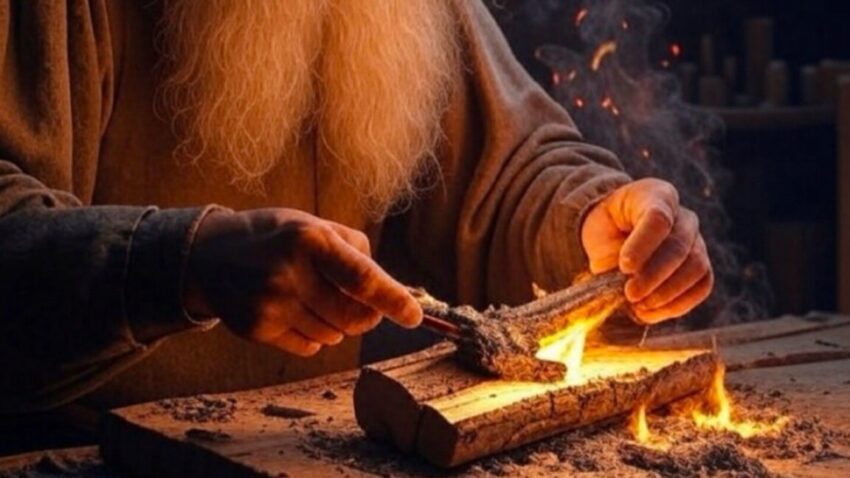
leonardo s wood charring method predates japanese Recent research suggests that Leonardo da Vinci may have documented the wood charring technique known as Yakisugi more than a century before it was formally recognized in Japan.
leonardo s wood charring method predates japanese
Understanding Yakisugi
Yakisugi, also known as Shou Sugi Ban, is a traditional Japanese method of charring wood to enhance its durability and aesthetic appeal. This technique involves burning the surface of the wood, creating a carbonized layer that serves multiple protective functions. The charred layer acts as a barrier against water, fire, insects, and fungi, significantly extending the lifespan of the wood. This method has gained popularity in recent years, particularly within the realm of bioarchitecture, where sustainability and longevity are paramount.
Historical Context of Yakisugi
The formal codification of Yakisugi techniques occurred in the 17th and 18th centuries, primarily in Japan. However, the practice itself is believed to date back even further, with roots in ancient Japanese culture. The technique was traditionally used in the construction of homes and temples, where the durability of wood was essential for longevity in the face of Japan’s diverse climate and natural disasters.
Modern Applications and Popularity
In contemporary architecture, Yakisugi has seen a resurgence as architects and builders seek sustainable materials and methods. The aesthetic appeal of charred wood, with its unique texture and deep color, has made it a favored choice for both interior and exterior applications. Additionally, the environmental benefits of using a natural, long-lasting material align well with modern sustainability goals.
Leonardo da Vinci’s Insights
Leonardo da Vinci, the quintessential Renaissance polymath, produced an extensive body of work, including over 13,000 pages of notes and sketches, which were later compiled into various codices. These notebooks contain a wealth of inventions and ideas that were far ahead of their time, ranging from flying machines to advanced weaponry. Among these insights, it appears that Leonardo also recognized the protective benefits of charring wood surfaces, a concept that aligns closely with the principles of Yakisugi.
Leonardo’s Codex Atlanticus
In his Codex Atlanticus, dated around 1490, Leonardo wrote about the possibility of enhancing wood through charring. This early mention predates the formal documentation of Yakisugi by over a century, raising intriguing questions about the exchange of knowledge between cultures and the independent development of similar techniques. Leonardo’s writings suggest that he understood the chemical and physical properties of charred wood, noting its potential to resist decay and damage.
The Significance of Leonardo’s Work
Leonardo’s notebooks are not just a collection of artistic sketches; they represent a profound understanding of science, engineering, and nature. His observations often foreshadowed future technologies and practices. For instance, he conceptualized flying machines long before the Wright brothers took to the skies and envisioned a telescope a century before it was invented. This ability to foresee technological advancements demonstrates Leonardo’s remarkable intellect and creativity.
Alessandro Vezzosi’s Discoveries
In 2003, Alessandro Vezzosi, the director of Italy’s Museo Ideale, made a significant discovery while examining Leonardo’s notes. He stumbled upon recipes for various mysterious mixtures that Leonardo had documented. Intrigued, Vezzosi decided to experiment with these recipes, leading to the creation of a material that closely resembled Bakelite, an early synthetic plastic widely used in the 20th century. This finding has prompted discussions about whether Leonardo might have been the first to invent a manmade plastic, further emphasizing his innovative spirit.
The Implications of Leonardo’s Innovations
Leonardo’s insights into materials and their properties extend beyond wood charring. His explorations into various substances and their potential applications reveal a mindset that sought to understand the world through experimentation and observation. This approach laid the groundwork for future scientific inquiry and technological advancements. The notion that he may have anticipated the benefits of charring wood adds another layer to his legacy as a pioneer in material science.
Comparative Analysis: Yakisugi and Leonardo’s Techniques
While Yakisugi and Leonardo’s charring method share similarities, they also reflect the unique cultural contexts in which they developed. Yakisugi is deeply rooted in Japanese tradition, emphasizing harmony with nature and the use of local materials. In contrast, Leonardo’s work embodies the Renaissance spirit of inquiry and innovation, drawing from a wide range of influences across Europe.
Cross-Cultural Knowledge Exchange
The possibility that Leonardo’s insights predate the formal documentation of Yakisugi raises questions about the exchange of knowledge between different cultures. It is unclear whether Leonardo had direct access to similar practices in Japan or if he independently arrived at the same conclusions through his observations and experiments. This phenomenon of parallel development is not uncommon in history, where similar ideas emerge in different regions without direct influence.
Stakeholder Reactions
The revelation of Leonardo’s early mention of wood charring has sparked interest among historians, architects, and material scientists alike. Many are excited about the implications of this discovery for understanding the evolution of building techniques and materials. Architects who favor sustainable practices are particularly intrigued by the potential for integrating historical methods into modern designs.
Academic Perspectives
Academics have begun to explore the broader implications of Leonardo’s work in relation to contemporary practices. Some argue that his insights could inspire new approaches to sustainability in architecture, while others emphasize the importance of recognizing the contributions of various cultures to the development of building techniques. This dialogue fosters a deeper appreciation for the interconnectedness of human knowledge and innovation.
Conclusion: The Legacy of Leonardo and Yakisugi
The intersection of Leonardo da Vinci’s insights and the traditional Japanese technique of Yakisugi highlights the richness of human ingenuity. While Yakisugi has been celebrated for its practical benefits and aesthetic qualities, the possibility that Leonardo anticipated similar techniques adds a fascinating layer to our understanding of architectural history. As we continue to explore the past, we uncover the threads that connect diverse cultures and their approaches to solving similar challenges.
In an era where sustainability is increasingly prioritized, revisiting historical techniques like Yakisugi, along with the insights of visionary figures like Leonardo, can inform modern practices. By embracing the wisdom of the past, architects and builders can create structures that honor tradition while meeting the demands of contemporary society.
Source: Original report
Was this helpful?
Explore more: More General Technology Tech News Blog
Last Modified: December 30, 2025 at 7:37 am
16 views