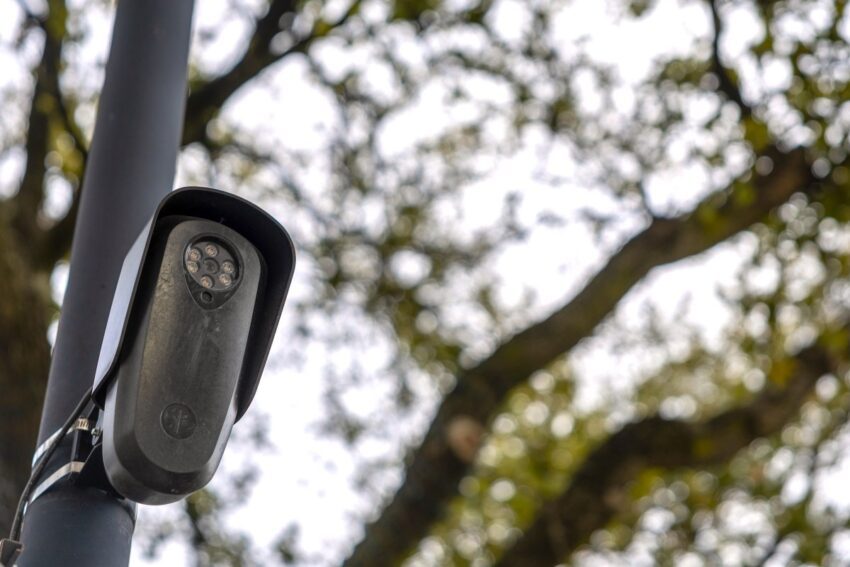
The Los Angeles Police Department is letting its contract with surveillance company Flock Safety expire, citing “serious concerns” about civil liberties, privacy and data handling as scrutiny over license plate readers continues to intensify across the U.S.
flock safety
LAPD says it will not renew the deal
A senior LAPD official told news outlets, first reported by ABC7 and the Los Angeles Times, that the department will allow its three-year agreement with Flock to end on Saturday rather than renew it. LAPD chief information officer Dean Gialamas said the decision was driven by “serious concerns” around civil liberties and civil rights, especially privacy and the data collected by the cameras.
“The LAPD had to make a difficult decision, in this case discontinuing using Flock services until we can get those data, privacy, security and sharing concerns ironed out through a contractual relationship,” Gialamas was quoted as saying.
The department did not immediately respond to TechCrunch’s request for comment over the weekend. It is also unclear whether Flock’s cameras will keep recording once the contract expires.
Privacy terms appear to be at the center of the dispute
According to ABC7, the LAPD is seeking new contract language that would address privacy and data storage issues before any renewed arrangement could move forward. That suggests the department’s objection is not necessarily to the cameras themselves, but to the terms governing how data is retained, shared and controlled.
The LAPD is one of Flock’s biggest government customers. As the third-largest police department in the United States, its decision is likely to draw attention well beyond Los Angeles.
Flock says it was caught off guard
Flock spokesperson Holly Beilin said in an email to TechCrunch that the contract expiration came as a surprise to the company. Flock said it was confident it could “clear up the current misconceptions” behind the decision, though it did not specify what those misconceptions were.
Flock’s business model centers on a large network of license plate reader cameras installed across the country. The company says it has at least 80,000 cameras in the U.S. that can scan plates and help police and federal agencies track vehicles.
A broader backlash against license plate readers
The LAPD move lands amid growing resistance to Flock and similar surveillance tools. Several cities, including Mountain View, California, and South Portland, Maine, have stopped working with the company, citing privacy concerns and worries that federal immigration officials used the cameras in ways that violated local sanctuary policies.
Community pushback has also taken more direct forms. In some places, residents have dismantled Flock cameras or covered them with trash bags. In other cases, locals have accused the company of reinstalling cameras without permission from local authorities.
Concerns over errors and false positives
Flock’s technology has also drawn criticism from researchers and journalists who say license plate readers can lead to harmful mistakes. Researchers have documented cases in which motorists were stopped, detained, held at gunpoint or even jailed because of false positives or other errors.
Last week, a journalist at The Drive said he was tracked for days and later boxed in by police after a Flock camera incorrectly flagged the license plate of a loaner review vehicle as stolen.
Security questions have added to the pressure
Security lapses have further complicated the company’s public image. In one case, researchers and journalists were able to view live images from publicly exposed Flock cameras, including in reporting by 404 Media. Lawmakers have also urged federal consumer authorities to investigate the company over concerns that it has not done enough to prevent hackers and spies from accessing camera feeds and related systems.
Those lawmakers warned that many police logins used to access the system were not protected by multi-factor authentication, increasing the risk of unauthorized access.
Federal access has also raised alarms
Another 404 Media report added to the criticism, saying the U.S. Drug Enforcement Administration used a local police officer’s password without the officer’s knowledge to search for a suspect accused of an immigration violation.
That allegation fed concerns that Flock’s systems may be used in ways local agencies and residents do not fully understand or control, especially when data sharing reaches beyond the original intent of a city’s policy.
What happens next
For now, the LAPD’s decision appears to open a pause rather than a permanent break. The department is looking for updated contract terms that would address its concerns, while Flock is signaling that it wants to resolve the dispute. But the move underscores a broader shift: even large police customers are now facing pressure to justify how long they keep location data, who can access it and under what legal framework.
With license plate readers already widespread and the debate over surveillance tools growing more intense, the LAPD’s decision may become a reference point for other agencies weighing the same tradeoffs between investigative utility and civil liberties.
Source: Original report
Was this helpful?
Explore more: More Big Tech & Platforms Tech News Blog
Last Modified: July 14, 2026 at 6:37 pm
8 views