Blue Origin’s damaged New Glenn launch pad may take much longer to rebuild than the company has suggested, according to former SpaceX engineers who lived through a nearly identical disaster in Florida nearly a decade ago. Their verdict: the timeline is probably measured in many months, not a few.
A familiar kind of catastrophe
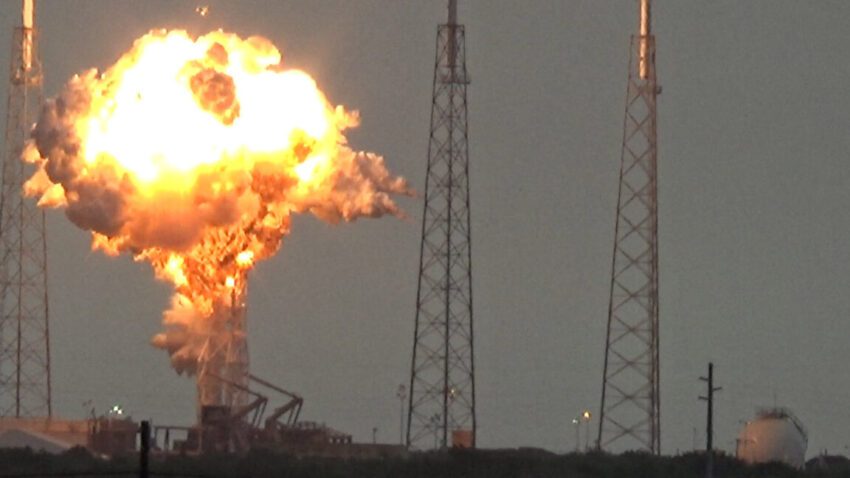
The comparison that keeps coming up is SpaceX’s September 2016 AMOS-6 failure. John Muratore, a former NASA engineer who sat on console as launch director that day, recalled the moment the Falcon 9 exploded during a static fire test in Florida. “It came out of nowhere, and it was really violent,” he said. The blast destroyed the rocket, much of the launch site, and the AMOS-6 satellite attached to the vehicle.
Nearly ten years later, on May 28, Blue Origin conducted a static fire test of New Glenn near Florida’s Space Coast and, after engine ignition, the rocket also exploded. For longtime observers, the similarities were striking: both programs were trying to move to a higher launch cadence, both had major customer and NASA implications, and both suffered catastrophic pad damage.
Ars Technica spoke with several SpaceX veterans who helped investigate AMOS-6 and rebuild Space Launch Complex-40, the pad destroyed in that incident, to gauge what Blue Origin may now be facing.
What SpaceX learned the hard way
Hans Koenigsmann, who led the SpaceX failure investigation in 2016, said the New Glenn video brought back difficult memories. “My AMOS-6 scar started itching when I saw the video of New Glenn,” he said. “It’s really terrible.”
At the time, Koenigsmann was SpaceX’s vice president of build and flight reliability. His team spent weeks searching the wetlands around Cape Canaveral for debris from the Falcon 9, using the pattern of wreckage to work backward toward the likely source of the failure. The investigation eventually focused on a complex issue involving the lining of a pressure vessel in the upper stage.
Koenigsmann said Blue Origin should move quickly to study the physical evidence, and be as transparent as possible with NASA and the Federal Aviation Administration. Every anomaly is different, he cautioned, but the sooner investigators can inspect the wreckage, the better their chances of understanding the failure.
Blue Origin has not publicly discussed the cause of the New Glenn accident, though speculation has centered on a possible problem with one of the rocket’s seven BE-4 engines. In SpaceX’s case, the rocket investigation was the main barrier to return to flight. For Blue Origin, the former SpaceX engineers said the pad itself may be the larger problem.
The pad is the real bottleneck
After AMOS-6, SpaceX had no immediately usable Falcon 9 pad at Cape Canaveral. The company returned to flight from Vandenberg Air Force Base in California in January 2017, less than five months after the explosion, while work continued at Kennedy Space Center’s Launch Complex 39A.
The closest parallel to Blue Origin’s current challenge is the rebuild of SLC-40, which was largely destroyed in the explosion. Muratore said SpaceX was not allowed to begin reconstruction until January 2017 because the investigation and site remediation had to come first. That process included a grid-by-grid search of debris and cataloging recovered material.
SpaceX then spent four months redesigning the pad before construction work got underway. Trip Harriss, who managed Falcon 9 fleet operations in 2016, said everyone at the company helped with both the investigation and the reconstruction. The debris search continued until early October, when Hurricane Matthew forced it to stop.
“At one point, I got a submersible to take into the flame trench, where there was an accumulation of water, to see if we could find any rocket debris,” Harriss said. “But it was just large chunks of concrete.”
Concrete, steel and a lot of wiring
Launch pads are not simple structures. They combine heavy steel towers, thick concrete foundations, flame trenches and a dense web of electrical and fluid systems. In Blue Origin’s case, the damage appears substantial: one of the company’s large launch towers toppled during the test failure, another appears seriously damaged, and concrete beneath the rocket seems to have collapsed in places.
Harriss said he is especially concerned about the tubing and wiring that run through a pad. “I’m worried about the tubing,” he said, noting that launch-site plumbing and electrical systems are bespoke and often require hand work, including pulling and splicing wire and delicate welding. “It takes a lot of time and effort to put that into place.”
SpaceX had some advantages during the SLC-40 rebuild. It could draw on teams from other Florida and California sites, including engineers, welders and laborers experienced in pad infrastructure. Even so, the first Falcon 9 did not launch from the rebuilt site until December 2017. Including remediation, SpaceX took 15.5 months from the AMOS-6 failure to a new launch, with the physical construction phase alone taking 11 months.
Blue Origin’s stated goal vs. the veteran view
On Monday night, Blue Origin chief executive Dave Limp said the company expects to launch from the damaged pad before the end of this year, or less than seven months from now. The SpaceX veterans Ars spoke with were skeptical. None of them thought that schedule was realistic. Twelve months was viewed as the best-case scenario, while 18 months was seen as more likely.
Muratore argued that, painful as the failure is, Blue Origin may ultimately benefit from rebuilding the site. He said the AMOS-6 disaster gave SpaceX a chance to redesign SLC-40 for faster launch turnarounds and better durability. The company reworked the strongback structure, improved the flame trench and upgraded the water-based sound suppression system. Those changes were meant to reduce turnaround times from weeks to days, and by earlier this year SpaceX was launching Falcon 9 missions from SLC-40 within 45 hours of each other.
Blue Origin, Muratore noted, designed its LC-36A pad before the final New Glenn specifications were complete. He also said Blue Origin started recruiting SpaceX employees to work on its Florida pad before SpaceX had finished rebuilding SLC-40. Now, he said, Blue Origin has data from three New Glenn launches and may be able to rebuild in a way that improves future turnaround.
Harriss offered the company a similar message: “Don’t give up,” he said. “This is hard. This is recoverable. You can come out on the other side, even if it doesn’t feel like that right now.”
For Blue Origin, the immediate challenge is recovery. For SpaceX veterans, the lesson is that launch-pad disasters are survivable, but they are rarely fast to fix.
Source: Original report
Was this helpful?
Explore more: DevOps Services More Cloud & DevOps Tech News
Last Modified: July 7, 2026 at 9:28 pm
6 views