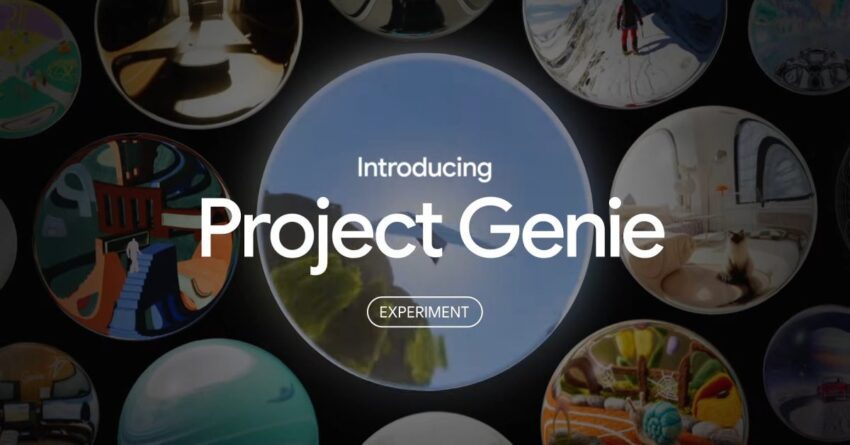
google rolling out project genie to generate Google has announced the rollout of Project Genie, a new initiative that leverages advanced AI technology to create interactive and playable virtual worlds.
google rolling out project genie to generate
Overview of Project Genie
At the heart of Project Genie is Genie 3, a sophisticated general-purpose world model designed to generate diverse and interactive environments. This innovative technology aims to enhance user experiences by allowing for the creation of immersive virtual spaces that can be tailored to individual preferences and needs. As part of its initial rollout, Google is providing access to this groundbreaking tool to AI Ultra subscribers in the United States.
What is Genie 3?
Genie 3 represents a significant advancement in artificial intelligence, particularly in the realm of world-building and simulation. Unlike traditional game engines that require extensive manual input and design, Genie 3 utilizes machine learning algorithms to autonomously generate environments that are not only visually appealing but also interactive. This capability opens up a plethora of possibilities for developers, gamers, and content creators alike.
Key Features of Project Genie
- Diverse Environment Generation: Genie 3 can create a wide range of environments, from lush forests to futuristic cities, adapting to the specific requirements of users.
- Interactivity: The generated worlds are not static; they allow for user interaction, enabling players to engage with the environment in meaningful ways.
- Customization: Users can tailor the generated worlds to fit their preferences, ensuring a personalized experience.
- Scalability: The technology is designed to handle various scales, from small, intimate settings to expansive landscapes.
Implications for Game Development
The introduction of Project Genie could revolutionize the game development landscape. Traditionally, creating a game environment has been a labor-intensive process requiring teams of artists, designers, and programmers. With Genie 3, developers can significantly reduce the time and resources needed to build immersive worlds.
Impact on Indie Developers
One of the most significant advantages of Project Genie is its potential to democratize game development. Indie developers, who often operate with limited budgets and resources, can leverage Genie 3 to create high-quality games without the need for extensive teams. This could lead to a surge in innovative and diverse gaming experiences, as more creators gain access to powerful tools that were previously available only to larger studios.
Enhancing User Engagement
For gamers, the ability to interact with dynamically generated worlds can enhance engagement and replayability. Traditional games often have fixed environments, which can lead to a sense of monotony over time. In contrast, Project Genie allows for continuous exploration and discovery, as each playthrough can offer a unique experience. This could lead to longer play sessions and increased player retention, which are critical factors for the success of any game.
Technical Aspects of Genie 3
The underlying technology of Genie 3 is based on advanced machine learning techniques, which enable it to analyze vast amounts of data to understand the elements that make up engaging environments. By training on diverse datasets, Genie 3 can learn to replicate various styles and themes, making it a versatile tool for creators.
Machine Learning and Data Analysis
Machine learning algorithms are at the core of Genie 3’s functionality. These algorithms allow the model to identify patterns and relationships within data, enabling it to generate environments that feel cohesive and immersive. The training process involves feeding the model a wide range of examples, from natural landscapes to urban settings, allowing it to learn the nuances of different environments.
Challenges and Limitations
Despite its impressive capabilities, Project Genie is not without challenges. One of the primary concerns is ensuring that the generated environments are not only visually appealing but also functionally sound. Developers must carefully evaluate the output to ensure that gameplay mechanics work seamlessly within the generated worlds.
Additionally, there are ethical considerations surrounding the use of AI in creative processes. As AI-generated content becomes more prevalent, questions arise about authorship, originality, and the potential for bias in the generated environments. Google will need to address these concerns as Project Genie continues to evolve.
Stakeholder Reactions
The announcement of Project Genie has garnered a mixed response from various stakeholders in the gaming and technology sectors. While many are excited about the potential for innovation, others express caution regarding the implications of AI-generated content.
Industry Experts
Industry experts have praised the initiative for its potential to streamline the game development process. Many believe that tools like Genie 3 could lead to a new era of creativity, where developers can focus more on storytelling and gameplay mechanics rather than the technical aspects of world-building.
Concerns from Creators
On the other hand, some creators have voiced concerns about the implications of relying on AI for creative processes. There is a fear that the unique artistic touch that human designers bring to game development could be diminished. Additionally, the potential for homogenization of game environments is a valid concern, as AI-generated content may lead to similar aesthetics across different games.
Future Prospects
As Project Genie continues to roll out and evolve, its impact on the gaming industry will likely become more pronounced. Google’s commitment to enhancing user experiences through AI technology could pave the way for future innovations in gaming and beyond.
Potential for Expansion
While Project Genie is currently available to AI Ultra subscribers in the U.S., there is potential for expansion into other markets and user demographics. As the technology matures, Google may consider offering access to a broader audience, including educational institutions and hobbyist developers.
Integration with Other Technologies
Furthermore, the integration of Project Genie with other emerging technologies, such as virtual reality (VR) and augmented reality (AR), could create even more immersive experiences. Imagine stepping into a world generated by Genie 3, where players can interact with their surroundings in real-time, enhancing the overall gaming experience.
Conclusion
Project Genie represents a significant leap forward in the intersection of artificial intelligence and game development. By enabling the creation of diverse, interactive worlds, Google is not only enhancing the gaming experience but also democratizing access to powerful development tools. As the technology continues to evolve, it will be essential for stakeholders to navigate the challenges and opportunities that arise, ensuring that the future of gaming remains creative, engaging, and inclusive.
Source: Original report
Was this helpful?
Last Modified: January 30, 2026 at 5:57 am
7 views