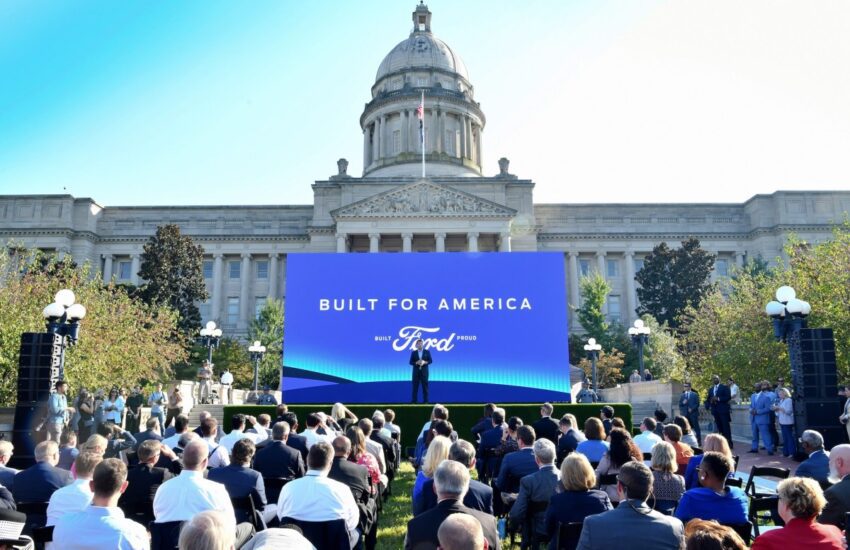
ford and sk on are ending their Ford and SK On have announced the dissolution of their joint venture focused on battery production in the United States, marking a significant shift in their collaboration strategy.
ford and sk on are ending their
Background of the Joint Venture
The partnership between Ford Motor Company and SK On, a subsidiary of South Korea’s SK Innovation, was established to bolster the electric vehicle (EV) market by developing advanced battery technology and manufacturing capabilities. This joint venture was part of a broader strategy by both companies to meet the growing demand for electric vehicles and to compete with other major players in the automotive industry.
Initially formed in 2021, the joint venture aimed to invest approximately $11.4 billion in battery production facilities across the United States. This included plans for two battery plants in Kentucky and a significant facility at the BlueOval SK campus in Tennessee. The collaboration was seen as a crucial step for Ford in its transition to electric vehicles, as it sought to produce batteries in-house to reduce costs and improve supply chain reliability.
Details of the Dissolution
As part of the recent announcement, Ford and SK On confirmed that while the joint venture will be dissolved, the factories themselves will continue to operate. The companies have agreed to divide the assets associated with the joint venture. Ford will take full ownership and operational control of the twin battery plants located in Kentucky, while SK On will retain operational responsibilities for the factory situated at the expansive BlueOval SK campus in Tennessee.
This decision comes as both companies reassess their strategies in light of evolving market conditions and the competitive landscape in the electric vehicle sector. The separation allows each company to pursue its own objectives more effectively, while still maintaining production capabilities at the existing facilities.
Implications for Ford
For Ford, the acquisition of the Kentucky plants represents a significant step in its ongoing commitment to electric vehicle production. The company has set ambitious targets for EV sales, aiming to produce more than 2 million electric vehicles annually by 2026. By taking control of the battery plants, Ford can streamline its operations and enhance its ability to produce batteries that meet its specific needs.
This move aligns with Ford’s broader strategy to invest heavily in electric vehicle technology. The company has committed to spending over $50 billion on EV development through 2026, which includes investments in battery technology, production facilities, and research and development. By consolidating its battery production under its own management, Ford aims to reduce costs and improve the efficiency of its supply chain.
Implications for SK On
For SK On, the decision to operate the Tennessee factory independently allows the company to focus on its core competencies in battery technology and manufacturing. SK On has been actively expanding its presence in the global battery market, partnering with various automotive manufacturers to supply batteries for electric vehicles. By maintaining control over the Tennessee facility, SK On can continue to serve its existing clients while exploring new partnerships and opportunities in the EV sector.
The company has been investing heavily in research and development to enhance its battery technology, focusing on improving energy density, reducing charging times, and increasing the overall lifespan of its batteries. This focus on innovation is critical as the competition in the battery market intensifies, with numerous companies vying for market share.
Market Context and Reactions
The dissolution of the joint venture comes at a time when the electric vehicle market is experiencing rapid growth. According to recent reports, global EV sales are expected to reach 26 million units by 2030, driven by increasing consumer demand and government incentives aimed at reducing carbon emissions. As automakers race to capture a share of this burgeoning market, the need for reliable and efficient battery production has never been more critical.
Industry analysts have noted that the separation of Ford and SK On could have mixed implications for both companies. While Ford’s acquisition of the Kentucky plants may enhance its production capabilities, it also raises questions about the company’s ability to manage battery production effectively. The automotive giant has historically relied on partnerships for its battery supply, and this shift could present challenges as it navigates the complexities of in-house production.
On the other hand, SK On’s independent operation of the Tennessee facility could position the company favorably in the competitive landscape. By focusing on its battery technology, SK On can continue to innovate and potentially attract new clients in the automotive sector. However, the company will need to ensure that it can meet the growing demand for batteries as more automakers transition to electric vehicles.
Stakeholder Reactions
Reactions to the dissolution of the joint venture have been varied among stakeholders. Analysts have expressed cautious optimism about Ford’s decision to take control of its battery production. Some believe that this move could lead to greater efficiencies and cost savings in the long run, while others remain skeptical about the company’s ability to manage battery production effectively.
Investors have also reacted to the news, with Ford’s stock experiencing fluctuations in the days following the announcement. The market’s response reflects the uncertainty surrounding the company’s ability to execute its ambitious EV strategy without the support of a dedicated battery partner.
Meanwhile, SK On’s stakeholders have expressed confidence in the company’s ability to thrive independently. The company has established itself as a key player in the battery market, and its focus on innovation and technology is expected to drive future growth. However, the company will need to navigate the challenges of scaling production to meet increasing demand.
Future Outlook
Looking ahead, both Ford and SK On face significant challenges and opportunities as they move forward independently. For Ford, the focus will be on ramping up production of electric vehicles and ensuring a reliable supply of batteries to meet its ambitious targets. The company will need to invest in talent and resources to build a robust battery production operation that can compete with established players in the market.
For SK On, the future will hinge on its ability to innovate and expand its client base. The company has already established partnerships with several automakers, and it will need to continue to build on these relationships while seeking new opportunities in the rapidly evolving battery market. As competition intensifies, SK On’s focus on research and development will be critical to maintaining its competitive edge.
Conclusion
The end of the joint venture between Ford and SK On marks a significant turning point for both companies as they navigate the complexities of the electric vehicle market. While the dissolution presents challenges, it also opens up new opportunities for each company to pursue its strategic objectives independently. As the demand for electric vehicles continues to grow, the ability to innovate and produce high-quality batteries will be paramount for success in this rapidly changing landscape.
Source: Original report
Was this helpful?
Explore more: More Business & Startups Tech News Blog
Last Modified: December 11, 2025 at 11:48 pm
17 views