Restate has raised $20 million in fresh funding as AI agents push more companies to rethink how they build resilient software. The Berlin-based startup says its durable workflow infrastructure, originally designed for crash-resistant multistep execution, is now a natural fit for agentic systems that can run longer, take unpredictable paths and need consistent recovery when something goes wrong.
Restate lands $20M as AI agents increase demand for durable infrastructure
The Series A was led by Singular, with participation from Redpoint Ventures and Capital One Ventures. Restate’s momentum has accelerated over the past few months, according to co-founder and CEO Stephan Ewen, who said the company closed multiple six- and seven-figure customer contracts during that period.
That traction comes at a time when durable infrastructure has become a more visible category in AI. Agent workflows often involve many steps, external systems and long-running processes, which makes retry logic and state management more important than in conventional application flows.
“It never was built for agents in the beginning, but it just happened to be a perfect match for all these problems that agents surface,” Ewen told TechCrunch.
Why Restate matters for AI agent workflows
Restate was founded in 2022 to provide execution infrastructure that can survive crashes and network interruptions. In practice, that means helping software remember where it was in a process and resume without losing consistency if a component fails mid-run.
Ewen said the challenge is especially acute for agents because they may take different paths each time they run. “You need to make sure you track exactly what you do to make it reproducible and have a consistent outcome,” he said.
The company is pitching that durability as more than a niche feature for heavyweight back-end systems. Instead, it wants to make the technology fast and lightweight enough for a broader range of workflows, including AI products that need reliable orchestration without introducing a lot of operational overhead.
How Restate says it differs from rivals
Restate is competing in a space that already includes Temporal, one of the best-known names in durable infrastructure. Temporal, founded in 2019, recently announced a $550 million Series E at a $12.55 billion valuation, underscoring investor interest in the category.
Rather than building on top of an external database, Restate developed its own storage, replication and redundancy layers. Ewen said that architecture helps the platform stay fast and lightweight, which he argues can make it better suited to modern agent-driven workloads.
The startup also says it is trying to broaden the market beyond traditional large-scale infrastructure users. Historically, many companies have associated durability engines with heavy backend jobs, but Restate sees an opportunity for more everyday application logic and AI systems that still need fault tolerance.
Customers range from AI startups to Fortune 500 firms
Restate has already signed notable customers, including Replit, the vibe-coding platform. Ewen also said the startup is working with Fortune 500 companies, including customers in the financial sector.
That mix suggests the company is finding demand in both emerging AI applications and more established enterprise environments. In both cases, the core need is similar: if a process fails halfway through, the system should be able to recover automatically and continue in a reliable way.
For AI companies, that can mean coordinating tool use, API calls, model invocations and business logic without losing track of what happened. For enterprises, it can mean making long-running workflows more robust and auditable.
A founding team with deep infrastructure roots
Ewen brings a background in data and distributed systems. Before Restate, he was a co-creator of Apache Flink, the open source stream-processing framework, and later became CTO of Data Artisans, the company built around it. Alibaba acquired Data Artisans in 2019 and renamed it Ververica, where Ewen continued as CTO for three years.
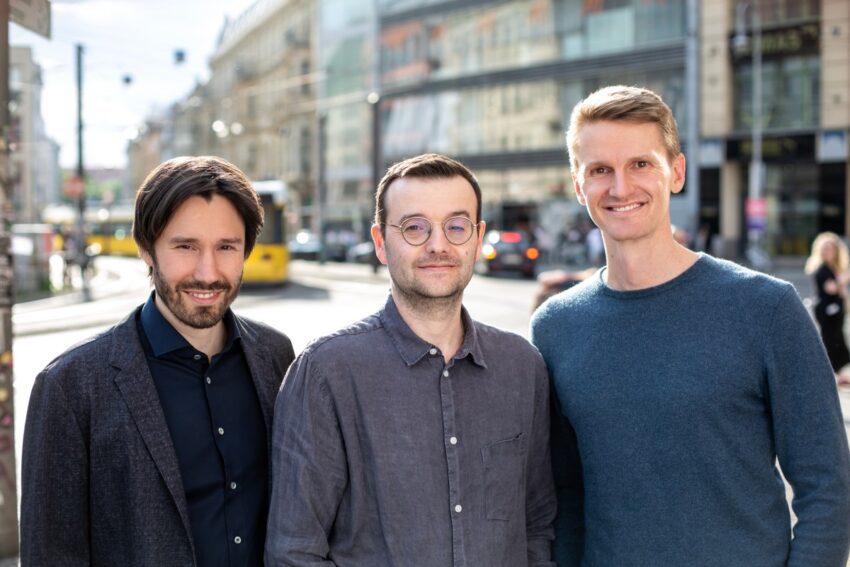
He co-founded Restate with former Data Artisans and Ververica colleagues Igal Shilman and Till Rohrmann. Ahmed Farghal, previously an engineer at Stripe and Meta, joined later as a fourth co-founder at the Series A stage.
The new financing will go toward expanding the company’s go-to-market team, hiring more engineers and growing its San Francisco Bay Area office so it can stay closer to customers and prospects. That expansion reflects Restate’s belief that demand is no longer limited to a narrow set of technical buyers.
What Restate plans to do next
Ewen says the bigger opportunity is still ahead. As more companies deploy AI agents and more workflows become automated and long-running, he believes durable infrastructure will become a standard layer in enterprise software.
“If we fast-forward a couple of years, it’s one of those tools, like a database, that I think pretty much any company will have a use case for, no matter their shape and size,” he said.
For now, Restate’s challenge is to turn that vision into broader adoption while competing with a much larger incumbent in Temporal. But the company’s early customer wins and fresh Series A suggest investors are betting that the rise of AI agents will keep durable execution software in demand.
Source: Original report
Was this helpful?
Explore more: Software Testing Services More Business & Startups Tech News
Last Modified: September 30, 2026 at 10:32 pm
0 views