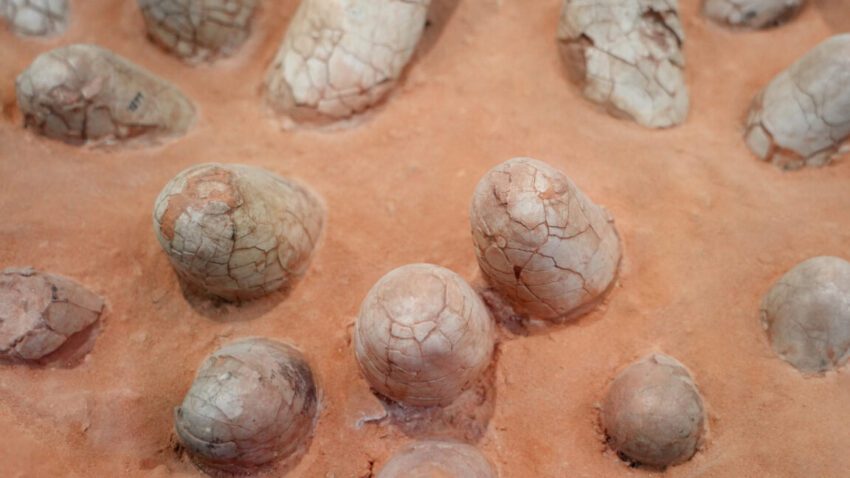
dinosaur eggshells can reveal the age of A new method utilizing dinosaur eggshells may provide a breakthrough in accurately dating surrounding fossils and sedimentary layers.
dinosaur eggshells can reveal the age of
The Challenge of Dating Dinosaur Fossils
Determining the age of dinosaur fossils has long been a complex and challenging task for paleontologists. When fossils are discovered at excavation sites, it is often difficult to ascertain how many millions of years ago these bones were buried. The geological history is preserved in the various strata of sedimentary rock, but accurately dating these layers and the fossils within them has proven to be a frustrating endeavor.
Fossilized bones and teeth have been dated with varying degrees of success, but this success is inconsistent and heavily reliant on the specific specimens being studied. The processes of fossilization and the transformation of sediment into rock can alter the bones in ways that complicate accurate dating. For instance, the chemical composition of the bones may change over time, leading to discrepancies in age estimates.
Current Dating Techniques
Among the most widely used methods for dating geological materials is uranium-lead dating. This technique involves measuring the decay of uranium isotopes into lead isotopes, providing a reliable means of determining the age of rocks. However, its application to directly date fossils is still in its infancy. The challenge lies in the fact that most fossils are not directly associated with the rocks that contain them, making it difficult to establish a clear timeline.
Other techniques, such as radiocarbon dating, are limited to relatively recent fossils, typically those younger than 50,000 years. For dinosaur fossils, which can be tens of millions of years old, these methods are not applicable. Consequently, paleontologists have often relied on relative dating methods, which can provide a general timeframe but lack the precision needed for more detailed studies.
A Breakthrough with Dinosaur Eggshells
In a significant advancement, a research team led by paleontologist Ryan Tucker from Stellenbosch University has developed a novel method for dating dinosaur eggshells. This approach offers a promising solution to the longstanding issue of dating surrounding rocks and fossils. The research team has devised a technique that reveals how long ago the eggshells were buried under layers of sand, mud, or other sediments.
The implications of this discovery are profound. By establishing the burial time of the eggshells, researchers can infer the burial time of any other fossils embedded in the same sedimentary layer. This method not only enhances the accuracy of dating but also provides a more comprehensive understanding of the ecosystem in which these dinosaurs lived.
Methodology of the Study
The research team employed a combination of fieldwork and laboratory analysis to develop their dating technique. They collected samples of fossilized dinosaur eggshells from various excavation sites, particularly those known for rich fossil deposits. The eggshells were analyzed for their mineral composition and structural characteristics, which can provide insights into their age.
One of the key aspects of the methodology involves understanding the sedimentary context in which the eggshells were found. By examining the layers of sediment above and below the eggshells, researchers can create a timeline of deposition. This sedimentary analysis is crucial, as it allows scientists to correlate the age of the eggshells with the surrounding geological features.
Implications for Paleontology
The ability to accurately date dinosaur fossils has far-reaching implications for the field of paleontology. Understanding the timeline of dinosaur existence can shed light on evolutionary processes, migration patterns, and environmental changes that occurred over millions of years. This newfound method of dating eggshells can enhance our knowledge of the ecological dynamics of the Mesozoic era, the period during which dinosaurs thrived.
Ecological Insights
By establishing a clearer timeline of when certain dinosaur species existed, researchers can better understand the interactions between different species and their environments. For instance, if a particular species of dinosaur is found alongside eggshells dated to a specific period, it may indicate that these species coexisted and interacted in their habitats. Such insights can help scientists reconstruct ancient ecosystems and understand how they evolved over time.
Furthermore, this method can aid in identifying mass extinction events and their aftermath. By dating fossils from different layers, researchers can determine how quickly life rebounded after such events, providing valuable information about resilience and adaptation in prehistoric ecosystems.
Stakeholder Reactions
The scientific community has responded positively to the findings of Tucker and his team. Many paleontologists view this method as a significant advancement in the field, offering a new tool for researchers to refine their understanding of dinosaur history. The ability to date fossils more accurately is seen as a game-changer, particularly for sites that have long been difficult to interpret.
Dr. Sarah Mitchell, a paleontologist at the University of California, expressed her enthusiasm for the research, stating, “This is a groundbreaking development that could revolutionize how we date fossils. The implications for our understanding of dinosaur evolution are immense.” Her sentiments reflect a broader consensus among researchers who recognize the potential of this method to unlock new insights into the distant past.
Future Research Directions
While the initial findings are promising, further research is needed to refine the dating technique and explore its applicability across different geological contexts. Future studies may focus on testing the method in various sedimentary environments and comparing the results with existing dating techniques to validate its accuracy.
Additionally, researchers may explore the potential for applying this method to other fossil types, such as those from different periods or species. By broadening the scope of the research, scientists can gain a more comprehensive understanding of the evolutionary history of life on Earth.
Conclusion
The development of a method for dating dinosaur eggshells represents a significant advancement in paleontology, offering researchers a new tool to accurately date fossils and sedimentary layers. By establishing the burial time of eggshells, scientists can infer the age of surrounding fossils, enhancing our understanding of the ecological dynamics of the Mesozoic era.
As the scientific community continues to explore the implications of this research, it is clear that the ability to accurately date dinosaur fossils will open new avenues for understanding the history of life on Earth. The collaboration between fieldwork and laboratory analysis exemplifies the interdisciplinary nature of modern paleontological research, paving the way for future discoveries that may reshape our understanding of the distant past.
Source: Original report
Was this helpful?
Explore more: More General Technology Tech News Blog
Last Modified: February 21, 2026 at 7:35 pm
13 views