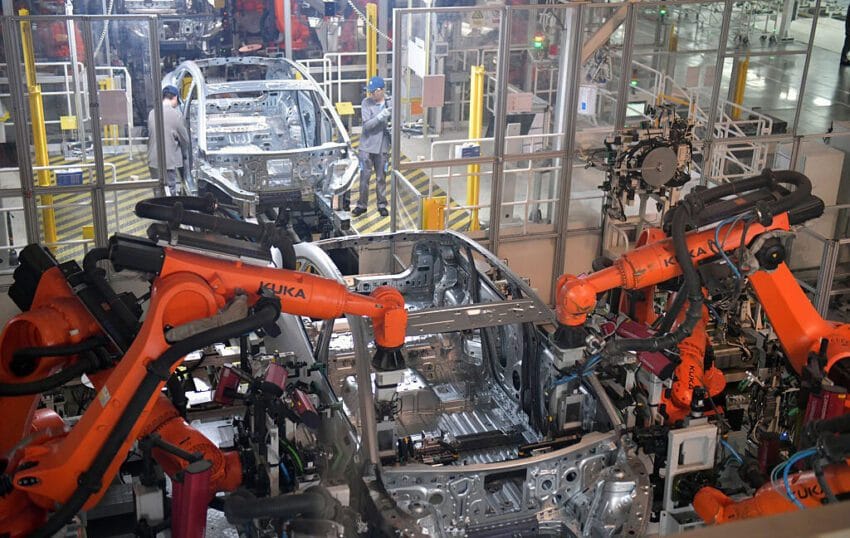
deepmind s robotic ballet an ai for DeepMind has introduced an innovative AI system named RoboBallet, designed to autonomously coordinate the actions of manufacturing robots, significantly reducing the time and effort required for programming.
deepmind s robotic ballet an ai for
The Rise of Automation in Manufacturing
In recent years, automation has transformed the manufacturing landscape. Robots equipped with multiple degrees of freedom are now commonplace, performing tasks ranging from assembly to packaging. These robotic arms are typically arranged along conveyor belts, executing a series of synchronized motions that are crucial for maintaining efficiency in production lines. However, the programming of these robots has traditionally been a labor-intensive process, often taking hundreds to thousands of hours to complete. This manual programming not only consumes valuable time but also requires a high level of expertise.
Introducing RoboBallet
DeepMind, a subsidiary of Alphabet Inc., has developed RoboBallet, an AI system that aims to revolutionize how manufacturing robots are programmed. By leveraging advanced algorithms, RoboBallet enables robots to autonomously determine their tasks and optimize their movements without extensive human intervention. This development marks a significant leap forward in the field of robotics and automation, as it addresses the complexities involved in coordinating multiple robotic systems.
Challenges in Robot Coordination
Coordinating the actions of manufacturing robots is a multifaceted challenge. It involves solving three interrelated problems: task allocation, scheduling, and motion planning. Each of these components presents its own set of difficulties:
- Task Allocation: This involves determining which robot should perform which task. Given the variety of tasks that can be assigned, the combinations can quickly become overwhelming.
- Scheduling: Once tasks are allocated, the next step is to decide the order in which they should be executed. This requires careful consideration of timing and resource availability.
- Motion Planning: Finally, robots must navigate their environment without colliding with each other or with surrounding equipment. This requires real-time adjustments and precise calculations.
Matthew Lai, a research engineer at Google DeepMind, explains the complexity of these challenges: “There are some tools that let you automate motion planning, but task allocation and scheduling are usually done manually. Solving all three of these problems combined is what we tackled in our work.”
How RoboBallet Works
RoboBallet employs a sophisticated AI framework that integrates machine learning techniques to address the challenges of task allocation, scheduling, and motion planning. The system utilizes a combination of reinforcement learning and optimization algorithms to enable robots to learn from their environment and improve their performance over time.
Reinforcement Learning
At the core of RoboBallet is reinforcement learning, a type of machine learning where an agent learns to make decisions by receiving feedback from its actions. In the context of manufacturing robots, this means that the robots can experiment with different task allocations and movement strategies, receiving rewards for efficient actions and penalties for inefficient ones. Over time, this feedback loop allows the robots to refine their strategies, leading to improved performance.
Optimization Algorithms
In addition to reinforcement learning, RoboBallet employs optimization algorithms that help determine the most efficient way to allocate tasks and schedule operations. These algorithms analyze the various constraints and requirements of the manufacturing process, ensuring that robots work together harmoniously while minimizing idle time and maximizing throughput.
Implications for the Manufacturing Industry
The introduction of RoboBallet has far-reaching implications for the manufacturing industry. By automating the coordination of robots, companies can expect significant reductions in programming time and costs. This allows manufacturers to adapt more quickly to changing production needs and market demands.
Increased Efficiency
One of the primary benefits of RoboBallet is the potential for increased efficiency in manufacturing processes. With robots capable of autonomously determining their tasks and optimizing their movements, production lines can operate more smoothly. This can lead to faster production cycles, reduced downtime, and ultimately, higher output.
Cost Savings
In addition to efficiency gains, RoboBallet can also result in substantial cost savings. The reduction in programming time translates to lower labor costs, while the increased efficiency can lead to higher profit margins. Manufacturers can reallocate resources previously dedicated to programming tasks to other areas of their operations, further enhancing productivity.
Flexibility and Scalability
RoboBallet also offers manufacturers greater flexibility and scalability. As production demands fluctuate, the AI system can quickly adapt to new tasks and reconfigure the robotic workforce accordingly. This adaptability is particularly valuable in industries where product lines change frequently or where customization is key to meeting customer needs.
Stakeholder Reactions
The introduction of RoboBallet has garnered attention from various stakeholders in the manufacturing sector. Industry experts, business leaders, and labor representatives have expressed a range of reactions to this groundbreaking development.
Industry Experts
Many industry experts view RoboBallet as a significant advancement in the field of robotics and automation. They believe that the ability to coordinate multiple robots autonomously will set a new standard for manufacturing efficiency. “This technology could redefine how we think about automation in manufacturing,” says Dr. Emily Chen, a robotics researcher. “It opens up new possibilities for optimizing production processes.”
Business Leaders
Business leaders are also optimistic about the potential of RoboBallet. Companies that adopt this technology may gain a competitive edge in the market by improving their operational efficiency and reducing costs. “Investing in AI-driven automation is not just a trend; it’s a necessity for staying competitive,” states John Smith, CEO of a leading manufacturing firm. “RoboBallet could be a game-changer for our industry.”
Labor Representatives
However, not all reactions have been entirely positive. Labor representatives have raised concerns about the implications of increased automation on jobs. While they acknowledge the potential for efficiency gains, they also emphasize the need for a balanced approach that considers the impact on the workforce. “We must ensure that workers are not left behind as automation advances,” says Maria Gonzalez, a labor union leader. “It’s crucial to invest in retraining and upskilling programs to prepare workers for the future.”
The Future of Manufacturing with RoboBallet
As RoboBallet continues to evolve, its impact on the manufacturing industry is likely to grow. The integration of AI in coordinating robotic systems represents a significant step toward a more automated and efficient future. However, the transition to this new paradigm will require careful consideration of the challenges and opportunities it presents.
Ongoing Research and Development
DeepMind is committed to ongoing research and development to enhance the capabilities of RoboBallet. Future iterations of the system may incorporate even more advanced machine learning techniques, allowing for greater adaptability and efficiency. The goal is to create a system that not only coordinates robots but also learns from its experiences to continually improve performance.
Broader Applications
While RoboBallet is currently focused on manufacturing, the underlying technology has the potential for broader applications across various industries. From logistics to healthcare, the ability to coordinate autonomous systems could lead to significant advancements in efficiency and productivity.
Conclusion
DeepMind’s RoboBallet represents a transformative development in the field of robotics and automation. By enabling manufacturing robots to autonomously coordinate their actions, this AI system has the potential to revolutionize production processes, increase efficiency, and reduce costs. However, as the industry moves forward, it is essential to address the implications for the workforce and ensure that the benefits of automation are shared equitably.
Source: Original report
Was this helpful?
Explore more: AI Automation Services More AI & Automation Tech News
Last Modified: September 25, 2025 at 5:37 pm
15 views