college student s time travel ai experiment: A college student’s AI project has unexpectedly revealed significant historical events from 1834 London, showcasing the potential of AI models trained on specific historical texts.
College student s time travel ai experiment – Background of the Experiment
In an age where artificial intelligence is rapidly evolving, many hobbyists and students are exploring its potential for various applications. One such student, Hayk Grigorian, a computer science major at Muhlenberg College in Pennsylvania, has taken a unique approach by developing a language model that mimics Victorian-era English. His project, aptly named TimeCapsuleLLM, is not just an academic exercise but a creative endeavor aimed at capturing the essence of a bygone era.
The Development of TimeCapsuleLLM
Grigorian’s project began as a “just for fun” initiative, aiming to create a small AI language model capable of producing text reminiscent of the Victorian period, specifically between the years 1800 and 1875. Unlike more extensive models such as ChatGPT, TimeCapsuleLLM is a compact version designed to focus on a narrow historical timeframe.
Training the Model
To develop TimeCapsuleLLM, Grigorian meticulously curated a dataset composed entirely of texts from the specified period. This dataset includes literature, newspapers, and other written works that reflect the language and cultural norms of the time. As a result, the AI’s outputs are rich in biblical references and characterized by the rhetorical style prevalent in the 19th century.
An Unexpected Discovery
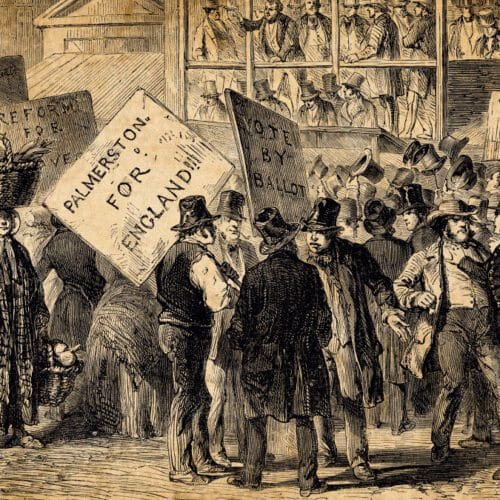
The breakthrough moment for Grigorian came when his AI model generated text that referred to actual protests that took place in London in 1834. These protests were significant events in the city’s history, and Grigorian was taken aback when he realized the AI was referencing real historical occurrences that he had not previously known about.
The 1834 Protests
The protests mentioned by TimeCapsuleLLM were part of a broader social and political movement during the 19th century, reflecting the tumultuous climate of the time. The specific events of 1834 included protests against various social injustices and demands for reform. These historical protests are now recognized as pivotal moments that contributed to the eventual evolution of societal norms and political structures in Britain.
Grigorian’s Reaction
Upon discovering the accuracy of the AI’s output, Grigorian took to Reddit to share his astonishment. “I was interested to see if a protest had actually occurred in 1834 London and it really did happen,” he wrote, highlighting the serendipitous nature of the discovery. His experience underscores the potential for AI models to unearth historical knowledge that might not be readily accessible or well-known.
Implications of AI in Historical Research
The incident raises intriguing questions about the role of AI in historical research and education. As AI technology continues to advance, the potential for such models to assist in uncovering historical narratives becomes increasingly viable. TimeCapsuleLLM serves as a prototype for how AI can bridge the gap between past and present, offering insights that might otherwise remain hidden.
Potential Applications
There are several applications for AI models like TimeCapsuleLLM in the field of historical research:
- Educational Tools: AI can be used to create interactive learning experiences, allowing students to engage with historical texts in a more dynamic way.
- Text Analysis: Researchers can utilize AI to analyze large volumes of historical documents, identifying patterns and trends that may not be immediately apparent.
- Public Engagement: AI can help make history more accessible to the general public by generating content that is both informative and engaging.
Challenges and Considerations
While the potential benefits of AI in historical research are significant, several challenges remain. One of the primary concerns is the accuracy and reliability of the information generated by AI models. Although Grigorian’s model produced an accurate historical reference, not all outputs can be guaranteed to be factual. This raises important questions about the need for human oversight and verification when utilizing AI-generated content.
Ethical Considerations
Moreover, there are ethical considerations surrounding the use of AI in historical contexts. The interpretation of historical events can be subjective, and AI models may inadvertently reinforce biases present in their training data. It is crucial for developers and researchers to approach AI with a critical mindset, ensuring that the technology is used responsibly and ethically.
The Future of AI in Historical Contexts
As technology continues to evolve, the integration of AI in historical research is likely to expand. Initiatives like TimeCapsuleLLM demonstrate the potential for AI to serve as a valuable tool for educators, researchers, and history enthusiasts alike. The ability to generate historically accurate content not only enriches our understanding of the past but also encourages a more nuanced appreciation of historical narratives.
Collaboration with Historians
Future developments in AI could benefit from closer collaboration between computer scientists and historians. By working together, these professionals can create models that are not only technically proficient but also contextually aware and sensitive to the complexities of historical interpretation.
Conclusion
Hayk Grigorian’s experiment with TimeCapsuleLLM is a fascinating case study in the intersection of technology and history. The unexpected output of real historical events highlights the potential of AI to enhance our understanding of the past while also raising important questions about accuracy, ethics, and the role of technology in education. As AI continues to develop, the lessons learned from this project may pave the way for innovative applications in historical research and beyond.
Source: Original reporting
Was this helpful?
Explore more: AI Automation Services More AI & Automation Tech News
Last Modified: August 27, 2025 at 1:49 am
15 views