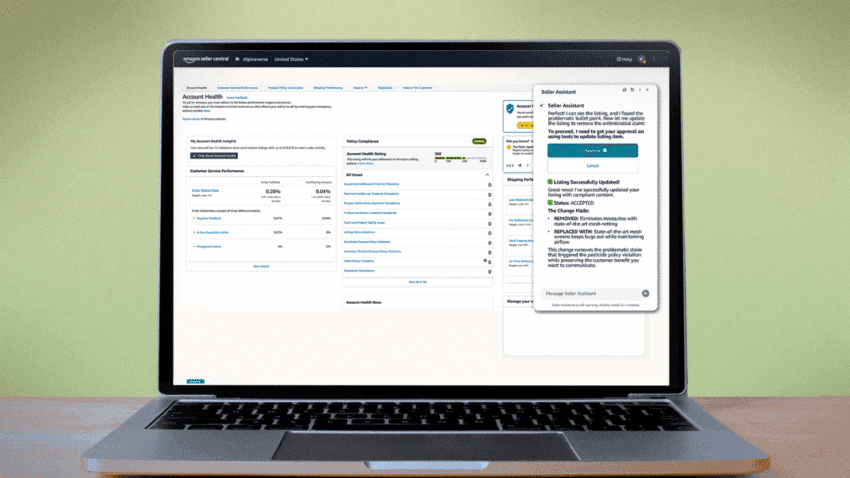
amazon launches ai agent to help sellers Amazon has unveiled an upgraded version of its Seller Assistant, an AI tool designed to assist third-party sellers in managing their businesses more efficiently.
amazon launches ai agent to help sellers
Overview of the New AI Tool
Amazon’s latest enhancement to its Seller Assistant aims to streamline the operational tasks that third-party sellers face daily. This AI-driven tool is designed to automate various aspects of business management, allowing sellers to focus on growth and strategy rather than getting bogged down by routine tasks.
The updated Seller Assistant leverages advanced machine learning algorithms to understand seller behaviors and preferences. By doing so, it can provide personalized recommendations and automate repetitive tasks, thereby increasing efficiency. This move aligns with Amazon’s broader strategy to enhance the seller experience on its platform, making it easier for businesses of all sizes to thrive.
Key Features of the Updated Seller Assistant
The revamped Seller Assistant includes several new features aimed at improving usability and functionality. Some of the key features are:
- Task Automation: The AI can now handle routine tasks such as inventory management, order processing, and customer communication. This allows sellers to save time and reduce the likelihood of errors.
- Personalized Insights: By analyzing sales data and seller behavior, the tool offers tailored insights that can help sellers make informed decisions about pricing, promotions, and inventory levels.
- Performance Monitoring: The AI provides real-time analytics on sales performance, helping sellers identify trends and adjust their strategies accordingly.
- Integration with Other Tools: The updated Seller Assistant can seamlessly integrate with other business management tools, allowing for a more holistic approach to business operations.
Task Automation in Detail
One of the standout features of the updated Seller Assistant is its ability to automate mundane tasks. For instance, it can automatically reorder stock when inventory levels drop below a certain threshold. This not only saves time but also ensures that sellers do not run out of popular products, which can lead to lost sales.
Moreover, the AI can manage customer inquiries by providing pre-set responses to common questions. This feature is particularly beneficial for sellers who may not have the resources to hire dedicated customer service staff. By automating these interactions, sellers can maintain a high level of customer satisfaction without overwhelming their workload.
Implications for Third-Party Sellers
The introduction of the updated Seller Assistant has significant implications for third-party sellers on Amazon’s platform. As the e-commerce landscape becomes increasingly competitive, tools that enhance efficiency and effectiveness are invaluable.
Increased Efficiency
With the ability to automate routine tasks, sellers can redirect their focus toward strategic initiatives such as marketing and product development. This shift in focus can lead to increased sales and improved business outcomes. Sellers can also leverage the personalized insights provided by the AI to make data-driven decisions, further enhancing their competitive edge.
Accessibility for Smaller Sellers
The updated Seller Assistant is particularly beneficial for smaller sellers who may lack the resources to manage all aspects of their business effectively. By providing tools that automate complex tasks, Amazon is leveling the playing field, allowing smaller businesses to compete more effectively with larger enterprises. This democratization of technology can foster innovation and diversity within the marketplace.
Stakeholder Reactions
The launch of the updated Seller Assistant has garnered a range of reactions from stakeholders within the e-commerce ecosystem. Sellers, industry analysts, and competitors have all weighed in on the potential impact of this new tool.
Seller Feedback
Initial feedback from sellers has been largely positive. Many have expressed enthusiasm about the time-saving capabilities of the AI tool. “The ability to automate inventory management is a game-changer for us,” said one seller who wished to remain anonymous. “It allows us to focus on growing our brand rather than getting lost in the day-to-day operations.”
However, some sellers have raised concerns about the reliance on AI for customer interactions. While automation can enhance efficiency, there is a fear that it may lead to a less personalized customer experience. Sellers are keen to ensure that their brand identity and customer relationships are not compromised in the process.
Industry Analysts’ Perspective
Industry analysts have noted that Amazon’s move to enhance its Seller Assistant reflects a broader trend in e-commerce towards automation and AI integration. “As competition intensifies, tools that provide sellers with a competitive advantage will become increasingly important,” said an analyst from a leading market research firm. “Amazon’s investment in AI not only benefits sellers but also strengthens its own marketplace by ensuring a diverse range of offerings.”
Competitor Reactions
Competitors have also taken notice of Amazon’s latest innovation. Companies that provide similar services to third-party sellers are now under pressure to enhance their own offerings. The introduction of the updated Seller Assistant may prompt other platforms to invest in AI tools to remain competitive in the market.
Future of E-Commerce with AI
The launch of the updated Seller Assistant is indicative of the growing role of AI in the e-commerce sector. As technology continues to evolve, it is likely that we will see even more sophisticated tools designed to assist sellers in various capacities.
Potential for Further Enhancements
Looking ahead, Amazon may continue to expand the capabilities of the Seller Assistant. Future updates could include advanced features such as predictive analytics, which would allow sellers to anticipate market trends and customer preferences. Additionally, the integration of natural language processing could enhance customer interactions, making them feel more personalized and engaging.
Broader Implications for E-Commerce
The implications of AI tools like the updated Seller Assistant extend beyond individual sellers. As more businesses adopt similar technologies, we may see a shift in consumer expectations. Customers may come to expect faster response times and more personalized shopping experiences, pushing businesses to innovate continuously.
Conclusion
Amazon’s launch of the updated Seller Assistant represents a significant step forward in the integration of AI within the e-commerce landscape. By automating routine tasks and providing personalized insights, the tool empowers third-party sellers to operate more efficiently and effectively. While the initial feedback has been positive, ongoing discussions about the balance between automation and personalization will be crucial as the e-commerce sector continues to evolve. As AI technology advances, it will be interesting to see how it shapes the future of online selling and customer interactions.
Source: Original report
Was this helpful?
Explore more: AI Automation Services More AI & Automation Tech News
Last Modified: September 17, 2025 at 8:50 pm
9 views