about this account reveals the scale of Recent developments surrounding X’s About This Account feature have shed light on the extensive foreign troll presence on the platform, revealing a troubling trend in the manipulation of American political discourse.
about this account reveals the scale of
Background on X and Foreign Influence Campaigns
Since its inception, X, formerly known as Twitter, has been a significant platform for political discourse. However, it has also been a battleground for foreign influence campaigns aimed at swaying public opinion and meddling in the political processes of other nations, particularly the United States. The focus has predominantly been on Russian troll farms, which have been implicated in various attempts to disrupt American elections and sow discord among the populace.
In recent years, the U.S. government has taken measures to counter these foreign influence operations, including sanctions against identified troll farms and increased scrutiny of social media platforms. Despite these efforts, the problem persists, and the emergence of new features on X has brought to light the scale and geographical diversity of these foreign troll accounts.
The Launch of the About This Account Feature
In an effort to enhance transparency, X launched the About This Account feature, which provides users with information about the origins of accounts, including their location. This feature was intended to help users identify potential foreign influence and better understand the context of the accounts they interact with. However, the launch quickly revealed a disturbing trend: many accounts that appeared to be American were actually based in foreign countries.
Initial Discoveries
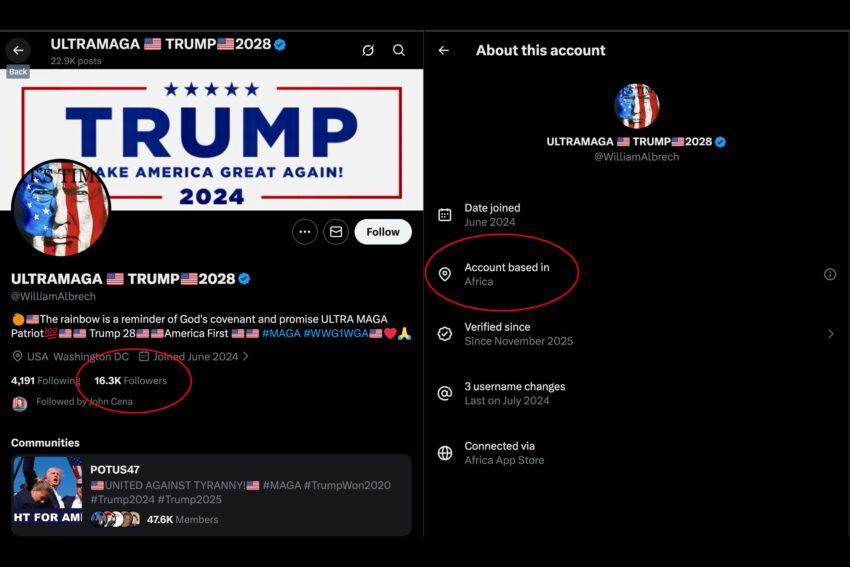
Shortly after the feature became available, users began to notice a surge of accounts that were seemingly designed to provoke outrage and political division, particularly around U.S. politics. Accounts with names like ULTRAMAGA🇺🇸TRUMP🇺🇸2028 were traced back to Nigeria, while a verified account impersonating border czar Tom Homan was found to originate from Eastern Europe. Another account, America_First0, was linked to Bangladesh, and a network of so-called “Trump-supporting independent women” was discovered to be operating from Thailand.
This revelation sparked a wave of online discussions and threads, as users began to compile lists of these pro-MAGA troll accounts that were masquerading as American citizens. The discovery prompted a broader conversation about the authenticity of online identities and the potential for foreign actors to manipulate political discourse from afar.
Political Reactions
The findings did not go unnoticed by political commentators and influencers. Some right-wing personalities quickly seized upon the evidence, suggesting that the presence of foreign trolls was indicative of a broader issue affecting left-wing users as well. This led to a flurry of accusations and counter-accusations, with users on both sides of the political spectrum questioning the legitimacy of their opponents’ online personas.
As the discourse escalated, X became inundated with calls to action from users demanding accountability and transparency regarding the origins of accounts. The platform was faced with mounting pressure to address the issue of foreign influence and take steps to mitigate the impact of these troll accounts on political discussions.
Response from X
In response to the growing concerns, X took swift action by removing information about where accounts were created. This decision was met with criticism, as many users felt that the removal of this data undermined the transparency that the About This Account feature was supposed to provide. Additionally, disclaimers were added to account location information, cautioning that factors such as travel, VPNs, and proxies could lead to inaccuracies in the data.
While it is true that some accounts may be using VPNs or other means to mask their true locations, many observers argue that this explanation does not account for the sheer volume of accounts identified as foreign trolls. The prevailing sentiment among users is that the majority of these accounts are indeed foreign actors attempting to influence American political discourse.
The Nature of Foreign Troll Accounts
The motivations behind these foreign troll accounts are complex and multifaceted. Some are likely part of state-sponsored influence campaigns, with foreign governments like Russia and China seeking to destabilize the American political landscape. These entities have long recognized the power of social media in shaping public opinion and have invested resources into creating networks of accounts designed to amplify divisive narratives.
However, it is also important to consider the economic incentives driving many of these accounts. While monetization opportunities on X may be limited by Western standards, they can represent a significant source of income in developing nations. For individuals in countries with struggling economies, the potential to earn money through social media engagement can be a powerful motivator, leading some to create accounts that engage in trolling or spreading misinformation.
Implications for American Politics
The implications of this foreign troll problem are far-reaching. As these accounts continue to proliferate, they have the potential to distort public discourse and undermine trust in legitimate political discussions. The presence of foreign actors can exacerbate polarization, making it increasingly difficult for Americans to engage in constructive dialogue.
Moreover, the ability of these trolls to masquerade as American citizens complicates efforts to combat misinformation and disinformation. Traditional methods of identifying and addressing fake accounts may be less effective when the accounts are designed to blend in with genuine users. This creates a challenging environment for both social media platforms and policymakers seeking to protect the integrity of political discourse.
Stakeholder Reactions
The reactions to the revelations surrounding X’s foreign troll problem have varied across the political spectrum. Some users have expressed outrage, calling for stricter regulations and greater accountability from the platform. Others have taken a more skeptical view, questioning the motivations behind the About This Account feature and whether it is genuinely aimed at improving transparency or merely a public relations effort.
Political analysts have also weighed in, emphasizing the need for a coordinated response to address the challenges posed by foreign influence in American politics. Some have called for increased collaboration between social media platforms, government agencies, and civil society organizations to develop strategies for identifying and mitigating the impact of foreign trolls.
The Role of Technology Companies
As the conversation surrounding foreign influence continues to evolve, the role of technology companies like X will be critical. These platforms must navigate the delicate balance between promoting free speech and protecting users from harmful misinformation. The challenge lies in developing effective tools and policies that can identify and address foreign troll accounts without infringing on the rights of legitimate users.
In addition, technology companies must be transparent about their efforts to combat foreign influence and provide users with the tools they need to make informed decisions about the accounts they engage with. This includes not only improving features like About This Account but also enhancing user education around the risks associated with foreign trolls and misinformation.
Conclusion
The revelations surrounding X’s foreign troll problem underscore the complexities of navigating political discourse in the digital age. As foreign actors continue to exploit social media platforms to manipulate public opinion, the need for transparency and accountability has never been more pressing. The About This Account feature may have opened a window into the scale of the issue, but it also highlights the ongoing challenges that users, policymakers, and technology companies must confront in order to safeguard the integrity of political discussions in the United States.
Source: Original report
Was this helpful?
Explore more: More Big Tech & Platforms Tech News Blog
Last Modified: November 24, 2025 at 5:37 am
28 views