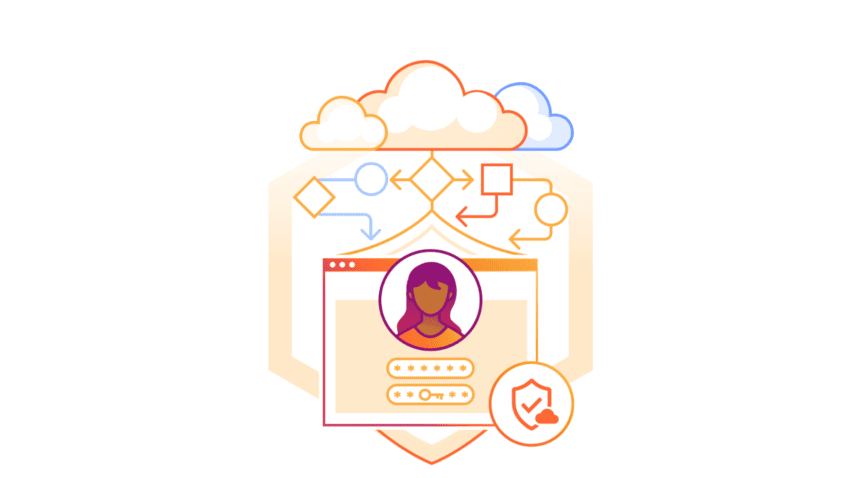
Cloudflare is adding automatic remediation policies to Cloudflare CASB, giving security teams a way to revoke risky file shares and trigger custom webhooks as soon as a finding is detected. The company says the new capability moves CASB beyond alerting and manual cleanup, letting customers define event-driven responses that run without human intervention.
Cloudflare CASB moves from visibility to action
When Cloudflare launched CASB, its cloud access security broker, the goal was straightforward: help teams understand the posture of their SaaS applications before misconfigurations turn into incidents. The platform uses a clientless integration model to surface issues continuously across users in an organization, including overshared files, dormant admin keys and tokens, and OAuth apps with overly broad permissions.
Cloudflare says automatic remediation policies are meant to address a long-standing weakness in SaaS Security Posture Management tools. In many cases, those tools warn administrators about a problem but do not resolve it. That creates a gap between detection and action that can stretch from hours to days, enough time for sensitive data to be downloaded, forwarded, or indexed.
What the new policies do
With the new CASB policies, security teams can define what should happen the moment a matching finding appears. The system can revoke a file share, send a webhook to another service, or do both. Cloudflare says the feature is intended to reduce the backlog of findings that can pile up when teams must manually review each alert.
That approach is especially relevant for organizations that allow exceptions to otherwise strict sharing rules. Cloudflare gave the example of companies that prohibit public file sharing but make room for marketing teams that need to collaborate externally. In that kind of environment, automation can revoke an unauthorized public share within minutes while still leaving approved exceptions intact.
From manual remediation to automated workflows
Earlier this year, Cloudflare introduced manual remediation actions in CASB, allowing teams to fix misconfigurations directly from the Cloudflare dashboard rather than logging into multiple SaaS portals. The new policies take that idea further by removing the need for a human to confirm each action.
Instead of waiting for someone to review a finding, CASB can now execute the customer’s configured response immediately after detection. Cloudflare describes the feature as a native automation engine built into Cloudflare One.
How Cloudflare CASB policies work
At a practical level, CASB policies are automated workflows tied to Cloudflare’s scanning service. When a new finding is detected, the configured policy checks whether it matches the customer’s rules and then triggers the selected action. That action can be a native remediation, a webhook dispatch, or both.
The company says this design gives teams flexibility. They can rely on Cloudflare’s built-in remediation actions or pass findings into existing internal systems, without building their own event-processing pipeline.
Built on Cloudflare’s developer platform
Cloudflare says the backend is built on its own developer platform. When the findings engine identifies an issue, it sends an orchestration message to a Cloudflare Queue. A Worker consumer then evaluates the policy configuration and, if there is a match, creates a job for the remediations pipeline.
That pipeline runs on Cloudflare Workflows, which the company says provides durable execution and automatic retry handling. If a process restarts, the job is preserved. If a third-party API returns a rate-limit error, the Workflow pauses for the required backoff period and retries rather than dropping the task.
Cloudflare says its target from detection to completed remediation is five minutes or less.
What admins can configure
To create a policy, customers go to the Cloudflare dashboard and define the scope of the rule. A policy can include a remediation action, a webhook action, or both. The setup flow asks administrators to choose several pieces of information:
- Vendor — select the SaaS provider and the integration or tenant the policy applies to.
- Integration — apply the policy to a specific integration or to all integrations for the selected vendor.
- Finding type — choose the CASB finding that should trigger the policy.
- Action — pick the available response for that finding type.
Cloudflare says first-party remediation actions are currently available for Microsoft and Google Workspace file and folder finding types. Those remediations may require upgraded permissions on the integrations to allow read and write access.
Webhooks expand the response path
In addition to direct remediation, CASB policies can send finding details to webhook destinations. Cloudflare lists Slack, Microsoft Teams, Jira, ServiceNow, Tines, and any custom HTTP endpoint as examples of supported destinations.
That makes the feature useful for organizations that want to route findings into existing security and operations workflows. A webhook can notify a SOC, feed a SOAR platform, or trigger an internal process that is already part of an incident response playbook.
An example of the data sent
Cloudflare included an example webhook payload for a policy dispatch event. The sample shows fields such as the finding ID, severity, dashboard URL, asset name, file path, access status, download count, and other metadata tied to the object under review.
In the example, the finding type is File publicly accessible with view access, the severity is High, and the asset name is q3_financial_report_preview.xlsx. The payload is designed to give downstream systems enough detail to understand what happened and decide what to do next.
Why the update matters for SSPM tools
Cloudflare’s pitch is that SSPM products should do more than collect findings. By tying detection directly to remediation, CASB policies aim to shorten the time between identifying a risk and eliminating it.
That matters most in noisy environments where a single misconfiguration can generate thousands of alerts. Rather than leaving administrators with a queue of similar issues, Cloudflare wants the system to handle repeated patterns automatically and keep the backlog clean.
Cloudflare’s broader automation push
The new feature also fits Cloudflare’s broader positioning around security automation inside Cloudflare One. By keeping the policy engine inside its own platform, the company can connect detection, routing, and execution without forcing customers to stitch together separate products.
For security teams, the result is a more aggressive model: detect, decide, and act in one step. Cloudflare says that should help organizations move from reactive cleanup to proactive control, especially when dealing with file sharing and SaaS configuration risks.
Source: Original report
Was this helpful?
Explore more: Application Audit & Review More Cybersecurity Tech News
Last Modified: September 11, 2026 at 10:34 pm
3 views