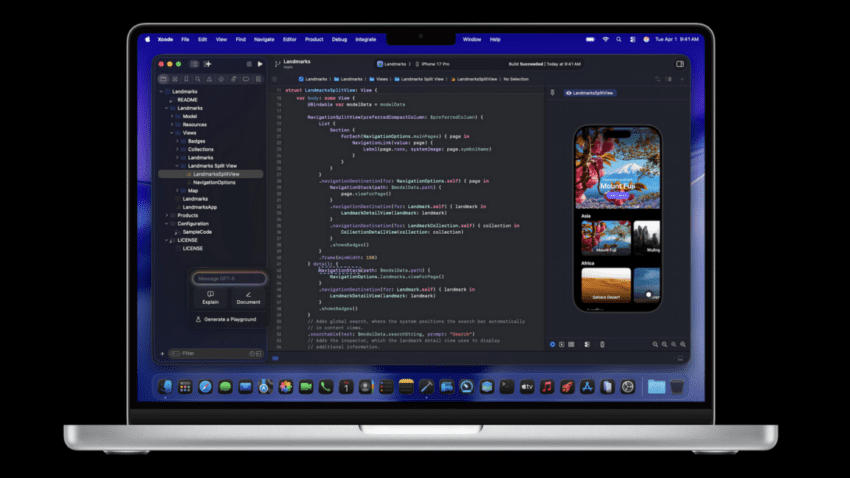
xcode 26 3 adds support for claude Apple’s latest release of Xcode 26.3 introduces significant enhancements, particularly in its support for advanced agentic coding tools.
xcode 26 3 adds support for claude
Overview of Xcode 26.3
Xcode, Apple’s integrated development environment (IDE), serves as a crucial platform for developers creating applications for iOS, macOS, watchOS, and tvOS. The recent update, Xcode 26.3, marks a pivotal moment in the evolution of this IDE by incorporating full-fledged agentic coding tools. This includes prominent AI models such as OpenAI’s Codex and Anthropic’s Claude Agent. The integration of these tools aims to streamline the development process, making it more efficient and user-friendly.
Key Features of Xcode 26.3
The standout feature of Xcode 26.3 is its support for agentic coding tools, which are designed to assist developers by automating various tasks. This is facilitated through a new side panel interface that allows users to assign tasks to these AI agents using prompts. Developers can also track the progress and changes made by the agents in real-time, enhancing collaboration between human developers and AI.
One of the core technologies enabling this integration is the Model Context Protocol (MCP). MCP is an open protocol that allows AI agents to interact with external tools and structured resources. By acting as an MCP endpoint, Xcode exposes numerous machine-invocable interfaces, granting AI tools like Codex and Claude Agent access to a wide array of IDE primitives. These include essential features such as file graphs, documentation searches, project settings, and more.
Implications of Agentic Tools in Development
The introduction of agentic tools within Xcode has far-reaching implications for software development. By leveraging AI capabilities, developers can significantly reduce the time spent on repetitive tasks, allowing them to focus on more complex and creative aspects of their projects. This shift not only enhances productivity but also fosters innovation, as developers can experiment with new ideas without being bogged down by mundane tasks.
Enhanced Collaboration
The side panel interface for task assignment is a game-changer in terms of collaboration. Developers can now work alongside AI agents, assigning specific tasks and monitoring their execution. This collaborative environment encourages a more dynamic workflow, where human intuition and creativity can complement the computational efficiency of AI. For instance, a developer might assign the AI to generate boilerplate code or conduct a thorough search of documentation, freeing them to concentrate on design and architecture.
Broader Accessibility
While Xcode 26.3 provides dedicated integration for OpenAI and Anthropic’s models, it also opens the door for other tools that support MCP. This flexibility means that developers can connect various AI tools to Xcode, expanding their options for automation and assistance. The ability to utilize locally running models further enhances this accessibility, allowing developers to tailor their environments to suit their specific needs.
Technical Aspects of MCP
The Model Context Protocol is a significant technical advancement that underpins the functionality of Xcode 26.3. MCP allows for seamless communication between AI agents and the IDE, enabling them to perform tasks that were previously challenging or impossible. By providing a standardized way for AI models to access IDE features, MCP enhances the overall usability of Xcode.
How MCP Works
MCP operates by defining a set of interfaces that AI agents can invoke. These interfaces allow agents to interact with various components of Xcode, such as:
- File Graph: This feature enables AI agents to understand the relationships between different files in a project, facilitating better code organization and navigation.
- Documentation Search: AI agents can quickly retrieve relevant documentation, making it easier for developers to find the information they need without leaving the IDE.
- Project Settings: Agents can modify project settings based on developer input, streamlining the configuration process.
This structured approach not only enhances the capabilities of AI agents but also ensures that they operate within the context of the developer’s project, leading to more relevant and accurate outputs.
Stakeholder Reactions
The introduction of agentic tools in Xcode 26.3 has garnered attention from various stakeholders within the tech community. Developers, industry analysts, and AI researchers have expressed a mix of excitement and caution regarding this new feature.
Developer Community
Many developers have welcomed the integration of AI tools, viewing it as a significant step forward in making software development more efficient. The ability to automate mundane tasks is particularly appealing, as it allows developers to focus on higher-level problem-solving and creativity. However, some developers have raised concerns about reliance on AI, emphasizing the importance of maintaining human oversight in the coding process.
Industry Analysts
Industry analysts have noted that the integration of AI tools into development environments like Xcode could signal a broader trend towards automation in software development. They argue that as AI continues to evolve, its role in coding will likely expand, potentially reshaping the landscape of the industry. Analysts also caution that while AI can enhance productivity, it may not replace the need for skilled developers who can provide critical thinking and creativity.
AI Researchers
AI researchers have expressed interest in the implications of MCP and its potential to facilitate more sophisticated interactions between AI and development tools. They see this as an opportunity to explore new avenues for AI-assisted development, pushing the boundaries of what is possible in software engineering. However, they also highlight the need for ongoing research to ensure that AI tools are used responsibly and ethically.
Future Directions
The release of Xcode 26.3 is just the beginning of what could be a transformative era in software development. As Apple continues to refine its IDE and expand the capabilities of agentic tools, developers can expect to see even more advanced features in future updates.
Potential Enhancements
Future iterations of Xcode could include:
- Improved Natural Language Processing: Enhancements in NLP could allow AI agents to better understand developer intent, leading to more accurate task execution.
- Greater Customization: Developers may have the ability to create custom AI models tailored to their specific workflows, further enhancing productivity.
- Integration with Other Tools: Expanding MCP support to include a wider range of development tools could create a more interconnected ecosystem, benefiting developers across various platforms.
Conclusion
The launch of Xcode 26.3 represents a significant milestone in the integration of AI into software development. By supporting advanced agentic tools through the Model Context Protocol, Apple is paving the way for a more efficient and collaborative development environment. As developers begin to harness the power of AI, the potential for innovation and productivity in software engineering is boundless. However, it is crucial to approach this new era with a balanced perspective, ensuring that human creativity and oversight remain at the forefront of the development process.
Source: Original report
Was this helpful?
Last Modified: February 4, 2026 at 9:42 am
0 views