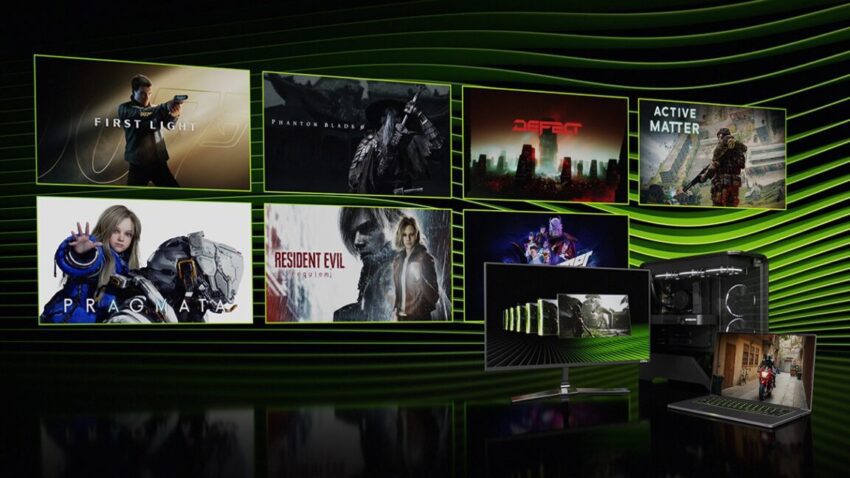
with geforce super gpus missing in action Nvidia has shifted its focus from hardware to software enhancements, marking a significant change in strategy as it navigates the current GPU landscape.
with geforce super gpus missing in action
Nvidia’s Absence at CES
For the first time in years, Nvidia did not unveil new GeForce graphics card models at the Consumer Electronics Show (CES). This absence is notable, especially considering the company’s historical prominence in the gaming hardware sector. CEO Jensen Huang’s keynote presentation, which typically features exciting product launches, was instead dominated by discussions surrounding Nvidia’s AI advancements. The 90-minute address, characterized by Huang’s expansive and somewhat unstructured style, left many in the gaming community wondering about the future of Nvidia’s hardware offerings.
Instead of introducing new GPUs, Nvidia opted to release a separate video later in the evening that contained the company’s gaming-related announcements. This decision underscores a strategic pivot towards enhancing existing products rather than launching new ones, reflecting the current market dynamics and Nvidia’s focus on leveraging its software capabilities.
Software Over Hardware: The New Direction
In lieu of new hardware, Nvidia’s announcements centered around software improvements, particularly in its Deep Learning Super Sampling (DLSS) technology. The most significant update is the introduction of DLSS 4.5, which brings a suite of new features aimed at enhancing the performance and quality of gaming experiences on existing hardware.
Understanding DLSS
DLSS is a technology that utilizes artificial intelligence to upscale lower-resolution images in real-time, allowing games to run at higher frame rates without sacrificing visual fidelity. This is particularly important for gamers who wish to experience high-quality graphics without the need for the latest and most powerful GPUs. The technology has evolved significantly since its inception, and the latest iteration, DLSS 4.5, promises to further improve image quality and performance.
Improvements in DLSS 4.5
One of the key advancements in DLSS 4.5 is the introduction of a new “second-generation transformer model.” This model has been trained on an expanded dataset, which Nvidia claims enhances its predictive capabilities when generating new pixels. Bryan Catanzaro, Nvidia’s Vice President of Applied Deep Learning Research, emphasized that this improvement is particularly beneficial for the Performance and Ultra Performance modes of DLSS. In these modes, the upscaler must make more educated guesses based on lower-resolution source images, and the enhanced model aims to reduce artifacts and improve overall image quality.
Benefits for Gamers
The implications of these advancements are significant for gamers. With the ongoing shortage of high-end GPUs, many players are unable to upgrade their hardware. By improving DLSS, Nvidia is providing a way for gamers to enhance their existing setups without the need for new graphics cards. This is particularly relevant as the gaming community continues to grapple with supply chain issues that have led to inflated prices and limited availability of GPUs.
Furthermore, the improvements in DLSS 4.5 may help bridge the gap between lower-end and higher-end gaming experiences. Gamers with mid-range GPUs can benefit from the enhanced upscaling technology, allowing them to enjoy modern titles with improved visuals and smoother performance. This democratization of gaming quality could lead to a broader audience for Nvidia’s software solutions.
Market Context and Implications
The decision to focus on software rather than hardware comes at a time when the GPU market is facing significant challenges. The global semiconductor shortage, exacerbated by the COVID-19 pandemic, has led to a scarcity of high-performance GPUs. As a result, many consumers are unable to purchase the latest models, and those who can often face exorbitant prices. In this context, Nvidia’s pivot towards software enhancements is a strategic move to maintain relevance and support its user base.
Moreover, the gaming industry is increasingly leaning towards software solutions that can optimize performance without requiring constant hardware upgrades. The rise of cloud gaming and subscription services has also shifted the focus from hardware ownership to software accessibility. Nvidia’s emphasis on DLSS and other software improvements aligns with this trend, positioning the company as a leader in both hardware and software innovation.
Stakeholder Reactions
The reaction from stakeholders has been mixed. Some industry analysts view Nvidia’s decision to focus on software as a pragmatic response to current market conditions. By enhancing existing products, Nvidia can continue to provide value to its customers while navigating the challenges of hardware production. Others, however, express concern that the lack of new hardware announcements may lead to a perception of stagnation within the company.
Gamers, too, have had varied responses. While many appreciate the improvements in DLSS and the potential for enhanced gaming experiences, there is a palpable desire for new hardware. The gaming community thrives on innovation, and the absence of new GPUs has left some feeling disillusioned. Nvidia will need to strike a balance between software and hardware advancements to maintain its leadership position in the market.
Looking Ahead
As Nvidia moves forward, the focus on software enhancements may pave the way for future innovations. The company has a track record of leveraging AI to improve gaming experiences, and the advancements in DLSS 4.5 could be just the beginning. Future updates may introduce even more sophisticated algorithms and features that further enhance image quality and performance.
Additionally, Nvidia’s commitment to software development may lead to collaborations with game developers to optimize their titles for DLSS. This partnership could result in a more seamless integration of AI-driven technologies in gaming, ultimately benefiting both Nvidia and the gaming community.
Conclusion
Nvidia’s decision to prioritize software improvements over new hardware at CES marks a significant shift in strategy. With the introduction of DLSS 4.5, the company aims to enhance the gaming experience for users who may be unable to upgrade their GPUs due to market constraints. While the absence of new GeForce models has raised questions about Nvidia’s hardware roadmap, the focus on software solutions demonstrates the company’s adaptability in a challenging environment. As the gaming landscape continues to evolve, Nvidia’s commitment to innovation—both in hardware and software—will be crucial for maintaining its competitive edge.
Source: Original report
Was this helpful?
Last Modified: January 7, 2026 at 3:38 pm
3 views