May’s science roundup from Ars Technica ranged from prehistoric copper clues in the Pyrenees to a new deep-sea octopus species, but one of the most charming findings was a reminder that domestic cats do not all react to the same plant with equal enthusiasm: in several experiments, they showed a stronger preference for silver vine than for catnip.
Prehistoric mining in the Pyrenees
High in the eastern Pyrenees, archaeologists excavating a prehistoric cave between 2021 and 2023 think they may have uncovered evidence of an ancient copper smelting site, alongside signs that the location was occupied more often than previously believed. The preliminary findings were reported in Frontiers in Environmental Archaeology.
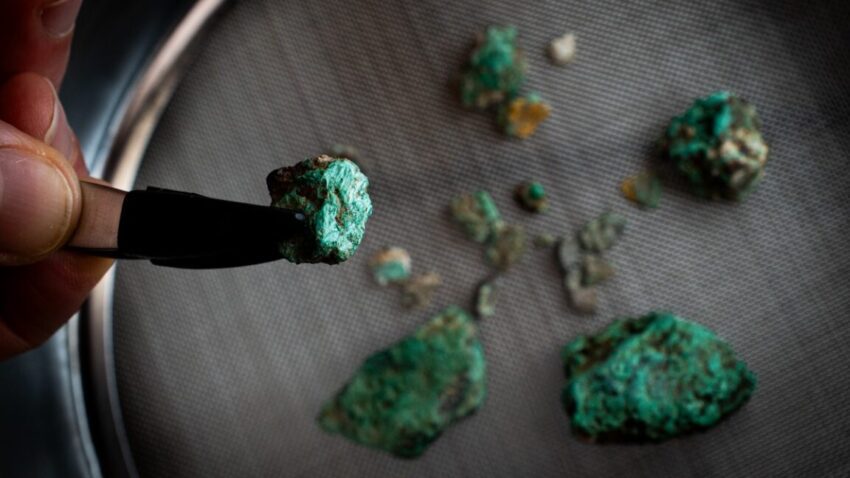
The most striking evidence came from 23 hearths found in the second and third layers of the excavation. They contained crushed green mineral fragments that had clearly been burned, while nearby materials showed no thermal damage. The team is still running tests to identify the material conclusively, but the fragments strongly resemble malachite, a copper-bearing mineral that can be heated to produce copper.
Most of the hearths date to between 4,000 and 5,500 years ago. Archaeologists also recovered two prehistoric pendants, a human finger bone, and a baby tooth from a child about 11 years old. Deeper layers could still reveal burials as work continues at the site.
Singing mice and a small wiring change
Singing mice from Costa Rica are known for their chirping call-and-response duets, and researchers had already identified the brain circuit behind the behavior in 2019. A new study from Cold Spring Harbor Laboratory suggests the trait did not require a major leap in brain complexity. Instead, according to research published in Nature, it appears to depend on only a few targeted changes to existing neural wiring.
The key advance came from a molecular barcoding method developed by Anthony Zador, which allowed the team to map thousands of individual neurons in singing mice and closely related species. The researchers found roughly triple the number of neurons linking the mouth-movement control region with both the hearing cortex and a midbrain structure involved in vocalizations.
The authors say similar wiring changes might someday allow scientists to make an ordinary lab mouse “sing.”
A tiny blue octopus from the deep
A second long-running story finally reached a conclusion after a 2015 deep-sea expedition in the Galápagos Islands, aboard the E/V Nautilus. Researchers spotted a small, distinctly blue octopus about 5,800 feet, or 1,773 meters, below the surface and collected it for study. Charles Darwin Foundation scientists have now identified it as a new species, reported in Zootaxa.
The specimen, small enough to fit in a person’s palm, had been preserved in storage since collection. Because it was the only known example, scientists avoided cutting it open and instead used mini-CT scans to create a 3D virtual dissection, including soft tissues. The scans showed short arms, few suckers, no ink sac, very smooth skin, and a large rachidian tooth. The species has been named Microeledone galapagensis.
Why not all slapsticks sound the same
Foley artists have used slapsticks for decades to imitate the crack of a whip, including in Leroy Anderson’s “Sleigh Ride.” But Daniel Ludwigsen of Kettering University found that commercially sold slapsticks do not all behave alike. He presented preliminary results at the Acoustical Society of America meeting in Philadelphia.
Ludwigsen tested five slapsticks in an anechoic environment and played each five times to minimize room effects. All of them showed a high-frequency roll-off and a broad peak between 1,000 and 3,000 Hz, but they differed in low-frequency behavior. The two smallest models, which could be played with one hand thanks to a spring hinge, performed best in the high-frequency range. Longer models, including the “Sleighride Special,” were stronger in the low-frequency range.
The tone also changed depending on how hard the sticks were struck. Preliminary testing of the Pearl slapstick suggested fairly uniform directionality across frequencies, though Ludwigsen said the work is still incomplete.
The hidden math of abstract art
A separate study in PLoS Computational Biology tackled an enduring question: why do some abstract artworks resonate so strongly? Mathematicians proposed a hidden “golden rule” that may help explain why viewers are drawn to a Jackson Pollock while other works leave them cold.
The researchers used a new analytical method based on persistent homology, a computational topology technique that tracks structure across multiple scales. They applied it to abstract paintings by well-known artists and to AI-generated “pseudo-art,” and the method could distinguish the two sets clearly.
Further analysis found that works by Pollock, Wassily Kandinsky, and Mark Rothko shared a similar balance of visual elements at the edges, described through Alexander duality. Eye-tracking and brain-activity experiments suggested that real art produced more stable integrative processing than pseudo-art, and that the observed eye movements aligned with the topological features identified in the analysis.
Political polarization as a phase transition
Researchers at the Complexity Science Hub (CSH) took a physics-based look at election spending and polarization, concluding in Physical Review Letters that political polarization behaves like a phase transition with a critical campaign spending threshold.
The team analyzed 6,357 House races across 435 congressional districts and 21 election cycles from 1980 to 2020. They found a district-level tipping point of $1.8 million. Below that level, community interactions play a larger role in determining outcomes. If only one side spends more than the threshold, that campaign gains a strong advantage. But if both campaigns spend above it, the model suggests that both social influence and high spending become less important.
In that regime, outcomes tend to settle near 50:50, while polarization rises. The researchers also found a real incumbency advantage in the intermediate spending range: a challenger would need to spend about $140,000 to defeat an incumbent even if the incumbent spent nothing. The team hopes to extend the analysis to multi-party systems in European democracies.
Why cats may prefer silver vine to catnip
The most familiar highlight for pet owners may be the cat study published in the Journal of Chemical Ecology. Domestic cats are often said to love catnip, but Japanese researchers found that many cats react even more strongly to silver vine, also known as matatabi.
The plants can trigger the classic feline response: rubbing faces and bodies against them, rolling on the ground, licking the leaves, and chewing them. Yet in one garden experiment, the team placed fresh silver vine branches and leaves near living catnip plants and watched six free-roaming cats over 10 nights. Five cats responded to silver vine, while none reacted to the fresh catnip.
When the researchers repeated the experiment using extracts, the pattern held. They then tested 22 captive purebred cats and found that 15 chose silver vine, three chose catnip, one responded to both, and three ignored both. That preference is notable because the catnip extract contained 170 times more bioactive compounds than the silver vine extract.
The authors suggest that living catnip may smell too intense or overwhelming, which could help explain why catnip is often sold dried. They also pointed to a historical note from 1768, when botanist Philip Miller wrote in The Gardeners Dictionary that cats liked catnip “when it is withered,” but often ignored it when it grew in a cluster.
Source: Original report
Was this helpful?
Explore more: More General Technology Tech News Blog
Last Modified: July 7, 2026 at 9:29 pm
6 views