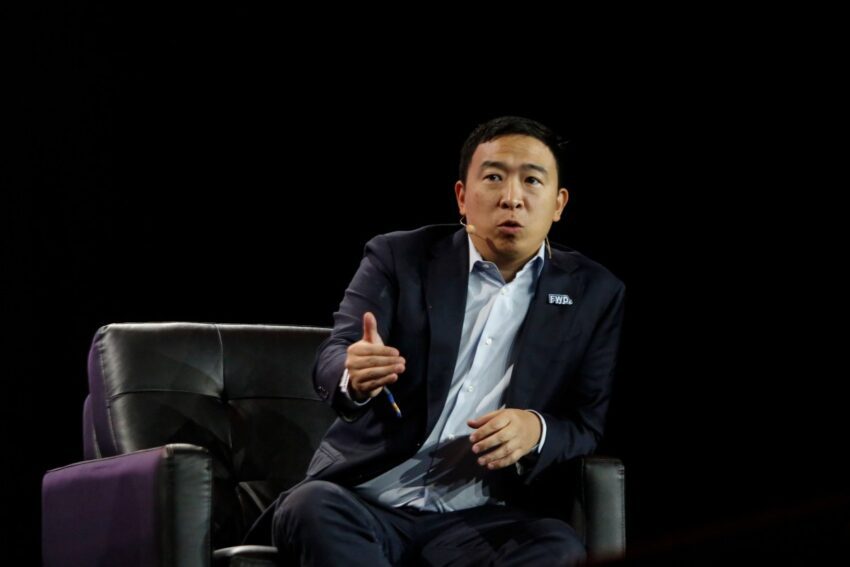
why andrew yang is building instead of Andrew Yang is taking a proactive approach to address the challenges posed by automation and artificial intelligence, rather than waiting for governmental solutions.
why andrew yang is building instead of
Background on Andrew Yang’s Vision
Andrew Yang, a former presidential candidate, gained significant attention during the 2020 election cycle for his forward-thinking ideas regarding the impact of technology on the economy. His campaign was built on the premise that automation and artificial intelligence (AI) would not only displace jobs but also exacerbate wealth inequality. Yang argued that these technological advancements could lead to a future where a small elite controls the majority of wealth, leaving many without stable employment or means of support.
At the time, concepts such as Universal Basic Income (UBI) were often dismissed as radical or impractical. However, Yang’s advocacy for UBI—where every citizen receives a regular, unconditional sum of money—was aimed at providing a safety net for individuals affected by job displacement. His ideas resonated with many, particularly as the pandemic accelerated discussions about economic security and the role of technology in society.
The Shift in Perception
Since Yang’s campaign, the dialogue surrounding automation and AI has evolved significantly. Influential figures in technology and politics, including Dario Amodei, Sam Altman, and Bernie Sanders, have begun to echo similar sentiments regarding the need for systemic change. This shift indicates a growing recognition of the potential consequences of unchecked technological advancement.
Amodei, co-founder of Anthropic and a prominent AI researcher, has voiced concerns about the ethical implications of AI development. Altman, CEO of OpenAI, has also highlighted the transformative potential of AI while advocating for responsible governance and regulation. Sanders, a long-time advocate for economic equality, has increasingly acknowledged the need for policies that address the challenges posed by automation.
Yang’s Entrepreneurial Approach
As an entrepreneur at heart, Yang has chosen to take action rather than wait for Washington to catch up with these pressing issues. He has launched initiatives aimed at building solutions that address the economic challenges posed by technology. Yang’s focus on entrepreneurship reflects his belief that innovation can be a powerful tool for social change.
One of Yang’s notable ventures is the establishment of the non-profit organization, Humanity Forward. This organization aims to promote UBI and other policies that support economic security. By leveraging grassroots support and engaging with communities, Humanity Forward seeks to create a movement that advocates for systemic change.
Humanity Forward and Its Mission
Humanity Forward’s mission is to advance policies that provide economic security for all individuals, particularly in the face of technological disruption. The organization conducts research, supports pilot programs, and engages in advocacy efforts to promote UBI and related initiatives. By focusing on practical solutions, Yang aims to demonstrate the feasibility of UBI and its potential to improve lives.
In addition to UBI, Humanity Forward explores other innovative solutions to address economic inequality. These include initiatives that promote job training, support for small businesses, and investments in technology that enhance productivity while ensuring fair compensation for workers. Yang’s approach emphasizes the importance of collaboration between the public and private sectors to create a more equitable economy.
The Broader Implications of Automation
The implications of automation and AI extend beyond individual job displacement; they affect entire industries and societal structures. As technology continues to evolve, the nature of work is changing, leading to a demand for new skills and adaptability. Many workers find themselves in precarious positions, with gig economy jobs lacking the stability and benefits of traditional employment.
Yang’s advocacy for UBI is rooted in the belief that a financial safety net can empower individuals to pursue education, entrepreneurship, and other opportunities without the constant fear of financial instability. By providing a basic income, society can encourage creativity and innovation, allowing individuals to contribute to the economy in diverse ways.
Stakeholder Reactions
The response to Yang’s ideas has been mixed. Supporters argue that UBI and similar policies are essential for addressing the challenges posed by automation. They contend that as technology continues to advance, traditional job markets will not be able to absorb the displaced workforce. Critics, however, raise concerns about the feasibility of implementing UBI on a large scale, questioning funding sources and potential impacts on work incentives.
Economists and policymakers are also divided on the issue. Some advocate for a gradual implementation of UBI, suggesting pilot programs to assess its effectiveness. Others argue for alternative approaches, such as expanding existing social safety nets or investing in education and job training programs. The debate continues as stakeholders grapple with the complexities of a rapidly changing economic landscape.
Yang’s Future Endeavors
Looking ahead, Yang’s focus remains on building solutions that address the challenges posed by automation and AI. His entrepreneurial spirit drives him to explore innovative approaches that can create a more equitable society. By engaging with communities and advocating for policies that prioritize economic security, Yang aims to foster a movement that transcends political divisions.
In addition to his work with Humanity Forward, Yang has also expressed interest in exploring opportunities within the tech industry. His understanding of both technology and policy positions him uniquely to bridge the gap between these two realms. By collaborating with tech leaders and policymakers, Yang hopes to influence the direction of AI development and ensure that it aligns with societal values.
The Role of Technology in Shaping the Future
The role of technology in shaping the future cannot be understated. As automation and AI continue to evolve, the need for thoughtful governance and ethical considerations becomes increasingly critical. Yang’s emphasis on proactive solutions reflects a broader recognition that technology should serve the public good, rather than exacerbate existing inequalities.
Moreover, the conversation around automation and AI is not limited to economic implications. It also encompasses ethical considerations, such as privacy, security, and the potential for bias in AI algorithms. Yang’s advocacy for responsible AI development aligns with a growing movement among technologists and policymakers to prioritize ethical standards in technology.
Conclusion
Andrew Yang’s journey from presidential candidate to entrepreneur illustrates a commitment to addressing the challenges posed by automation and AI. By advocating for policies like Universal Basic Income and launching initiatives through Humanity Forward, Yang seeks to create a more equitable future. As the dialogue surrounding technology continues to evolve, Yang’s proactive approach serves as a model for how individuals can take action in the face of systemic challenges.
As society grapples with the implications of technological advancement, the need for innovative solutions and collaborative efforts becomes paramount. Yang’s vision for a future where economic security is accessible to all reflects a growing understanding that the intersection of technology and policy will shape the trajectory of our society.
Source: Original report
Was this helpful?
Explore more: AI Automation Services More AI & Automation Tech News
Last Modified: June 11, 2026 at 4:43 am
12 views