video game company stock prices dip after Stock prices for several prominent video game companies experienced significant declines following Google’s announcement of its new AI world-generation tool, Project Genie.
video game company stock prices dip after
Overview of Project Genie
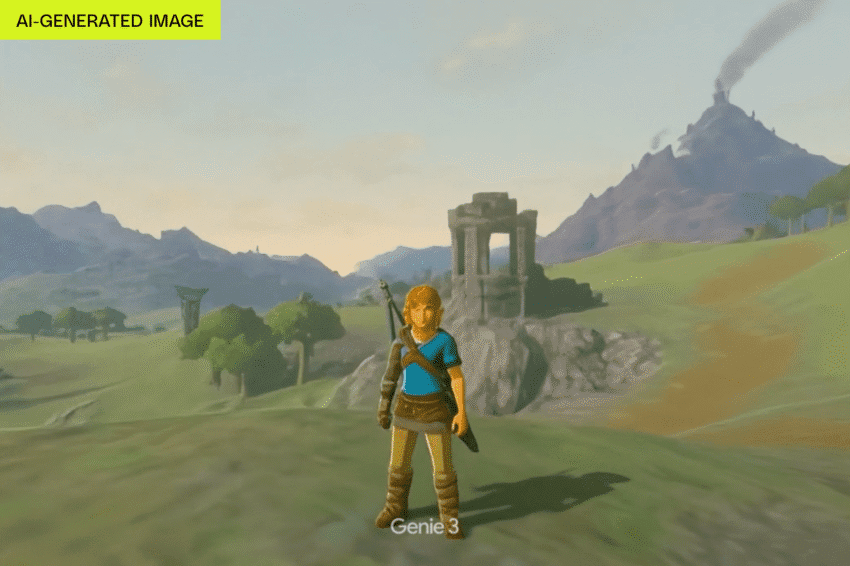
On Thursday, Google unveiled Project Genie, an innovative tool designed to allow users to prompt artificial intelligence to generate interactive experiences. This development is part of a broader trend in the gaming industry, where AI is increasingly being integrated into game design and development processes. Project Genie aims to streamline the creation of immersive environments, enabling developers to focus on storytelling and gameplay mechanics while the AI handles the more labor-intensive aspects of world-building.
Features of Project Genie
Project Genie incorporates advanced machine learning algorithms that can interpret user prompts and generate detailed game worlds in real-time. This capability not only accelerates the development timeline but also democratizes game creation, allowing individuals with minimal coding experience to create complex interactive experiences. The tool is expected to support various platforms, making it accessible to a wide range of developers and hobbyists.
Market Reaction
The announcement of Project Genie had immediate repercussions in the stock market. Major video game companies, including Take-Two Interactive, Roblox, and Unity, saw their stock prices drop significantly on Friday. According to Reuters, Take-Two’s stock closed at $220.30, reflecting a decline of 7.93 percent from the previous day. Roblox’s stock fell to $65.76, down 13.17 percent, while Unity experienced the most substantial drop, closing at $29.10, a decrease of 24.22 percent.
Implications for the Gaming Industry
The sharp decline in stock prices indicates a growing concern among investors regarding the potential impact of AI tools like Project Genie on traditional game development practices. As AI becomes more capable of generating content, there are fears that established companies may struggle to compete with new entrants who can leverage these technologies to create games more efficiently and at a lower cost.
Stakeholder Reactions
Reactions from industry stakeholders have been mixed. Some developers view Project Genie as a valuable tool that could enhance creativity and reduce the time required to bring new games to market. Others, however, express concern that reliance on AI-generated content could lead to a homogenization of gaming experiences, where unique artistic visions are overshadowed by algorithm-driven designs.
Concerns Over AI in Creative Industries
The introduction of AI tools in creative fields has sparked a broader debate about the implications of artificial intelligence on artistic integrity and originality. Many artists and creators have voiced their concerns regarding the use of AI in generating content, arguing that it often relies on existing works to train its models. This raises ethical questions about ownership and the potential for AI to infringe on the rights of original creators.
Environmental Impact
In addition to concerns about artistic integrity, there are growing worries about the environmental impact of AI technologies. The energy consumption associated with training AI models has been criticized for its significant carbon footprint. As the gaming industry increasingly adopts AI tools, it may face scrutiny over its environmental responsibilities and the sustainability of its practices.
Comparative Analysis of AI Tools
Project Genie is not the first AI tool to enter the gaming space. Other platforms have emerged, offering various functionalities aimed at enhancing game development. However, the unique capabilities of Project Genie, particularly its real-time world generation, set it apart from existing solutions. This competitive edge may further exacerbate the challenges faced by traditional game developers.
Potential for Collaboration
Despite the challenges posed by AI tools, there is potential for collaboration between traditional developers and AI technologies. By integrating AI into their workflows, developers can enhance their creative processes and explore new avenues for storytelling and gameplay. This collaborative approach may lead to innovative game designs that blend human creativity with the efficiency of AI.
Future of Game Development
The future of game development is likely to be shaped by the ongoing integration of AI technologies. As tools like Project Genie become more prevalent, developers will need to adapt to a rapidly changing landscape. This may involve rethinking traditional development methodologies and embracing new paradigms that prioritize collaboration between human creators and AI systems.
Long-Term Industry Trends
In the long term, the gaming industry may witness a shift in how games are conceptualized and developed. As AI tools become more sophisticated, they could enable the creation of highly personalized gaming experiences tailored to individual player preferences. This could lead to a more dynamic gaming environment where players have greater agency in shaping their experiences.
Conclusion
The announcement of Google’s Project Genie has undoubtedly sent shockwaves through the gaming industry, as evidenced by the significant stock price declines of major companies. While the tool presents exciting opportunities for innovation and efficiency in game development, it also raises important questions about the future of creativity, ownership, and sustainability in the industry. As stakeholders navigate these challenges, the balance between leveraging AI technologies and preserving the artistic integrity of game design will be crucial in shaping the future of gaming.
Source: Original report
Was this helpful?
Last Modified: January 31, 2026 at 4:43 am
2 views