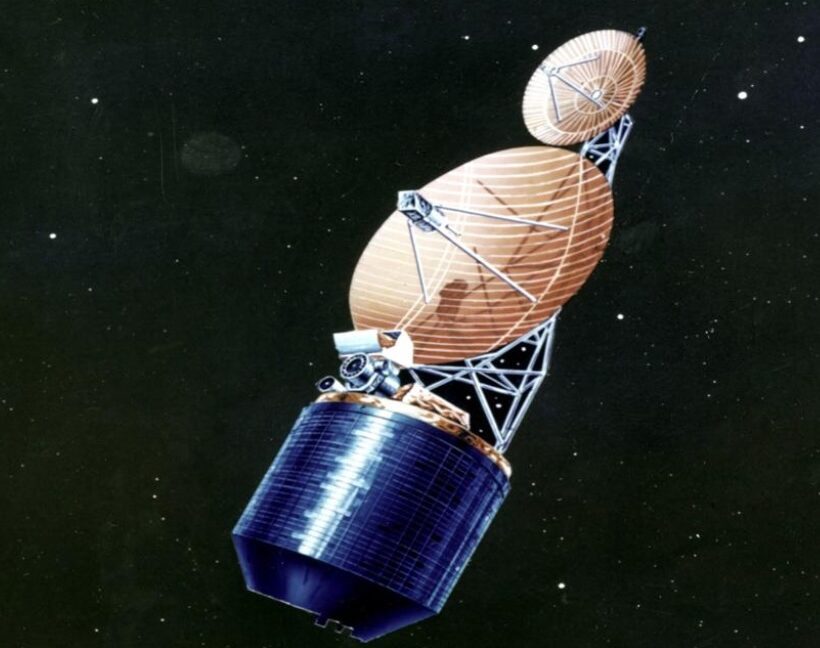
us spy satellite agency declassifies high-flying cold The National Reconnaissance Office (NRO) has recently declassified details about a Cold War-era program that played a critical role in monitoring Soviet military communications.
us spy satellite agency declassifies high-flying cold
Overview of the Jumpseat Program
The Jumpseat program, a significant initiative by the NRO, was designed to intercept and analyze military communication signals from the Soviet Union during a tense period in global politics. This program, which has now been officially acknowledged by the NRO, represents a pivotal moment in the history of U.S. intelligence operations. While the existence of Jumpseat was previously known through various leaks and media reports, the NRO’s recent disclosure provides a more comprehensive understanding of its purpose, development, and the technology involved.
Historical Context
During the Cold War, the United States and the Soviet Union were engaged in a prolonged geopolitical struggle characterized by espionage, military buildup, and technological competition. The need for reliable intelligence was paramount, as both nations sought to gain an upper hand in military capabilities and strategic planning. In this context, the Jumpseat program emerged as a crucial tool for the U.S. intelligence community.
The Cold War era was marked by a series of conflicts and crises, including the Cuban Missile Crisis and the Vietnam War, which underscored the importance of understanding adversarial military capabilities and intentions. The U.S. government invested heavily in various intelligence-gathering methods, including satellite reconnaissance, to monitor Soviet activities and ensure national security.
Technical Specifications of Jumpseat
The NRO has described Jumpseat as the United States’ first-generation, highly elliptical orbit (HEO) signals-collection satellite. This designation highlights the innovative nature of the program, as it utilized advanced technology for its time. The satellites were designed to operate in a highly elliptical orbit, allowing them to spend extended periods over specific geographic areas, thereby maximizing their ability to collect signals intelligence (SIGINT).
In practical terms, the HEO design allowed the satellites to remain over the Soviet Union for extended durations, providing a unique vantage point for intercepting military communications. The satellites were equipped with sophisticated sensors capable of detecting and analyzing a wide range of signals, including radio transmissions and radar emissions. This capability was essential for understanding Soviet military operations and intentions.
Significance of the Declassification
The declassification of the Jumpseat program is significant for several reasons. Firstly, it sheds light on the technological advancements made during the Cold War and the lengths to which the U.S. government went to secure intelligence. The acknowledgment of such programs also serves to highlight the importance of signals intelligence in shaping military strategy and policy.
Implications for Modern Intelligence Operations
The insights gained from the Jumpseat program have implications for contemporary intelligence operations. As technology has evolved, so too have the methods of gathering and analyzing intelligence. Modern satellites are equipped with even more advanced capabilities, including high-resolution imaging and real-time data transmission. However, the fundamental principles of signals intelligence remain relevant.
Today, the U.S. intelligence community continues to rely on a combination of satellite reconnaissance, cyber intelligence, and human intelligence to monitor global threats. The lessons learned from programs like Jumpseat inform current practices and strategies, emphasizing the importance of adaptability and innovation in the face of evolving challenges.
Stakeholder Reactions
The declassification of the Jumpseat program has elicited a range of reactions from various stakeholders, including intelligence analysts, historians, and policymakers. Many experts view the disclosure as a necessary step in promoting transparency within the intelligence community. By acknowledging past programs, the NRO contributes to a more comprehensive understanding of U.S. intelligence history and its impact on national security.
Historians specializing in Cold War studies have expressed interest in the implications of the Jumpseat program for understanding the broader context of U.S.-Soviet relations. The program serves as a case study in the interplay between technology and geopolitics, illustrating how intelligence operations can shape international dynamics.
Technological Evolution and Future Prospects
The Jumpseat program represents a pivotal moment in the evolution of satellite technology and signals intelligence. As the NRO continues to declassify information about its historical programs, it provides valuable insights into the technological advancements that have shaped modern intelligence operations.
Lessons from the Past
One of the key lessons from the Jumpseat program is the importance of adaptability in intelligence operations. The Cold War was characterized by rapid technological advancements, and the ability to leverage new technologies for intelligence gathering was crucial. This lesson remains relevant today, as the intelligence community faces challenges posed by emerging technologies such as artificial intelligence, machine learning, and cyber warfare.
Moreover, the Jumpseat program underscores the significance of collaboration between various branches of the intelligence community. The integration of signals intelligence with other forms of intelligence, such as imagery and human intelligence, enhances the overall effectiveness of intelligence operations. This collaborative approach is essential for addressing complex global threats in the modern era.
Future of Signals Intelligence
As the landscape of global security continues to evolve, the role of signals intelligence will remain critical. The NRO’s declassification of the Jumpseat program serves as a reminder of the importance of historical context in shaping current and future intelligence strategies. The insights gained from past programs can inform the development of new technologies and methodologies that enhance the effectiveness of intelligence operations.
Looking ahead, the integration of advanced technologies such as artificial intelligence and machine learning into signals intelligence operations will likely revolutionize the field. These technologies have the potential to enhance data analysis capabilities, allowing intelligence analysts to process vast amounts of information more efficiently and effectively.
Conclusion
The declassification of the Jumpseat program by the National Reconnaissance Office marks a significant milestone in the history of U.S. intelligence operations. By providing insights into the technological advancements and strategic considerations of the Cold War era, the NRO contributes to a deeper understanding of the role of signals intelligence in national security. As the intelligence community continues to adapt to new challenges, the lessons learned from programs like Jumpseat will remain relevant in shaping the future of intelligence operations.
Source: Original report
Was this helpful?
Last Modified: January 31, 2026 at 12:36 pm
0 views