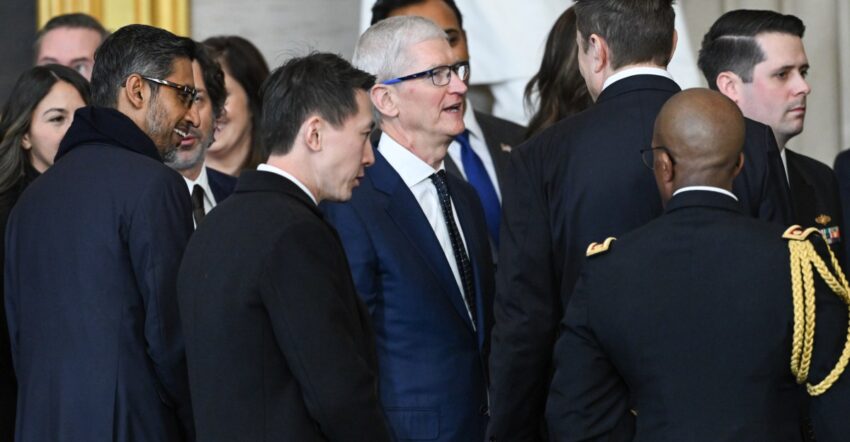
Tim Cook and Sundar Pichai have faced significant criticism for their inaction regarding the controversial content proliferating on the platform X, previously known as Twitter.
The Context of the Controversy
In recent months, X has become a platform for the misuse of deepfake technology, particularly in the creation of explicit images involving women and children. This alarming trend has raised ethical concerns and prompted discussions about the responsibilities of tech companies in moderating content on their platforms. Despite the clear violation of community standards and the potential harm to vulnerable individuals, X remains available on both the Apple App Store and Google Play Store.
The absence of action from Apple and Google has led to accusations that their CEOs, Tim Cook and Sundar Pichai, are failing to uphold their companies’ values. Critics argue that the tech giants are prioritizing business interests over ethical responsibilities, particularly in the face of pressure from influential figures like Elon Musk, who now owns X.
Understanding the Guidelines
Apple and Google have established guidelines for app developers that are meant to ensure a safe and respectful environment for users. For instance, the Apple App Store developer guidelines state that “Apps should not include content that is offensive, insensitive, upsetting, intended to disgust, in exceptionally poor taste, or just plain creepy.” This guideline raises the question: how does X, a platform that has allowed the dissemination of harmful deepfake content, continue to operate without repercussions?
Many users and observers have pointed out the hypocrisy in allowing X to remain on these platforms while other apps have been removed for far less severe infractions. This inconsistency has led to accusations that the leadership at Apple and Google is more concerned about maintaining their business relationships than enforcing their own guidelines.
The Implications of Inaction
The decision to keep X available on their platforms has broader implications beyond just the companies involved. It raises questions about the ethical responsibilities of tech giants in the digital age. As platforms that wield significant influence over public discourse, Apple and Google have a duty to protect their users from harmful content. Their inaction could be seen as tacit approval of the harmful practices that have emerged on X.
Furthermore, the failure to act against X could set a dangerous precedent for other tech companies. If major players like Apple and Google are unwilling to take a stand against harmful content, it may embolden other platforms to adopt similar lax policies. This could lead to a more permissive environment for the spread of misinformation, harassment, and exploitation.
Stakeholder Reactions
The reactions from various stakeholders have been mixed. Some users of X have expressed frustration and disappointment with Apple and Google, feeling that their silence on the issue reflects a lack of commitment to user safety. Advocacy groups focused on child protection and digital rights have also voiced their concerns, urging tech companies to take a more proactive stance against harmful content.
On the other hand, some industry analysts argue that the economic implications of removing X from app stores could be significant. With millions of users, X represents a substantial market for both Apple and Google. The potential loss of revenue from advertising and app purchases may be a factor in their reluctance to take action.
The Role of Leadership
Leadership plays a crucial role in shaping the values and priorities of a company. Tim Cook and Sundar Pichai have both been lauded for their commitment to innovation and user privacy in the past. However, their recent inaction raises questions about their leadership styles and the principles they are willing to uphold in the face of adversity.
Cook, who has often positioned Apple as a champion of user privacy and ethical technology, now faces scrutiny for allowing a platform that undermines those values to thrive on the App Store. Similarly, Pichai, who has emphasized the importance of responsible AI and content moderation, is being criticized for not taking a stand against the harmful practices emerging on X.
The Future of Content Moderation
The current situation highlights the challenges of content moderation in an era where technology evolves rapidly. As deepfake technology becomes more accessible, the potential for misuse increases. Tech companies must navigate the fine line between promoting innovation and protecting users from harm.
Moving forward, it is essential for Apple, Google, and other tech giants to establish clear policies and take decisive action against platforms that violate their guidelines. This may involve reevaluating their partnerships and making difficult decisions to uphold their values. Failure to do so could result in a loss of trust from users and stakeholders alike.
Conclusion
The ongoing controversy surrounding X and its content moderation practices serves as a critical reminder of the responsibilities that come with technological advancement. As leaders in the tech industry, Tim Cook and Sundar Pichai must reflect on their roles and the implications of their decisions. The choices they make today will shape the future of content moderation and the ethical landscape of the digital world.
In an era where the line between innovation and exploitation is increasingly blurred, the leadership of Apple and Google must rise to the occasion and prioritize user safety over profit. The time for action is now, and the world is watching.
Source: Original report
Was this helpful?
Last Modified: January 10, 2026 at 11:45 am
10 views