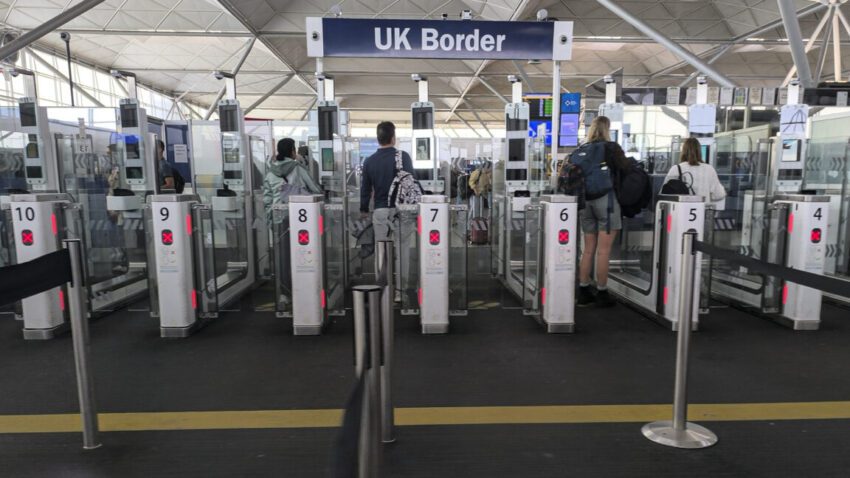
the uk will scan asylum-seekers faces for The UK government is set to implement facial age estimation technology for asylum seekers, a move that raises significant ethical and practical concerns regarding its accuracy and implications for vulnerable populations.
the uk will scan asylum-seekers faces for
The Rise of Age Verification Technologies
Age verification has become a prominent issue across the globe, with various jurisdictions implementing measures to ensure that individuals accessing certain online content are of appropriate age. This trend has manifested in different forms, from social media bans in Australia to restrictions on adult content in numerous U.S. states. As a result, proving one’s age has increasingly become a routine requirement for many internet users.
However, the advent of age verification technologies is not limited to the digital realm. The UK government’s upcoming initiative to employ facial age estimation (FAE) technology marks a significant shift toward the use of artificial intelligence (AI) in offline settings. This development is particularly concerning given the potential life-altering consequences for individuals whose ages are inaccurately predicted by AI systems.
Facial Age Estimation Technology Explained
Facial age estimation technology utilizes algorithms to analyze facial features and estimate a person’s age. This process typically involves machine learning models trained on large datasets of faces, allowing the AI to recognize patterns associated with different age groups. While the technology has seen advancements, its reliability remains a contentious issue, especially in high-stakes scenarios such as determining the age of asylum seekers.
The UK Government’s Plan
Beginning in 2025, the UK government plans to deploy FAE technology at its borders to assess the ages of asylum seekers. Many individuals arriving in the UK lack documentation that verifies their age, creating a significant challenge for border officials. The government’s rationale for implementing FAE is to streamline the age verification process and ensure that minors receive the protections they are entitled to under UK law.
However, the implications of misclassifying children as adults are severe. If a minor is incorrectly identified as an adult, they may be stripped of essential legal protections, potentially leading to their placement in adult-only detention centers. Such a scenario not only jeopardizes the safety and well-being of vulnerable individuals but also raises ethical questions about the use of AI in sensitive situations.
Concerns Over Accuracy and Bias
Investigations into the efficacy of FAE technology have revealed troubling findings. A collaborative investigation by WIRED and Lighthouse Reports, in conjunction with The Independent, uncovered an internal UK government report that details the testing of various FAE systems. The report indicates that these systems frequently misidentify children as adults, raising significant concerns about their reliability.
Moreover, the investigation highlights the presence of serious bias issues within the technology. The algorithms used in FAE systems often struggle to accurately assess the ages of individuals from diverse backgrounds, particularly those from minority ethnic groups. This bias can lead to disproportionate misclassifications, further exacerbating the challenges faced by already vulnerable populations.
Statistical Insights
According to data from the UK Home Office, the largest group of migrants subject to age assessments in 2025 will be those seeking asylum. This demographic is particularly at risk of being misclassified due to the inherent limitations of FAE technology. The internal report suggests that the systems tested have an accuracy rate that falls short of what is necessary for such critical applications.
For instance, one study cited in the report indicated that the FAE technology misclassified minors as adults in over 30% of cases. Such a high error rate is alarming, especially when considering the potential consequences for individuals who may be wrongly categorized. The stakes are particularly high in the context of asylum seekers, where accurate age assessment is crucial for ensuring appropriate legal protections.
Ethical Implications
The deployment of FAE technology raises profound ethical questions. The use of AI to make determinations about an individual’s age, particularly in high-stakes situations, necessitates a careful examination of the moral implications involved. The potential for harm is significant, especially when vulnerable populations are involved.
Critics argue that relying on flawed technology to make critical decisions about people’s lives undermines the principles of justice and fairness. The prospect of misclassifying children as adults not only exposes them to greater risks but also erodes trust in the systems designed to protect them. Furthermore, the ethical ramifications extend beyond individual cases, raising broader questions about the role of technology in society and the responsibilities of governments in its implementation.
Stakeholder Reactions
The announcement of the UK government’s plan has elicited a range of responses from various stakeholders, including human rights organizations, legal experts, and technology advocates. Many have expressed deep concern over the potential misuse of FAE technology and its implications for asylum seekers.
Human rights groups have been particularly vocal in their opposition, arguing that the use of flawed technology to assess the ages of vulnerable individuals is inherently unjust. They emphasize the need for more reliable methods of age verification that do not rely on potentially biased algorithms. Legal experts have echoed these sentiments, highlighting the importance of ensuring that asylum seekers receive the protections they are entitled to under international law.
Alternatives to Facial Age Estimation
Given the significant concerns surrounding FAE technology, many advocates are calling for alternative approaches to age verification for asylum seekers. Some suggest that more traditional methods, such as interviews or assessments conducted by trained professionals, may provide a more accurate and humane means of determining age.
Additionally, there is a growing consensus that any technology used in such sensitive contexts should undergo rigorous testing and validation to ensure its reliability. This includes not only assessing the accuracy of the algorithms but also evaluating their potential biases and impacts on different demographic groups.
The Future of Age Verification Technologies
The broader implications of the UK government’s decision to implement FAE technology extend beyond its immediate application to asylum seekers. As age verification continues to gain traction in various sectors, the challenges associated with accuracy and bias will likely persist. Policymakers must grapple with the ethical dimensions of deploying AI technologies in sensitive contexts, particularly when vulnerable populations are involved.
As the conversation around age verification evolves, it is crucial for stakeholders to engage in meaningful dialogue about the potential risks and benefits of such technologies. This includes considering the perspectives of those directly affected, as well as the broader societal implications of relying on AI to make critical determinations about individuals’ lives.
Conclusion
The UK government’s plan to use facial age estimation technology for asylum seekers represents a significant development in the intersection of technology and public policy. While the intention may be to streamline age verification processes, the potential for harm and misclassification raises serious ethical and practical concerns. As the implementation date approaches, it is imperative for policymakers to consider the implications of their decisions and to prioritize the protection of vulnerable individuals in the asylum process.
Source: Original report
Was this helpful?
Explore more: AI Automation Services More AI & Automation Tech News
Last Modified: June 21, 2026 at 4:35 am
14 views