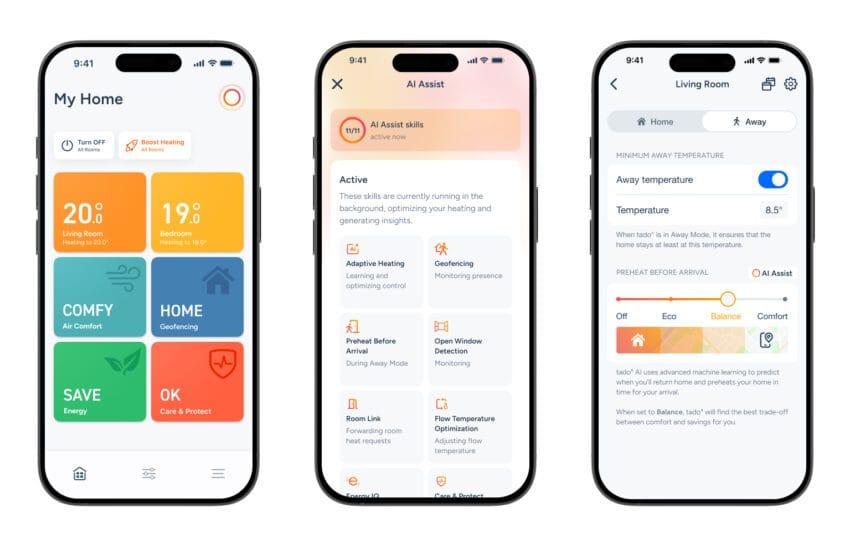
tado s new ai features will adaptively Tado has unveiled new AI-powered features designed to enhance the efficiency of home heating systems, marking a significant update to its existing Auto Assist service.
tado s new ai features will adaptively
Introduction to Tado’s AI Assist Update
Smart thermostat manufacturer Tado is making strides in the realm of home automation with the introduction of its AI Assist update. This new feature is an enhancement of Tado’s existing Auto Assist options, leveraging advanced machine learning techniques to optimize heating in real time. The company claims that the AI Assist update will not only improve comfort but also promote energy efficiency, a critical consideration for many homeowners today.
Key Features of AI Assist
The AI Assist update introduces several innovative features aimed at providing a more tailored heating experience. These features include:
- Adaptive Heating: This feature learns the unique heat-up and cool-down characteristics of each room. By utilizing Tado AI, the system fine-tunes the control of Smart Radiator Thermostats, optimizing both comfort and energy efficiency.
- Preheat Before Arrival: Tado AI employs advanced machine learning to predict when users will return home, ensuring that the heating system preheats the home in time for their arrival.
- Energy IQ: This feature provides AI-powered insights that reveal how energy is being used throughout the home. This information enables homeowners to make smarter decisions regarding their energy consumption, potentially leading to significant savings.
- Holiday Mode: This mode allows users to set their heating according to their time away, ensuring that they return to a comfortable home while avoiding unnecessary energy use during their absence.
Availability and Pricing
The AI Assist features are currently available in Europe and the UK for all Tado X owners. Users can access these enhancements at the same price as the existing subscription model, which is £29.99 per year or £3.99 per month. Existing Auto Assist subscribers will be automatically upgraded to the new AI features, although it is important to note that owners of older Tado hardware will not receive these updates.
Context and Implications
The introduction of AI Assist comes at a time when energy efficiency is becoming increasingly important for consumers. Rising energy costs and growing environmental concerns are prompting many homeowners to seek smarter solutions for managing their energy consumption. Tado’s AI Assist aims to address these needs by providing a more intuitive and responsive heating system.
However, while Tado’s new features may sound promising, they also raise questions about the actual benefits of AI in this context. Features like Energy IQ and Away Mode were already part of Tado’s existing Auto Assist service, leading some to speculate whether this update represents a significant technological advancement or merely a rebranding of existing capabilities.
Comparative Analysis with Competitors
In the smart home market, Tado is not alone in offering heating solutions that utilize machine learning and AI. Competitors such as Nest have also integrated similar features into their products without explicitly labeling them as “AI” innovations. For instance, Nest’s Learning Thermostat adapts to user behavior over time, learning when to heat or cool a home based on historical data and user preferences.
This raises an important question: Is Tado’s use of AI truly groundbreaking, or is it simply a marketing strategy to differentiate itself in a crowded marketplace? The line between genuine innovation and clever branding can often be blurred, and consumers may find it challenging to discern the actual value of AI features in their smart home devices.
User Experience and Feedback
As with any technological update, user experience plays a crucial role in determining the success of Tado’s AI Assist features. Early adopters of the AI Assist update will likely provide valuable feedback that can help shape future iterations of the product. Tado has emphasized its commitment to user satisfaction, and the company appears to be actively seeking input from its customer base to refine its offerings.
Moreover, the integration of AI into home heating systems could lead to a more personalized experience for users. For instance, the Adaptive Heating feature may help to create a more comfortable living environment by adjusting temperatures based on individual room characteristics. This level of customization could enhance the overall user experience, making it more appealing to potential customers.
Environmental Considerations
In addition to improving user comfort, Tado’s AI Assist features also have potential environmental implications. By promoting energy efficiency, these features could contribute to reduced energy consumption, which is increasingly important in the context of climate change. As more consumers become aware of their carbon footprints, solutions that help minimize energy use while maintaining comfort will likely gain traction.
Furthermore, the ability to monitor energy consumption through the Energy IQ feature could empower users to make more informed decisions about their energy use. This aligns with broader trends in sustainability, where consumers are seeking ways to reduce their environmental impact.
Future Developments and Innovations
Looking ahead, Tado’s AI Assist update may pave the way for further innovations in smart home technology. As machine learning continues to evolve, there is potential for even more sophisticated features that could enhance the functionality of smart heating systems. For example, future updates could incorporate predictive analytics to anticipate user behavior more accurately, leading to even greater energy savings and comfort.
Additionally, Tado may explore partnerships with other smart home device manufacturers to create a more integrated ecosystem. By collaborating with other companies, Tado could enhance the capabilities of its AI Assist features, providing users with a more seamless smart home experience.
Conclusion
Tado’s AI Assist update represents a notable advancement in the realm of smart home heating solutions. By leveraging advanced machine learning techniques, Tado aims to provide users with a more efficient and personalized heating experience. While the update includes features that were already part of the existing Auto Assist service, the introduction of AI elements may enhance the overall user experience and promote energy efficiency.
As consumers increasingly prioritize energy savings and comfort, Tado’s AI Assist could play a significant role in shaping the future of home heating. However, it remains to be seen whether the update will deliver on its promises and how it will be received by users in the competitive smart home market.
Source: Original report
Was this helpful?
Last Modified: September 23, 2025 at 1:36 pm
7 views