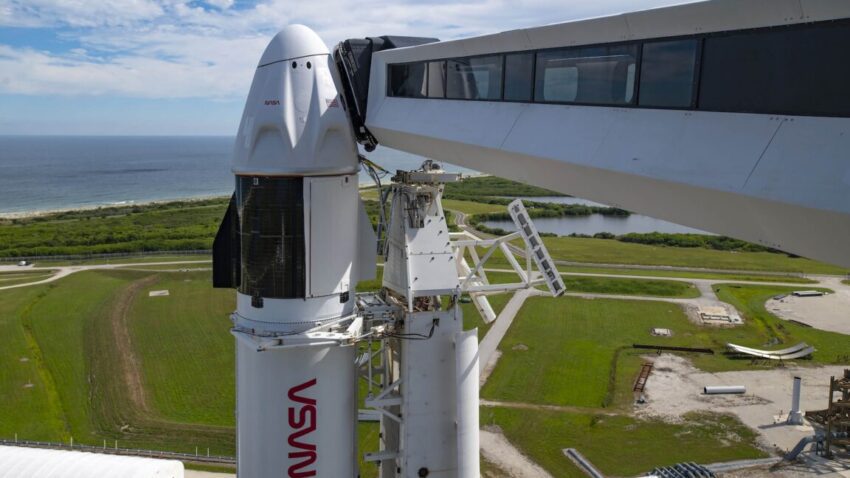
spacex takes down dragon crew arm giving SpaceX has recently undertaken significant modifications at Launch Complex 39A, marking a pivotal moment in the evolution of this historic site.
spacex takes down dragon crew arm giving
Historical Significance of Launch Complex 39A
Launch Complex 39A (LC-39A) at NASA’s Kennedy Space Center in Florida has a storied history that spans over six decades. Originally carved from the Florida wetlands in the early 1960s, this launch pad has been the site of numerous groundbreaking missions. It was here that NASA launched the iconic Saturn V rockets, which played a crucial role in sending astronauts to the Moon during the Apollo program. The pad was later adapted for the Space Shuttle program, witnessing its last flight in 2011.
Following the conclusion of the shuttle era, NASA leased LC-39A to SpaceX, allowing the private aerospace company to utilize the site for its Falcon 9 and Falcon Heavy rockets. This transition marked a significant shift in the landscape of space exploration, as it opened the door for commercial spaceflight and private sector involvement in missions that were once solely the domain of government agencies.
Recent Modifications: The Removal of the Crew Access Arm
On Wednesday, construction workers began the process of removing the Crew Access Arm, a structure that provided astronauts with a pathway to board their spacecraft. This removal is part of a broader effort to prepare the launch pad for future missions, particularly those involving SpaceX’s Starship program.
The Crew Access Arm: A Brief Overview
The Crew Access Arm was installed on LC-39A in 2018, replacing an aging arm from the shuttle era. This new structure was designed to facilitate the boarding of astronauts into the Crew Dragon spacecraft. Suspended over 200 feet above the pad’s surface, the arm provided a critical connection between the launch tower and the spacecraft, ensuring that astronauts could safely access their vehicles prior to liftoff.
The first crewed flight of the Crew Dragon spacecraft took place in May 2020, marking a historic moment as it was the first time astronauts launched from American soil since the shuttle program ended. The Crew Access Arm played a vital role in this mission, allowing astronauts to board the spacecraft with ease and confidence.
Implications of the Removal
The removal of the Crew Access Arm signifies a shift in focus for SpaceX as it prepares for the next chapter in its launch operations. With the Starship program gaining momentum, modifications to LC-39A are essential to accommodate the larger and more complex spacecraft.
Starship, designed for missions to the Moon, Mars, and beyond, requires a different set of infrastructure and support systems compared to the Falcon 9 and Falcon Heavy rockets. The removal of the Crew Access Arm is just one step in a series of upgrades that will enable SpaceX to conduct more ambitious missions in the future.
Future of Launch Complex 39A
As SpaceX continues to develop its Starship program, the future of LC-39A looks promising. The modifications being made to the launch pad are indicative of the company’s commitment to pushing the boundaries of space exploration. The removal of the Crew Access Arm will pave the way for new infrastructure that can support the unique requirements of Starship.
Anticipated Upgrades and Modifications
In addition to the removal of the Crew Access Arm, SpaceX is expected to implement a range of upgrades to LC-39A. These may include:
- Enhanced Ground Support Equipment: As Starship is a larger vehicle, the ground support systems will need to be upgraded to handle the increased demands of fueling and launch operations.
- New Launch Infrastructure: Modifications to the launch pad itself may be necessary to accommodate the unique design and launch profile of Starship.
- Safety Enhancements: With the introduction of new technologies and systems, safety protocols will be updated to ensure the well-being of crew members and ground personnel.
Stakeholder Reactions
The decision to remove the Crew Access Arm has garnered mixed reactions from various stakeholders in the space community. While many recognize the necessity of these changes for the advancement of SpaceX’s ambitions, others express concern over the implications for crewed missions in the near term.
NASA’s Perspective
NASA has historically been a key partner with SpaceX, particularly in the context of the Commercial Crew Program. The agency has expressed support for SpaceX’s efforts to innovate and expand its capabilities. However, there is an understanding that the transition to Starship may temporarily impact crewed missions from LC-39A.
Industry Experts
Industry experts have weighed in on the implications of the modifications at LC-39A. Many believe that the removal of the Crew Access Arm is a necessary step toward achieving the ambitious goals set forth by SpaceX. The focus on Starship is seen as a crucial element in the broader context of space exploration, particularly with NASA’s Artemis program aiming to return humans to the Moon.
Public Sentiment
The public’s reaction to the changes at LC-39A has been largely positive, with many expressing excitement about the future of space travel. The prospect of missions to Mars and beyond has captured the imagination of people around the world, and SpaceX’s role in making these missions a reality is widely acknowledged.
Conclusion: A New Era for Space Exploration
The removal of the Crew Access Arm at Launch Complex 39A marks a significant milestone in the ongoing evolution of this historic launch pad. As SpaceX pivots toward its Starship program, the modifications being made to LC-39A are indicative of a broader shift in the landscape of space exploration. With the potential for ambitious missions to the Moon, Mars, and beyond, the future of space travel is poised for transformative change.
As the aerospace industry continues to evolve, the role of commercial entities like SpaceX will become increasingly prominent. The developments at LC-39A serve as a reminder of the importance of innovation and adaptability in the pursuit of exploration beyond our planet.
Source: Original report
Was this helpful?
Last Modified: February 12, 2026 at 10:36 am
8 views