spacex s next-gen super heavy booster aces SpaceX has successfully completed cryogenic proof testing for its upgraded Super Heavy booster, marking a significant advancement in preparations for the next Starship flight.
spacex s next-gen super heavy booster aces
Overview of the Cryogenic Testing
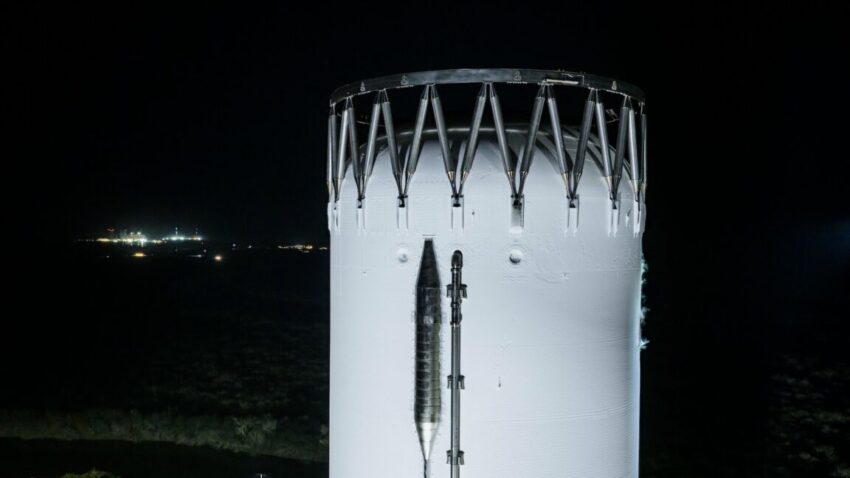
On Tuesday, SpaceX announced via social media that the cryoproof operations for the Super Heavy V3 booster have been completed. This milestone is particularly noteworthy as it addresses a critical issue that previously led to the destruction of an earlier booster during testing. The company stated, “Cryoproof operations complete for the first time with a Super Heavy V3 booster. This multi-day campaign tested the booster’s redesigned propellant systems and its structural strength.”
Testing Procedures
The testing took place at SpaceX’s Starbase facility in Texas, where the 237-foot-tall (72.3-meter) stainless-steel booster was rolled out of its factory and transported a few miles to Massey’s Test Site. The test crew initiated the process with a pressure test at ambient temperatures. Following this, they loaded super-cold liquid nitrogen into the rocket four times over a span of six days. This rigorous testing subjected the booster to repeated thermal and pressurization cycles.
The use of liquid nitrogen is crucial as it serves as a stand-in for the cryogenic methane and liquid oxygen that will ultimately fill the booster’s propellant tanks on launch day. This approach allows engineers to simulate the conditions the booster will face during an actual launch, providing valuable data on its performance and structural integrity.
Significance of the Super Heavy V3 Booster
The Super Heavy booster is a vital component of SpaceX’s Starship system, designed to carry heavy payloads into orbit and beyond. The upgraded version, known as V3, incorporates several design enhancements aimed at improving performance, reliability, and safety. These upgrades are particularly important given the challenges faced during previous testing phases.
Addressing Past Challenges
In April 2023, SpaceX experienced a setback when its previous Super Heavy booster was destroyed during a static fire test. This incident underscored the need for rigorous testing protocols and highlighted the importance of the cryogenic proof testing now completed. The lessons learned from that failure have informed the design and testing of the V3 booster, leading to a more robust and reliable system.
Engineering Innovations
The V3 booster features redesigned propellant systems that enhance its ability to withstand the extreme conditions of launch. These innovations include improved insulation and structural reinforcements that help maintain the integrity of the booster during the cryogenic loading process. By successfully completing cryogenic proof testing, SpaceX has demonstrated that these design changes are effective in mitigating risks associated with cryogenic fuels.
Implications for Future Missions
The successful completion of cryogenic proof testing is a critical step toward the next Starship flight, which aims to further SpaceX’s ambitions for deep space exploration and commercial space travel. The Starship system is designed to be fully reusable, significantly reducing the cost of access to space and enabling a wide range of missions, from satellite deployment to crewed missions to Mars.
Upcoming Launch Plans
With the cryogenic testing phase now complete, SpaceX is poised to move forward with additional testing and preparations for an upcoming launch. The next steps will likely include further static fire tests, where the booster will be tested with its full complement of propellant. These tests will provide additional data on the performance of the booster and its readiness for flight.
SpaceX has ambitious plans for the Starship system, including a potential crewed mission to the Moon as part of NASA’s Artemis program and future missions to Mars. The successful operation of the Super Heavy booster is essential for achieving these goals, as it serves as the primary launch vehicle for the Starship spacecraft.
Stakeholder Reactions
The successful cryogenic proof testing has garnered positive reactions from various stakeholders, including aerospace experts, industry analysts, and space enthusiasts. Many view this milestone as a testament to SpaceX’s engineering capabilities and its commitment to advancing space technology.
Industry Perspectives
Aerospace analysts have noted that the successful testing of the Super Heavy V3 booster could have broader implications for the space industry as a whole. The advancements made by SpaceX may influence other companies and organizations involved in space exploration, prompting them to adopt similar technologies or testing methodologies.
Furthermore, the successful development of the Starship system could pave the way for increased competition in the commercial space sector, driving innovation and reducing costs for satellite launches and other space-related activities.
Public Interest and Support
The public’s interest in SpaceX and its missions continues to grow, fueled by the company’s high-profile launches and ambitious goals. The successful completion of the cryogenic proof testing is likely to enhance public support for SpaceX’s endeavors, as many view the company as a leader in the push for space exploration and colonization.
Future Challenges and Considerations
While the successful cryogenic proof testing is a significant milestone, it is important to recognize that challenges remain. SpaceX must continue to refine its technology and address any issues that may arise during subsequent testing phases. The complexities of launching a fully reusable spacecraft system present unique challenges that require ongoing innovation and adaptation.
Regulatory and Safety Considerations
As SpaceX moves closer to its next launch, it will also need to navigate regulatory requirements and safety considerations. The Federal Aviation Administration (FAA) plays a crucial role in overseeing commercial space launches, and SpaceX will need to ensure that it meets all safety standards and regulations before proceeding with its next flight.
Additionally, public safety remains a top priority. SpaceX has implemented various safety measures to mitigate risks associated with rocket launches, and ongoing testing will help ensure that these measures are effective.
Conclusion
The successful completion of cryogenic proof testing for the Super Heavy V3 booster marks a crucial step in SpaceX’s preparations for its next Starship flight. This achievement not only addresses past challenges but also sets the stage for future missions that could redefine space exploration and commercial travel. As SpaceX continues to innovate and push the boundaries of technology, the aerospace industry and the public will be watching closely, eager to see what comes next.
Source: Original report
Was this helpful?
Explore more: More General Technology Tech News Blog
Last Modified: February 11, 2026 at 9:39 am
36 views