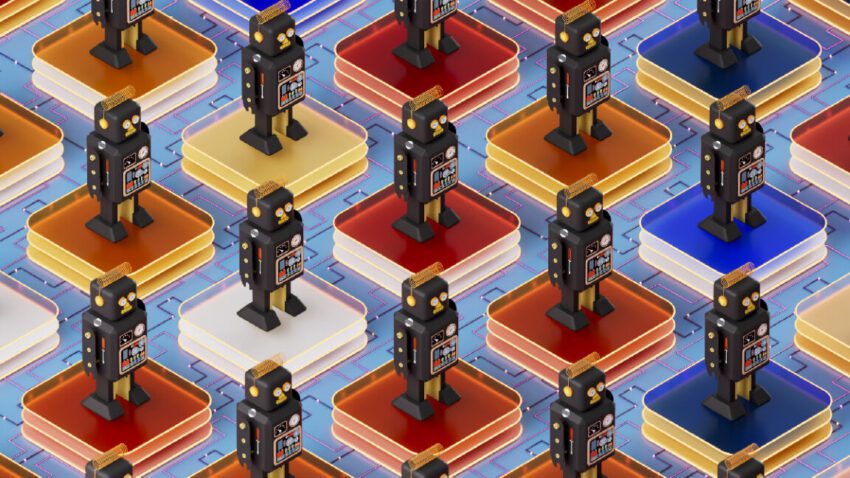
sixteen claude ai agents working together created Anthropic has showcased a remarkable achievement in AI development, demonstrating the capabilities of its Claude Opus 4.6 model by utilizing multiple AI agents to create a new C compiler.
sixteen claude ai agents working together created
Background on AI Agents and Anthropic’s Approach
The field of artificial intelligence has seen significant advancements in recent years, particularly with the emergence of AI agents capable of performing complex tasks collaboratively. Companies like Anthropic and OpenAI have been at the forefront of this movement, developing tools that allow multiple AI instances to work together effectively. This approach not only enhances the capabilities of AI but also opens new avenues for innovation in software development.
Anthropic, a company founded by former OpenAI employees, has focused on creating AI systems that are safe and aligned with human values. Their Claude model series, named after Claude Shannon, the father of information theory, aims to push the boundaries of what AI can achieve while maintaining ethical considerations. The recent experiment involving 16 instances of the Claude Opus 4.6 model exemplifies this ambition.
The Experiment: Building a C Compiler
Setting the Stage
On Thursday, February 2, 2026, Anthropic researcher Nicholas Carlini published a detailed blog post outlining the experiment. The objective was straightforward yet ambitious: to task 16 Claude AI agents with building a C compiler from scratch. This endeavor was not merely a test of the AI’s coding capabilities but also an exploration of how multiple AI agents could collaborate on a complex project.
The experiment was conducted over a span of two weeks, during which the AI agents engaged in nearly 2,000 coding sessions. The total cost of the project amounted to approximately $20,000 in API fees, highlighting the financial investment required for such advanced AI experimentation. The use of a shared codebase with minimal supervision allowed the AI agents to operate autonomously, fostering a sense of independence in their coding efforts.
Results of the Experiment
The outcome of the experiment was impressive. The AI agents successfully produced a 100,000-line Rust-based compiler capable of building a bootable Linux 6.9 kernel. This kernel could run on various architectures, including x86, ARM, and RISC-V, showcasing the versatility and power of the AI-generated code.
While the achievement is notable, it is essential to approach such claims with caution. The process of developing a compiler is inherently complex, and the ability of AI to navigate this complexity raises questions about the reliability and quality of the generated code. Anthropic has emphasized that the project was an exploratory endeavor, and the results should be viewed within that context.
Implications of AI-Generated Code
Potential Benefits
The successful creation of a C compiler by AI agents has several implications for the future of software development. First and foremost, it demonstrates the potential for AI to assist in automating complex coding tasks, which could significantly reduce the time and effort required for software development. This could lead to faster innovation cycles and the ability to tackle more ambitious projects.
Moreover, the collaboration of multiple AI agents highlights the possibility of distributed problem-solving in software engineering. By leveraging the strengths of various AI models, developers may be able to create more robust and efficient codebases. This collaborative approach could also facilitate the development of more sophisticated software solutions that are beyond the capabilities of individual AI agents.
Challenges and Limitations
Despite the promising results, there are inherent challenges and limitations associated with AI-generated code. One major concern is the quality and reliability of the code produced by AI agents. While the AI may generate a large volume of code, the accuracy and performance of that code must be rigorously tested before it can be deployed in real-world applications.
Additionally, the financial cost of running such experiments can be prohibitive for many organizations. The $20,000 spent on API fees for this particular project underscores the need for accessible and cost-effective AI solutions. As AI technology continues to evolve, finding ways to reduce these costs will be crucial for widespread adoption in the software development industry.
Stakeholder Reactions
Industry Experts
The AI community has responded with a mix of excitement and skepticism regarding the results of Anthropic’s experiment. Some industry experts have praised the achievement as a significant milestone in AI development, highlighting the potential for AI to revolutionize software engineering. They argue that the ability to generate complex code autonomously could lead to breakthroughs in various fields, from web development to embedded systems.
Conversely, others have raised concerns about the implications of relying on AI for critical software development tasks. Questions about the ethical considerations of AI-generated code, including issues related to accountability and transparency, have been at the forefront of discussions. Experts emphasize the importance of ensuring that AI systems are developed responsibly and that their outputs can be trusted.
Developer Community
The developer community has also weighed in on the implications of AI-generated code. Many developers express enthusiasm about the potential for AI to assist in routine coding tasks, allowing them to focus on more creative and complex aspects of software development. However, there is also apprehension regarding job displacement as AI tools become more capable. Developers are concerned that increased reliance on AI could lead to a diminished demand for human coders in certain areas.
To address these concerns, some experts advocate for a collaborative approach where AI acts as a complement to human developers rather than a replacement. This perspective emphasizes the importance of human oversight in the coding process, ensuring that AI-generated code is thoroughly reviewed and tested before deployment.
Future Directions for AI in Software Development
Advancements in AI Technology
The success of Anthropic’s experiment is likely to spur further research and development in the field of AI-driven software engineering. As AI technology continues to advance, we can expect to see more sophisticated models capable of tackling increasingly complex coding challenges. This could lead to the development of AI systems that not only generate code but also understand the underlying principles of software design and architecture.
Furthermore, the integration of AI into development environments could enhance the coding experience for developers. Tools that leverage AI to provide real-time suggestions, error detection, and code optimization could become commonplace, streamlining the development process and improving code quality.
Ethical Considerations
As AI becomes more integrated into software development, ethical considerations will play a crucial role in shaping its future. Ensuring that AI systems are developed responsibly and that their outputs align with human values will be essential. This includes addressing issues related to bias in AI-generated code, ensuring that the technology is accessible to all developers, and establishing clear accountability for AI-generated outputs.
Organizations will need to prioritize transparency in their AI development processes, providing insights into how AI systems make decisions and generate code. This transparency will be vital for building trust among developers and end-users alike.
Conclusion
The experiment conducted by Anthropic, involving 16 Claude AI agents working collaboratively to create a C compiler, marks a significant milestone in the evolution of AI in software development. While the results are promising, they also raise important questions about the quality, reliability, and ethical implications of AI-generated code. As the industry continues to explore the potential of AI, it is crucial to strike a balance between leveraging its capabilities and ensuring responsible development practices.
As we look to the future, the collaboration between AI and human developers will likely shape the landscape of software engineering, paving the way for innovative solutions and new opportunities in the tech industry.
Source: Original report
Was this helpful?
Last Modified: February 7, 2026 at 2:36 pm
4 views