porsche s electric cayenne has so much Porsche is set to redefine the luxury electric vehicle (EV) experience with the upcoming Cayenne Electric, featuring a groundbreaking curved OLED display that promises to enhance both functionality and aesthetics.
porsche s electric cayenne has so much
Introducing the Cayenne Electric
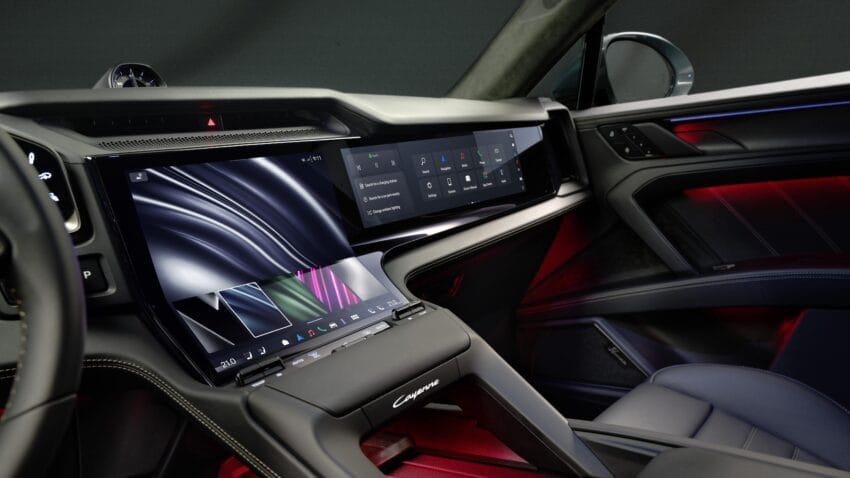
The Porsche Cayenne Electric is scheduled to make its official debut later this year, but the automaker is already providing a glimpse into its innovative interior. Among the standout features is the Flow Display, a unique curved screen that sets a new standard in the automotive industry. This display is not only the largest ever installed in a Porsche but also one of the most distinctive, designed to create a seamless interaction between driver and vehicle.
The Flow Display: A New Era of Interaction
Porsche has dubbed the new display the Flow Display, which is vertically installed and curves toward the bottom. This design choice is intended to enhance the user experience by allowing for a more intuitive interaction with the vehicle’s systems. The Flow Display will operate on Porsche’s newly developed operating system, which aims to create a cohesive and harmonious experience throughout the vehicle’s interior.
While Porsche has not disclosed the exact dimensions of the Flow Display, reports suggest it spans nearly 42 inches. This expansive screen will be complemented by a 14.25-inch instrument cluster, a heads-up display, and an optional 14.9-inch passenger screen, which will allow for video streaming and app control functions. The integration of these screens reflects a broader trend in the automotive industry, where manufacturers are increasingly focusing on digital interfaces to enhance the driving experience.
Design Philosophy and Innovation
Markus Auerbach, director of interior design at Style Porsche, emphasized the design philosophy behind the Flow Display. “Our goal was to combine quintessential Cayenne characteristics and the newly developed display surfaces with the features of the new ‘Porsche Digital Interaction’ into a harmonious overall package,” he stated in a press release. This approach aims to create an interior that is not only innovative and forward-thinking but also meticulously designed down to the finest detail.
The emphasis on design and technology is not merely aesthetic; it reflects a strategic response to evolving consumer expectations. As electric vehicles gain popularity, manufacturers are tasked with creating interiors that not only look good but also offer enhanced functionality and user engagement.
Market Context and Competitive Landscape
The introduction of the Cayenne Electric comes at a time when Porsche is experiencing a mixed bag of sales results. While the overall sales of the automaker have seen a decline in the first half of the year, the demand for electric and plug-in hybrid vehicles has surged, increasing by 14.5 percent compared to the same period in 2024. This trend underscores the growing consumer preference for electric vehicles, prompting Porsche to innovate and expand its EV lineup.
The Cayenne Electric is expected to play a pivotal role in this strategy. The model aims to attract both existing Porsche enthusiasts and new customers who are increasingly interested in electric mobility. With the Cayenne’s established reputation for performance and luxury, the introduction of an electric variant could further solidify Porsche’s position in the competitive EV market.
Addressing Consumer Concerns
Despite the excitement surrounding the Cayenne Electric, there are potential challenges that Porsche must navigate. One significant concern is the phenomenon of “screen fatigue.” Many consumers are becoming weary of the minimalist interiors popularized by brands like Tesla, which often prioritize touchscreen controls over physical buttons. Surveys indicate that car shoppers are increasingly expressing a desire for tactile controls, suggesting that Porsche’s approach may need to strike a balance between modern technology and traditional user interfaces.
Porsche appears to be aware of this concern, as the Cayenne Electric will feature a new AI-powered voice assistant designed to enhance driver engagement. This voice assistant can understand complex instructions and follow-up questions without requiring the user to repeat the activation word. It will control various functions, including climate settings, seat heating, and ambient lighting, while also recognizing addresses and points of interest. This dual approach of integrating both voice and tactile controls could help alleviate consumer concerns about excessive reliance on screens.
Technological Integration and Future Prospects
As Porsche prepares to launch the Cayenne Electric, it is also gearing up to integrate Apple’s newly immersive CarPlay Ultra into its vehicles. This development raises questions about how phone mirroring will function on the expansive Flow Display. The current version of CarPlay has been shown to work effectively with the Flow Display, as demonstrated in a TikTok by Autogefuehl. However, the deeper integration of CarPlay Ultra remains to be seen, particularly given the unique curvature of the display.
This integration is crucial as it aligns with the broader trend of enhancing in-car connectivity and entertainment options. As consumers increasingly expect their vehicles to serve as extensions of their digital lives, the ability to seamlessly integrate smartphones with vehicle systems will be a key selling point for the Cayenne Electric.
Competing in a High-Tech Landscape
Porsche’s efforts to reinvent the interior experience of the Cayenne Electric are part of a larger trend among luxury automakers. Brands like Mercedes-Benz and BMW are also focusing on high-tech interiors to compete with the influx of advanced Chinese EVs. These competitors are leveraging technology to create unique selling propositions, with features such as media streaming and gaming becoming central to their marketing strategies.
Moreover, companies like Sony and Honda’s Afeela are positioning themselves as tech-centric brands, emphasizing media and entertainment experiences in anticipation of a future where autonomous driving may render traditional driving controls obsolete. This shift in focus presents both challenges and opportunities for established brands like Porsche, which must adapt to remain competitive in a rapidly evolving market.
Consumer Expectations and the Future of Luxury EVs
As the automotive landscape continues to evolve, consumer expectations are also shifting. Today’s car buyers are looking for more than just performance and luxury; they want a comprehensive experience that integrates technology, comfort, and convenience. The Cayenne Electric aims to meet these expectations by offering a state-of-the-art interior that combines innovative design with advanced technology.
However, the success of the Cayenne Electric will ultimately depend on how well Porsche can balance these competing demands. While the Flow Display and other technological advancements are likely to attract tech-savvy consumers, the brand must also consider the preferences of traditional luxury car buyers who may prioritize tactile controls and a more conventional driving experience.
Conclusion
The Porsche Cayenne Electric is poised to make a significant impact in the luxury EV market, thanks to its innovative Flow Display and a focus on driver engagement. As Porsche navigates the challenges of modern consumer preferences and competitive pressures, the Cayenne Electric represents a bold step forward in redefining what a luxury electric vehicle can be. With its combination of cutting-edge technology and traditional Porsche characteristics, the Cayenne Electric may very well set a new standard for the future of luxury electric vehicles.
Source: Original report
Was this helpful?
Explore more: More Hardware & Devices Tech News Blog
Last Modified: October 1, 2025 at 8:44 pm
17 views