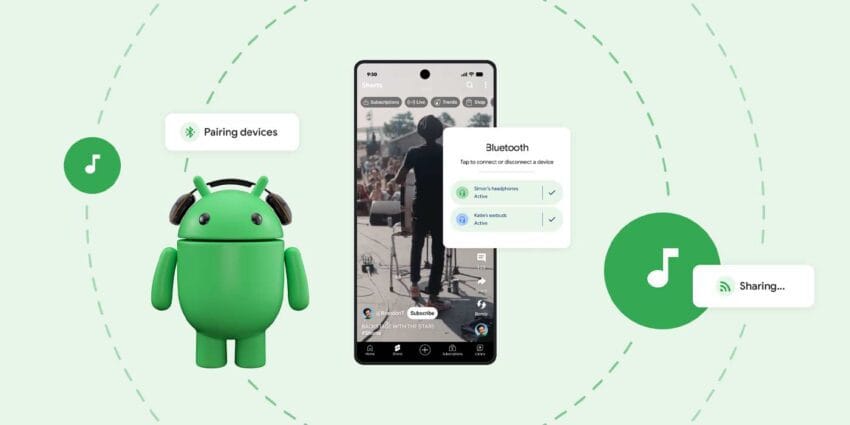
pixel phones are getting android s audio Google has officially announced that Pixel phones running Android 16 will support Auracast, a feature of Bluetooth’s LE Audio technology, marking a significant advancement in audio sharing capabilities.
pixel phones are getting android s audio
Understanding Auracast and LE Audio
Auracast is a groundbreaking feature within the Bluetooth LE Audio specification that allows multiple devices to share audio streams simultaneously. This technology is particularly beneficial in environments where users want to listen to the same audio source, such as in social settings, educational institutions, or public venues. For instance, in a crowded café, two friends can listen to the same music from a single device without the need for wired connections or complicated setups.
LE Audio, or Low Energy Audio, is a new audio transmission standard that enhances the Bluetooth audio experience. It offers several advantages over the traditional Bluetooth audio protocols, including improved sound quality, lower power consumption, and the ability to connect multiple audio devices at once. This is particularly relevant for users of wireless earbuds and headphones, as it allows for a more seamless and efficient listening experience.
The Evolution of Bluetooth Audio
Bluetooth audio has come a long way since its inception. The original Bluetooth audio protocols were limited in terms of sound quality and connectivity options. As technology evolved, so did the need for better audio solutions. The introduction of Bluetooth 5.0 and subsequent versions brought about significant improvements, but it was the development of LE Audio that truly revolutionized the space.
LE Audio was officially announced by the Bluetooth Special Interest Group (SIG) in 2020, and it has been in the works ever since. The technology aims to address the growing demand for high-quality audio streaming while maintaining low power consumption, which is crucial for battery-operated devices. With the addition of Auracast, LE Audio is set to redefine how users interact with audio in their daily lives.
Google’s Commitment to Audio Innovation
Google’s collaboration with the Bluetooth SIG to integrate Auracast into Pixel devices demonstrates the company’s commitment to enhancing user experiences through innovative audio solutions. The announcement comes after a period of anticipation, as many users had been eagerly awaiting the rollout of Auracast support on their devices.
With the launch of Android 16, Google has taken a significant step forward in making advanced audio sharing capabilities accessible to a broader audience. This move not only benefits Pixel users but also sets a precedent for other manufacturers to follow suit, potentially leading to widespread adoption of LE Audio technology across various devices.
Implications for Users
The introduction of Auracast support on Pixel phones has several implications for users:
- Enhanced Social Listening: Users can now share audio experiences with friends and family without the need for multiple devices. This is particularly useful in social settings, such as watching a movie together or listening to music at a gathering.
- Educational Applications: In classrooms or lecture halls, teachers can broadcast audio to multiple students’ devices, ensuring that everyone can hear the material clearly. This could enhance learning experiences and accessibility for students with hearing impairments.
- Public Venues: Auracast can be utilized in public spaces like museums, airports, and theaters, where audio guides or announcements can be shared with visitors’ devices, providing a more personalized experience.
Technical Aspects of Auracast
From a technical standpoint, Auracast operates by utilizing the broadcast capabilities of LE Audio. This allows a single audio source to transmit to multiple receivers, which can be particularly advantageous in scenarios where multiple users want to access the same audio content. The technology leverages the low latency and high efficiency of LE Audio, ensuring that users experience minimal delay and high-quality sound.
Moreover, Auracast supports various audio formats, making it versatile for different types of content, whether it be music, podcasts, or spoken word. This flexibility is crucial in today’s diverse audio landscape, where users consume content in various formats and contexts.
Challenges and Considerations
Despite the promising features of Auracast, there are challenges and considerations that users and developers must keep in mind:
- Device Compatibility: While Pixel phones will support Auracast, not all Bluetooth devices may be compatible with LE Audio. Users will need to ensure that their headphones or speakers support this new standard to take full advantage of the feature.
- Network Interference: In crowded environments, multiple audio streams can lead to potential interference. Developers will need to optimize the technology to minimize disruptions and ensure a smooth audio experience.
- User Awareness: As with any new technology, user awareness and education will be crucial. Users need to understand how to utilize Auracast effectively to maximize its benefits.
Stakeholder Reactions
The announcement of Auracast support on Pixel phones has garnered positive reactions from various stakeholders in the tech industry. Analysts and industry experts have praised Google for its forward-thinking approach to audio technology. The integration of Auracast is seen as a significant step towards creating a more connected and interactive audio experience.
Manufacturers of audio devices are also likely to respond positively, as the demand for LE Audio-compatible products is expected to rise. This could lead to increased innovation in the audio space, with companies looking to develop new products that leverage the capabilities of Auracast and LE Audio.
Future Prospects
The introduction of Auracast on Pixel phones is just the beginning. As more devices adopt LE Audio and Auracast, we can expect to see a shift in how audio is consumed and shared. This could lead to new applications and use cases that we have yet to imagine.
Furthermore, as the technology matures, we may see enhancements in audio quality, latency reduction, and overall user experience. The potential for Auracast to transform social interactions and public experiences is vast, and its successful implementation could pave the way for future innovations in audio technology.
Conclusion
Google’s announcement of Auracast support for Pixel phones running Android 16 marks a significant milestone in the evolution of audio technology. By enabling users to share audio streams seamlessly, Auracast has the potential to enhance social interactions, educational experiences, and public engagements. As the technology continues to develop and gain traction, it will be interesting to see how users and manufacturers adapt to these new capabilities and what innovations will emerge in the audio landscape.
pixel phones are getting android s audio Source: Original report
Was this helpful?
Last Modified: September 8, 2025 at 6:32 pm
3 views