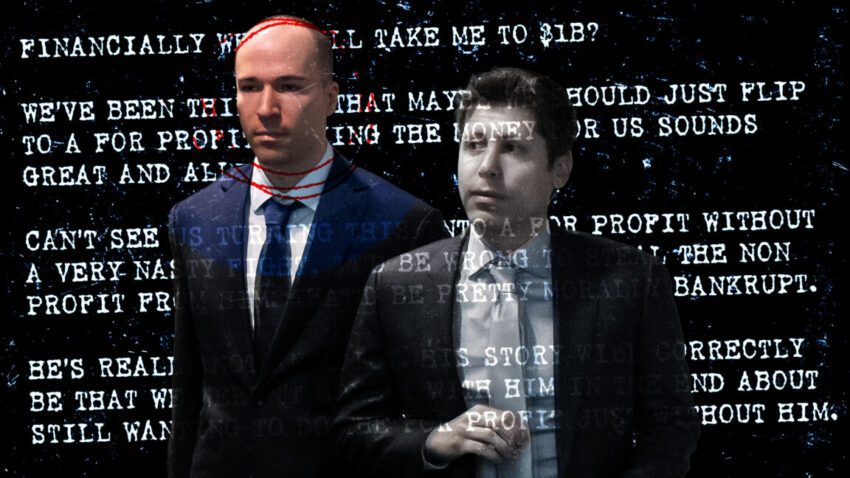
openai president forced to read his personal OpenAI President Greg Brockman has found himself in an uncomfortable position, having to publicly read excerpts from his personal diary during a high-profile trial that questions the organization’s commitment to its original nonprofit mission.
openai president forced to read his personal
Background of the Trial
The trial centers around allegations made by Elon Musk, one of the co-founders of OpenAI, who claims that the organization has strayed from its foundational goals. Musk asserts that OpenAI has shifted its focus from altruistic endeavors to profit-driven motives, benefiting its leadership, including Brockman and CEO Sam Altman. This shift, according to Musk, undermines the very principles that led to the establishment of OpenAI in 2015.
OpenAI was founded with the mission to ensure that artificial general intelligence (AGI) benefits all of humanity. The organization initially operated as a nonprofit but transitioned to a “capped-profit” model in 2019, allowing it to attract more funding while still claiming to prioritize its mission. This change has been a point of contention, particularly among its early supporters, including Musk, who has since distanced himself from the organization.
Brockman’s Testimony
During the trial, Brockman has been compelled to read from his personal journal, a task he described as “very painful.” This diary, which he considers deeply personal, contains reflections that are not merely factual accounts but rather a stream of consciousness that captures his thoughts and feelings over time. Brockman emphasized that he is not ashamed of the entries; however, he views them as intimate and not meant for public scrutiny.
The Nature of the Diary Entries
Brockman explained that his diary entries serve as a means of exploring different perspectives and emotions. They are not structured like a traditional log; instead, they reflect his internal dialogues and the complexities of his role at OpenAI. This introspective approach allows him to process the challenges and responsibilities he faces as a leader in a rapidly evolving field.
In the courtroom, Brockman has been asked to clarify specific entries that Musk’s legal team has interpreted as evidence of greed or self-interest. For instance, one entry discusses the financial implications of OpenAI’s decisions, which Musk’s team argues highlights a shift towards prioritizing profit over mission. Brockman countered that these reflections were part of a broader contemplation about the sustainability of the organization and its ability to fulfill its mission in a competitive landscape.
Implications of the Trial
The trial has significant implications not only for OpenAI but also for the broader tech industry, particularly in how nonprofit organizations transition to for-profit models. The scrutiny that Brockman and OpenAI are facing raises questions about transparency, accountability, and the ethical responsibilities of tech leaders.
Stakeholder Reactions
Reactions to the trial have been mixed. Supporters of OpenAI argue that the organization’s transition to a capped-profit model was necessary to secure the funding required to compete with other tech giants. They contend that this model allows OpenAI to attract top talent and invest in research and development while still maintaining a commitment to its mission.
Critics, including Musk, argue that the shift has led to a culture of greed within the organization. They believe that the focus on profitability has compromised OpenAI’s original mission and that the organization must be held accountable for its actions. This sentiment is echoed by some former employees and industry observers who worry about the implications of prioritizing profit in a field that has the potential to impact humanity profoundly.
The Future of OpenAI
As the trial unfolds, the future of OpenAI hangs in the balance. The organization must navigate the challenges posed by Musk’s allegations while also addressing the concerns of its stakeholders. The outcome of the trial could set a precedent for how similar organizations operate and how they are perceived by the public.
Potential Outcomes
Several potential outcomes could arise from this trial. If the jury finds in favor of Musk, it could lead to increased scrutiny of OpenAI’s practices and possibly a reevaluation of its business model. This might compel the organization to adopt more transparent practices and reinforce its commitment to its original mission.
Conversely, if the jury rules in favor of OpenAI, it may bolster the organization’s position and validate its approach to balancing profit and mission. Such a ruling could encourage other tech companies to pursue similar models, potentially reshaping the landscape of the tech industry.
Broader Context of Nonprofit to For-Profit Transitions
The trial also highlights a broader trend in the tech industry where nonprofit organizations are increasingly transitioning to for-profit models. This shift often raises ethical questions about the motivations behind such changes and the potential consequences for stakeholders.
Organizations like OpenAI are not alone in this journey. Other tech companies have faced similar dilemmas, balancing the need for funding with their foundational missions. The challenge lies in maintaining transparency and accountability while pursuing growth and innovation.
Lessons Learned
As the trial progresses, there are valuable lessons to be learned for both current and future leaders in the tech industry. The importance of clear communication with stakeholders cannot be overstated. Organizations must articulate their missions and the rationale behind their business decisions to build trust and credibility.
Moreover, the trial serves as a reminder of the ethical responsibilities that come with leadership in the tech sector. As technology continues to evolve, leaders must remain vigilant about the potential implications of their decisions on society as a whole.
Conclusion
Greg Brockman’s testimony and the ongoing trial present a critical moment for OpenAI and the tech industry at large. The scrutiny faced by Brockman and the organization underscores the complexities of navigating the transition from nonprofit to for-profit while remaining committed to a mission that benefits humanity. As the jury deliberates, the outcomes of this trial will likely resonate beyond the courtroom, influencing the future of tech organizations and their ethical responsibilities.
Source: Original report
Was this helpful?
Explore more: More Big Tech & Platforms Tech News Blog
Last Modified: May 6, 2026 at 3:36 pm
11 views