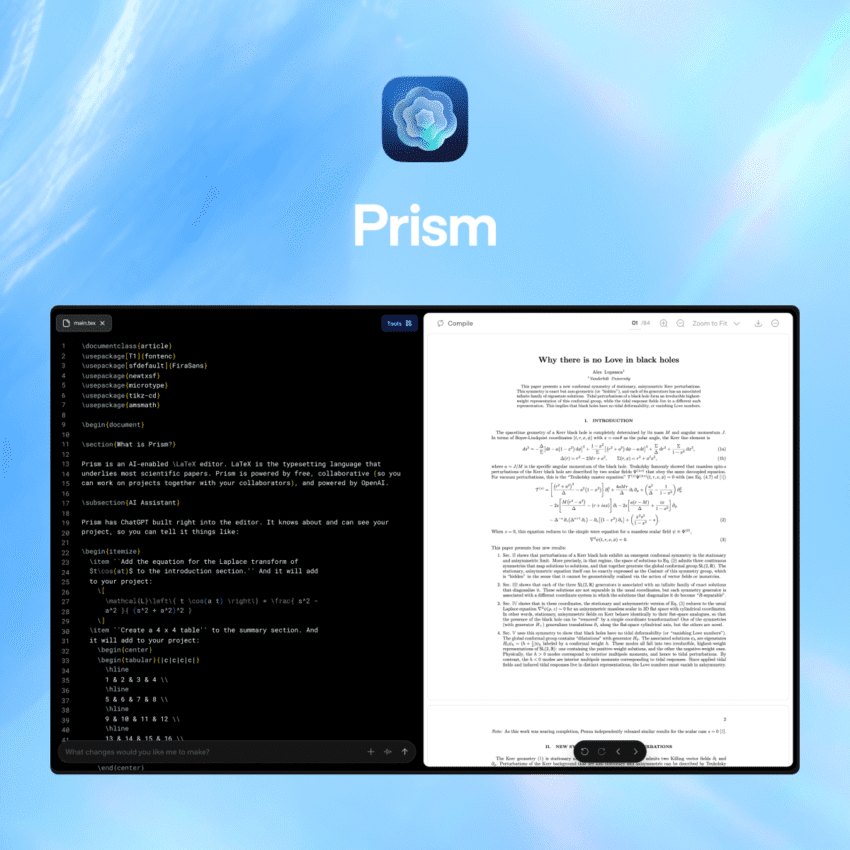
openai launches prism a new ai workspace OpenAI has introduced Prism, a groundbreaking AI workspace designed specifically for scientists, aiming to enhance the process of composing research papers.
openai launches prism a new ai workspace
Overview of Prism
Prism represents a significant advancement in the integration of artificial intelligence within the scientific community. This new workspace is tailored to meet the unique needs of researchers, providing tools that streamline the writing and collaboration processes inherent in scientific research. By leveraging AI technology, Prism seeks to improve the efficiency and quality of research outputs, ultimately contributing to the acceleration of scientific discovery.
Key Features of Prism
Prism is equipped with a variety of features that cater to the specific requirements of scientists. These features include:
- AI-Powered Writing Assistance: Prism utilizes advanced natural language processing algorithms to assist researchers in drafting, editing, and refining their manuscripts. This feature aims to reduce the time spent on writing while ensuring clarity and precision in scientific communication.
- Collaboration Tools: The platform facilitates seamless collaboration among researchers, allowing multiple users to work on a document simultaneously. This is particularly beneficial for teams spread across different geographical locations, enabling real-time updates and feedback.
- Integration with Existing Standards: One of the standout aspects of Prism is its compatibility with established research paper standards. This ensures that users can easily format their work according to the specific requirements of various journals and conferences.
- Data Management: Prism offers robust data management capabilities, allowing researchers to organize and store their datasets efficiently. This feature is crucial for maintaining the integrity and accessibility of research data throughout the project lifecycle.
- Automated Literature Review: The platform includes tools for conducting literature reviews, enabling researchers to quickly gather relevant studies and citations. This automation helps users stay updated with the latest findings in their fields, fostering a more comprehensive understanding of existing research.
Implications for the Scientific Community
The launch of Prism has far-reaching implications for the scientific community. As research becomes increasingly collaborative and interdisciplinary, the need for efficient tools that facilitate communication and data sharing has never been more critical. Prism addresses these needs by providing a centralized platform that enhances collaboration and streamlines the research process.
Enhancing Research Efficiency
One of the primary benefits of Prism is its potential to significantly enhance research efficiency. By automating various aspects of the writing and review processes, researchers can focus more on their core scientific inquiries rather than administrative tasks. This shift could lead to faster publication times and, consequently, a more rapid dissemination of knowledge.
Fostering Collaboration
In an era where scientific research often involves multidisciplinary teams, the collaborative features of Prism are particularly valuable. Researchers can easily share their work with colleagues, receive feedback, and make necessary adjustments in real time. This collaborative environment not only improves the quality of research but also encourages the exchange of ideas, which can lead to innovative solutions and breakthroughs.
Supporting Open Science
Prism aligns with the growing movement towards open science, which advocates for transparency and accessibility in research. By facilitating easier data sharing and collaboration, Prism supports the principles of open science, allowing researchers to share their findings with a broader audience. This openness can enhance the reproducibility of research, a critical factor in scientific integrity.
Stakeholder Reactions
The introduction of Prism has garnered attention from various stakeholders within the scientific community. Researchers, academic institutions, and publishers have expressed a mix of enthusiasm and caution regarding the new platform.
Researchers’ Perspectives
Many researchers have welcomed the launch of Prism, viewing it as a valuable tool that can simplify the often cumbersome process of writing and publishing scientific papers. The AI-powered writing assistance and collaboration features have been particularly highlighted as game-changers. However, some researchers have raised concerns about the potential for over-reliance on AI tools, fearing that it may lead to a decline in critical thinking and writing skills.
Academic Institutions’ Views
Academic institutions are also taking note of Prism’s potential impact. Many universities are exploring how to integrate such tools into their research workflows. Some institutions have already begun to offer training sessions for faculty and students to familiarize them with the platform, emphasizing the importance of adapting to new technologies in an evolving research landscape.
Publishers’ Concerns
On the other hand, publishers have expressed some apprehension regarding the implications of Prism for the peer review process. The automation of literature reviews and writing assistance could change the dynamics of how research is evaluated and published. Publishers are keen to understand how these changes will affect the quality and integrity of the research being submitted to their journals.
Future Developments and Considerations
As Prism continues to evolve, several considerations will be critical for its success and acceptance within the scientific community.
Continuous Improvement of AI Algorithms
For Prism to remain relevant, OpenAI must ensure that the underlying AI algorithms are continuously improved. This includes refining the natural language processing capabilities to better understand and generate complex scientific language. Feedback from users will be essential in guiding these improvements, allowing the platform to adapt to the changing needs of researchers.
Addressing Ethical Concerns
With the integration of AI in research, ethical considerations will also come to the forefront. Issues such as data privacy, intellectual property rights, and the potential for bias in AI-generated content must be addressed. OpenAI will need to establish clear guidelines and best practices to ensure that Prism is used responsibly and ethically within the scientific community.
Expanding Accessibility
Another important consideration is the accessibility of Prism. Ensuring that the platform is user-friendly and available to researchers from diverse backgrounds and institutions will be crucial. OpenAI may need to explore partnerships with academic institutions and funding bodies to provide access to under-resourced researchers, thereby promoting inclusivity in scientific research.
Conclusion
The launch of Prism marks a significant step forward in the integration of AI within the scientific research process. By providing a comprehensive workspace that enhances writing, collaboration, and data management, Prism has the potential to transform how researchers approach their work. While there are challenges and considerations to address, the overall reception of Prism suggests a promising future for AI-assisted scientific research.
Source: Original report
Was this helpful?
Last Modified: January 28, 2026 at 1:59 am
0 views