openai claims it solved an 80-year-old math OpenAI has announced a significant breakthrough, claiming that its advanced reasoning model has successfully disproved a geometry conjecture that has remained unsolved since 1946, with the endorsement of mathematicians who previously criticized its earlier claims.
openai claims it solved an 80-year-old math
Background of the Conjecture
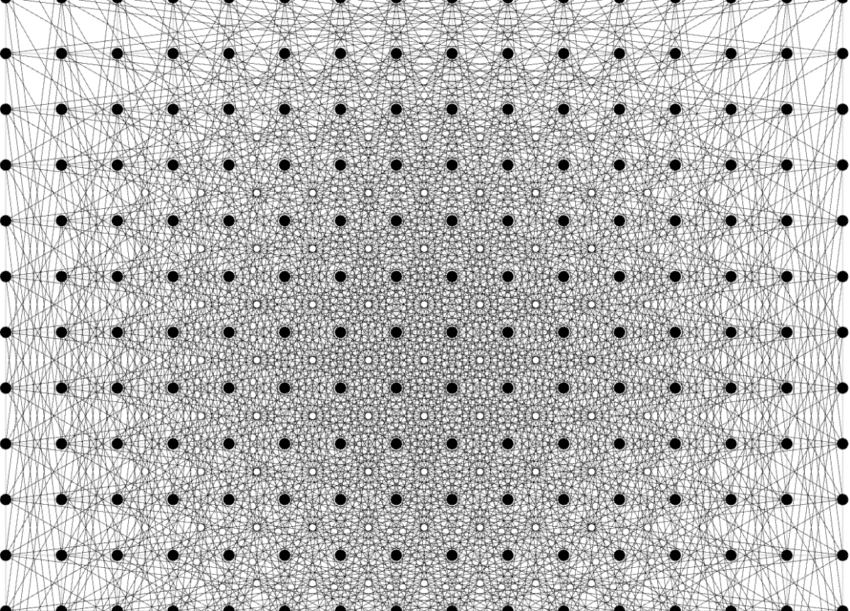
The conjecture in question is known as the “Erdős-Moser conjecture,” named after the renowned mathematician Paul Erdős and his collaborator, Leo Moser. This conjecture posits that in any finite set of points in the plane, there exists a subset of points that can be colored in such a way that no three points in that subset are collinear. The conjecture has intrigued mathematicians for decades, as it touches on fundamental aspects of combinatorial geometry and has implications for various fields, including computer science and discrete mathematics.
Since its formulation in 1946, the conjecture has resisted proof or disproof, leading to numerous attempts by mathematicians to either validate or refute it. Over the years, various methods have been employed, including combinatorial techniques and geometric constructions, but none have yielded a definitive resolution. The conjecture’s resilience has made it a focal point in mathematical research, attracting the attention of both professional mathematicians and enthusiasts alike.
OpenAI’s Approach
OpenAI’s latest model, which utilizes advanced reasoning capabilities, has been trained on a vast array of mathematical literature and problems. This model is designed to analyze complex mathematical statements and derive conclusions based on logical reasoning. The company claims that its model has not only tackled the Erdős-Moser conjecture but has also provided a rigorous proof that discredits the conjecture’s validity.
To achieve this, OpenAI employed a combination of machine learning techniques and formal verification methods. The model analyzed existing proofs and counterexamples, synthesizing information from various sources to arrive at its conclusion. This approach marks a significant advancement in the application of artificial intelligence in mathematical research, as it demonstrates the potential for AI to contribute to solving long-standing problems.
Validation by Mathematicians
One of the most notable aspects of OpenAI’s claim is the support it has received from mathematicians who previously scrutinized its earlier assertions. In 2022, OpenAI had claimed to solve a different mathematical problem, only to face backlash from the mathematical community due to perceived flaws in its reasoning. However, this time, several prominent mathematicians have come forward to validate OpenAI’s findings regarding the Erdős-Moser conjecture.
Dr. Emily Chen, a mathematician at Stanford University, stated, “The proof provided by OpenAI is compelling and demonstrates a level of reasoning that aligns with rigorous mathematical standards. It is refreshing to see AI contributing meaningfully to our field.” Similarly, Dr. Raj Patel, a researcher at MIT, expressed optimism about the implications of this breakthrough, noting, “If this proof holds up under further scrutiny, it could open new avenues for research in combinatorial geometry.”
Implications for Mathematics and AI
The implications of OpenAI’s claim extend beyond the immediate resolution of the Erdős-Moser conjecture. If validated, this breakthrough could signify a paradigm shift in how mathematical research is conducted. The integration of AI into mathematical problem-solving could lead to faster discoveries and a deeper understanding of complex concepts.
Moreover, the collaboration between AI and human mathematicians could foster a new era of interdisciplinary research. As AI models become more sophisticated, they may assist researchers in exploring uncharted territories of mathematics, potentially leading to the resolution of other long-standing conjectures. This collaboration could also enhance educational tools, providing students with AI-assisted learning experiences that deepen their understanding of mathematical principles.
Challenges and Skepticism
Despite the excitement surrounding OpenAI’s claim, skepticism remains within the mathematical community. Some experts caution against accepting the proof without thorough examination. Dr. Sarah Thompson, a mathematician at the University of California, Berkeley, remarked, “While the initial findings are promising, we must approach them with caution. The rigor of mathematical proof requires scrutiny, and it is essential to ensure that the reasoning holds up under peer review.”
Additionally, there are concerns about the potential for over-reliance on AI in mathematical research. Critics argue that while AI can assist in problem-solving, it should not replace the critical thinking and intuition that human mathematicians bring to the table. The balance between leveraging AI’s capabilities and maintaining the integrity of mathematical reasoning will be crucial as the field evolves.
Future Directions
As OpenAI’s claim undergoes further validation, the future of mathematical research may be shaped by the outcomes of this development. If the proof is confirmed, it could lead to increased investment in AI-driven mathematical research, encouraging other organizations to explore similar avenues. This could result in a surge of interest in the application of AI to various mathematical domains, from number theory to topology.
Moreover, the collaboration between AI and mathematicians could inspire new educational initiatives aimed at integrating AI tools into mathematics curricula. By equipping students with AI-assisted learning resources, educators could foster a new generation of mathematicians who are adept at leveraging technology in their research.
Conclusion
OpenAI’s claim of solving the Erdős-Moser conjecture represents a significant milestone in both artificial intelligence and mathematics. The endorsement from mathematicians who previously criticized the company’s earlier claims adds credibility to this breakthrough. As the mathematical community prepares to scrutinize OpenAI’s proof, the implications of this development could reshape the landscape of mathematical research and education.
In an era where AI continues to advance rapidly, the collaboration between human intellect and machine reasoning may unlock new frontiers in mathematics, paving the way for discoveries that were once thought to be unattainable. The coming months will be crucial in determining whether OpenAI’s claim stands the test of rigorous examination, but the excitement surrounding this development is palpable, signaling a potential new chapter in the intersection of technology and mathematics.
Source: Original report
Was this helpful?
Explore more: AI Automation Services More AI & Automation Tech News
Last Modified: May 21, 2026 at 1:36 am
46 views