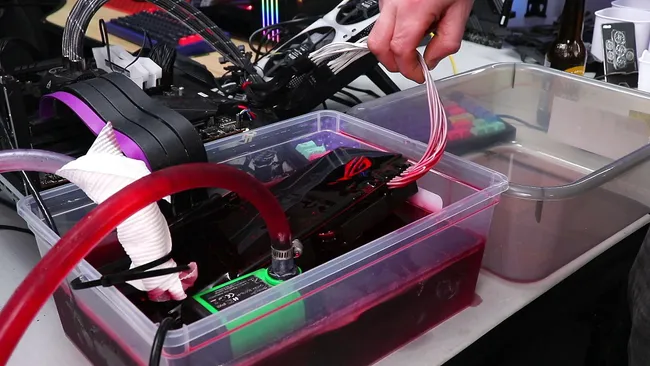
A Reddit enthusiast has taken immersion cooling to a new level by submerging a GTX 1060 and a 1080 Ti in car transmission fluid to conduct overclocking experiments.
NVidia 1080 ti dunked into car transmission
Understanding Immersion Cooling
NVidia 1080 ti dunked into car transmission: key context and updates inside.
Immersion cooling is a method that involves submerging computer components in a thermally conductive liquid, which helps dissipate heat more effectively than traditional air cooling systems. This technique has gained traction among overclocking enthusiasts and data centers looking to improve thermal management and energy efficiency. By using liquids with high thermal conductivity, users can achieve lower temperatures, thereby enhancing performance and extending the lifespan of components.
How Immersion Cooling Works
In immersion cooling, components are placed in a non-conductive liquid that absorbs heat generated during operation. The heat is then transferred away from the components, often through a radiator or cooling system that circulates the liquid. This method can lead to significant temperature reductions, allowing for higher overclocking potential. The choice of liquid is crucial; while water is a common coolant, alternatives like mineral oil or specialized fluids are often used for their superior thermal properties.
The Experiment: Submerging GPUs in Transmission Fluid
The Reddit user, known for their innovative approach to overclocking, decided to experiment with immersion cooling using Automatic Transmission Fluid (ATF). This choice of coolant is unconventional, as ATF is typically used in vehicles to lubricate and cool transmission components. However, its thermal properties made it an intriguing option for cooling computer hardware.
Setup and Methodology
The enthusiast submerged both a GTX 1060 and a GTX 1080 Ti in the ATF, utilizing a Dodge Journey transmission cooler as a radiator. This setup allowed for effective heat dissipation, as the cooler circulated the transmission fluid, preventing overheating during the overclocking tests. The experiment aimed to determine whether immersion cooling with ATF could yield significant performance gains for these GPUs.
Performance Results
The results of the experiment were revealing. The GTX 1060 showed substantial improvements in performance, with gains ranging from 7% to 16%. This increase can be attributed to the effective cooling provided by the immersion setup, allowing the GPU to maintain optimal operating temperatures even under heavy loads.
In contrast, the GTX 1080 Ti exhibited only mild improvements in performance. While the immersion cooling setup did enhance its thermal management, the gains were not as pronounced as those seen with the GTX 1060. This disparity may be due to the inherent design and architecture differences between the two GPUs, as well as the limitations of the ATF as a cooling medium for higher-end components.
Implications of the Experiment
This experiment raises several questions about the effectiveness of immersion cooling using unconventional fluids like ATF. While the results for the GTX 1060 were promising, the limited gains for the GTX 1080 Ti suggest that not all components may benefit equally from this method. This discrepancy could lead to further exploration of different cooling fluids and setups tailored to specific hardware.
Potential Benefits of Immersion Cooling
Despite the mixed results, immersion cooling offers several potential benefits for overclocking enthusiasts and gamers:
- Enhanced Thermal Management: Immersion cooling can significantly lower temperatures, allowing for more aggressive overclocking without the risk of overheating.
- Noise Reduction: By eliminating the need for traditional fans, immersion cooling systems can operate more quietly, creating a more pleasant computing environment.
- Longevity of Components: Lower operating temperatures can extend the lifespan of GPUs and other components, reducing the frequency of replacements and upgrades.
Challenges and Considerations
However, there are challenges associated with immersion cooling that must be considered:
- Cost: Setting up an immersion cooling system can be expensive, especially when using specialized fluids and equipment.
- Complexity: The installation and maintenance of an immersion cooling system can be more complicated than traditional cooling methods, requiring a certain level of technical expertise.
- Compatibility: Not all components are designed for immersion cooling, and users must ensure that their hardware can withstand being submerged in liquid.
Community Reactions and Future Prospects
The Reddit community has reacted with a mix of fascination and skepticism to the experiment. Many users expressed admiration for the ingenuity displayed in using ATF for immersion cooling, while others questioned the practicality and safety of such a setup. Discussions have emerged regarding the potential for further experimentation with different fluids and configurations, as well as the implications for future GPU designs.
Potential for Further Research
This experiment opens the door for further research into the effectiveness of various cooling fluids in immersion setups. While ATF showed promise for the GTX 1060, other fluids may yield better results for high-performance GPUs like the GTX 1080 Ti. Future experiments could explore the use of mineral oil, specialized cooling fluids, or even custom blends designed for optimal thermal performance.
Conclusion
The Reddit enthusiast’s foray into immersion cooling with ATF has provided valuable insights into the potential and limitations of unconventional cooling methods. While the results for the GTX 1060 were encouraging, the modest gains for the GTX 1080 Ti highlight the need for further exploration in this area. As the community continues to experiment with different cooling solutions, the future of immersion cooling may hold exciting possibilities for overclocking and thermal management.
Source: Original report
Related: More technology coverage
Was this helpful?
Last Modified: August 31, 2025 at 10:13 pm
11 views