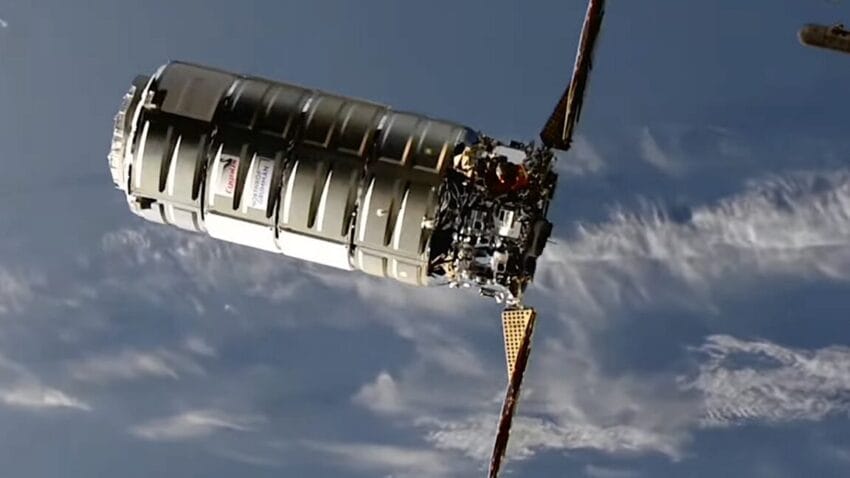
northrop grumman successfully resupplies iss after overcoming Northrop Grumman’s Cygnus XL cargo freighter successfully resupplied the International Space Station (ISS) after overcoming a software glitch that delayed its arrival.
northrop grumman successfully resupplies iss after overcoming
Mission Overview
On Thursday, the Cygnus XL spacecraft arrived at the ISS, delivering over 5 tons of essential supplies and scientific experiments to the station’s seven-person crew. This mission, designated NG-19, was crucial for maintaining the ongoing research and daily operations aboard the ISS. The spacecraft was initially scheduled to arrive a day earlier but faced a delay due to a software issue that was identified and resolved prior to its docking.
Docking Procedure
The docking process was executed with precision, showcasing the capabilities of both the Cygnus spacecraft and the ISS’s robotic systems. NASA astronaut Jonny Kim took control of the space station’s robotic arm, known as the Canadarm2, to capture the Cygnus spacecraft at 7:24 AM EDT (11:24 UTC). This operation required meticulous coordination and timing, as the spacecraft approached the station at a speed of approximately 0.1 meters per second.
Once captured, the robotic arm maneuvered the Cygnus spacecraft over an attachment port on the ISS’s Unity module. Following this, 16 bolts were driven closed to create a secure mechanical connection between the spacecraft and the station. This connection is vital for ensuring that the supplies can be safely transferred to the ISS and that the spacecraft can be monitored while it remains docked.
Significance of the Resupply Mission
The successful docking of the Cygnus XL is a testament to the resilience and adaptability of the teams involved in the mission. The supplies delivered are not just critical for the day-to-day operations of the ISS but also support ongoing scientific research that can have far-reaching implications for space exploration and life on Earth.
Supplies and Experiments Delivered
The cargo delivered by the Cygnus XL includes a variety of supplies, ranging from food and water to scientific equipment and experiments. Some of the notable items in the cargo manifest include:
- Food and nutritional supplements for the crew
- Scientific experiments aimed at understanding the effects of microgravity on various biological processes
- Equipment for ongoing research in fields such as materials science and fluid dynamics
- Hardware for the station’s systems, including spare parts and maintenance tools
This resupply mission is particularly significant as it supports a range of experiments that could lead to advancements in medicine, agriculture, and materials science. For example, research conducted in microgravity can provide insights into protein crystallization, which is essential for drug development.
Addressing the Software Glitch
The software glitch that delayed the Cygnus XL’s arrival was a critical issue that required immediate attention. While specific details about the nature of the glitch have not been disclosed, it was resolved in time to ensure a safe docking. Such glitches are not uncommon in space missions, where complex systems must work seamlessly together.
Implications of Software Reliability
The incident underscores the importance of software reliability in space missions. As spacecraft become increasingly autonomous, the need for robust and fail-safe software systems becomes paramount. Engineers and mission planners must continuously refine and test these systems to prevent potential failures that could jeopardize missions and crew safety.
NASA and Northrop Grumman have emphasized their commitment to rigorous testing and validation processes. This incident serves as a reminder of the challenges faced in space exploration and the importance of having contingency plans in place.
Future of Cygnus Missions
The Cygnus XL spacecraft is expected to remain docked at the ISS for up to six months. During this time, astronauts will unpack the cargo module and utilize the supplies for their ongoing research and daily needs. Once the mission is complete, the Cygnus spacecraft will be filled with trash and waste generated during its time at the station.
Destructive Reentry
After its mission concludes, the Cygnus spacecraft will depart the ISS and head for a controlled destructive reentry over the remote Pacific Ocean. This procedure is a standard practice for resupply missions, ensuring that any remaining materials are safely disposed of without posing a risk to populated areas.
Stakeholder Reactions
The successful resupply mission has garnered positive reactions from various stakeholders, including NASA officials, Northrop Grumman engineers, and the astronauts aboard the ISS. NASA Administrator Bill Nelson expressed his satisfaction with the mission’s outcome, stating, “This successful resupply mission is a testament to the hard work and dedication of our teams and partners. It ensures that our astronauts have the resources they need to continue their important work aboard the ISS.”
Northrop Grumman’s leadership also praised the team for their swift resolution of the software issue. “Our engineers worked tirelessly to address the glitch, and their efforts have paid off,” said Northrop Grumman’s Vice President of Space Systems. “This mission is a critical component of our ongoing partnership with NASA and the international space community.”
Conclusion
The successful docking of Northrop Grumman’s Cygnus XL cargo freighter with the ISS marks another milestone in the ongoing collaboration between commercial space companies and government space agencies. As the ISS continues to serve as a platform for scientific research and international cooperation, missions like NG-19 are essential for sustaining its operations and advancing our understanding of space.
Looking ahead, the lessons learned from this mission, particularly regarding software reliability and mission planning, will inform future resupply missions and contribute to the overall safety and success of space exploration endeavors. As humanity continues to push the boundaries of what is possible in space, the importance of reliable technology and effective teamwork cannot be overstated.
Source: Original report
Was this helpful?
Explore more: DevOps Services More Cloud & DevOps Tech News
Last Modified: September 19, 2025 at 4:37 am
11 views