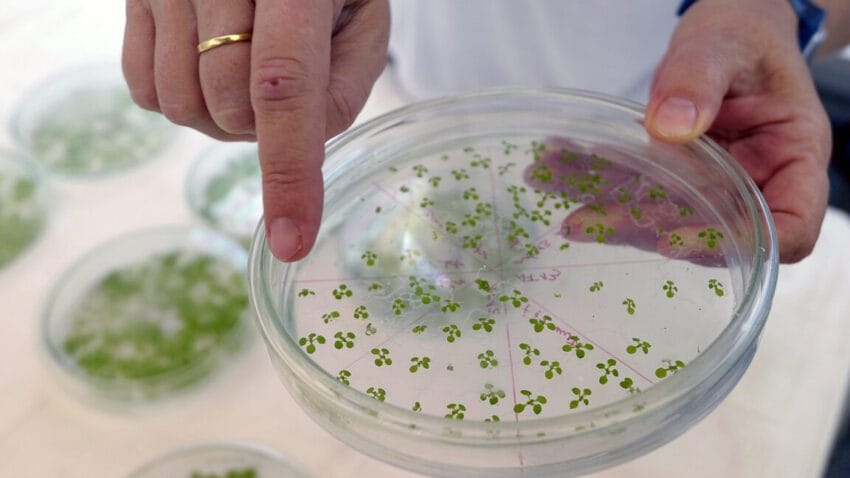
new pathway engineered into plants lets them Researchers have engineered a novel biochemical pathway in plants that enhances their ability to absorb carbon dioxide, offering a promising avenue for addressing climate change.
new pathway engineered into plants lets them
Introduction to Carbon Sequestration via Plants
As concerns over climate change intensify, the role of plants in sequestering carbon dioxide (CO₂) has garnered significant attention. The idea of utilizing natural processes to mitigate the effects of greenhouse gases is appealing, especially given the urgency of reducing atmospheric CO₂ levels. However, recent studies have revealed that the potential for large-scale reforestation may be limited due to insufficient productive land available for planting. This has led researchers to explore alternative methods for enhancing the carbon uptake capabilities of existing plants.
The Challenge of RUBISCO
One of the primary challenges in improving carbon uptake in plants lies with the enzyme responsible for incorporating CO₂ into the photosynthetic process: RUBISCO (Ribulose-1,5-bisphosphate carboxylase/oxygenase). Despite being one of the most abundant enzymes on Earth, RUBISCO is notoriously inefficient. Its slow reaction rate and tendency to react with oxygen instead of carbon dioxide limit the overall efficiency of photosynthesis, making it a significant bottleneck in the carbon fixation process.
Understanding Photosynthesis
Photosynthesis is a complex biochemical process that allows plants to convert light energy into chemical energy, using CO₂ and water. The Calvin cycle, a crucial component of photosynthesis, involves a series of reactions that ultimately convert CO₂ into glucose. This cycle begins when RUBISCO catalyzes the reaction between CO₂ and a five-carbon sugar, ribulose bisphosphate (RuBP), resulting in two three-carbon molecules known as 3-phosphoglycerate (3-PGA).
These three-carbon molecules can then be utilized for energy or reassembled into RuBP, allowing the cycle to continue. However, the inefficiency of RUBISCO means that a significant amount of energy is wasted, limiting the plant’s ability to sequester carbon effectively.
Innovative Approach by Taiwanese Researchers
In light of these challenges, a team of researchers in Taiwan has taken a groundbreaking approach to enhance carbon uptake in plants. They engineered a set of enzymes that introduce a new biochemical cycle, distinct from the traditional Calvin cycle, allowing plants to incorporate carbon more efficiently. This innovative pathway has the potential to significantly increase the size and carbon content of the plants.
The New Biochemical Cycle
The newly engineered cycle operates by modifying the way plants process carbon. The researchers designed enzymes that facilitate a series of reactions that are more energetically favorable than those in the Calvin cycle. By optimizing these reactions, the plants can absorb CO₂ more effectively, leading to increased biomass and improved carbon sequestration capabilities.
Initial experiments have shown promising results. The modified plants not only grow larger but also demonstrate a greater capacity to incorporate carbon into their structures. This advancement could have far-reaching implications for agriculture, forestry, and climate change mitigation strategies.
Implications for Climate Change Mitigation
The ability to enhance carbon uptake in plants could play a crucial role in global efforts to combat climate change. As the world grapples with rising temperatures and increasing levels of greenhouse gases, finding effective solutions to reduce atmospheric CO₂ is imperative. The engineered plants could serve as a natural method for carbon sequestration, complementing other strategies such as renewable energy adoption and carbon capture technologies.
Potential Applications
The implications of this research extend beyond theoretical discussions. The enhanced carbon uptake capabilities of these engineered plants could lead to various practical applications:
- Agricultural Productivity: By increasing the carbon content in crops, farmers could potentially achieve higher yields, contributing to food security in a changing climate.
- Reforestation Efforts: Enhanced plants could be utilized in reforestation projects, helping to restore ecosystems while simultaneously sequestering carbon.
- Bioenergy Production: Plants with improved growth rates and carbon content could be used as feedstocks for bioenergy, providing a sustainable energy source while reducing atmospheric CO₂.
Stakeholder Reactions
The research has garnered attention from various stakeholders, including scientists, environmentalists, and policymakers. Many view the development as a significant step forward in the quest for sustainable solutions to climate change. However, there are also concerns regarding the potential ecological impacts of introducing genetically modified organisms (GMOs) into natural ecosystems.
Scientific Community
Within the scientific community, the engineered pathway has sparked excitement and curiosity. Researchers are eager to explore the full potential of this innovation and its implications for plant biology. Some scientists emphasize the importance of conducting thorough studies to understand the long-term effects of these modifications on plant health and ecosystem dynamics.
Environmental Advocacy Groups
Environmental advocacy groups have expressed cautious optimism about the research. While they acknowledge the potential benefits of enhanced carbon uptake, they also stress the need for rigorous safety assessments and regulatory frameworks to ensure that genetically modified plants do not disrupt existing ecosystems. The balance between innovation and ecological integrity remains a critical consideration.
Policy Implications
Policymakers are also taking note of the research, recognizing its potential to inform climate action strategies. The integration of enhanced carbon-sequestering plants into national and international climate policies could be a game-changer in the fight against climate change. However, policymakers must navigate the complexities of GMO regulations and public perception to ensure that these innovations are embraced rather than resisted.
Future Directions in Research
The research conducted by the Taiwanese team represents a significant advancement in our understanding of plant biology and carbon sequestration. However, it is only the beginning. Future studies will be essential to further explore the mechanisms behind the engineered pathway, assess its effectiveness in various environmental conditions, and evaluate its potential impacts on ecosystems.
Field Trials and Long-Term Studies
To fully understand the implications of these engineered plants, field trials will be necessary. These trials will provide valuable insights into how the modified plants perform in real-world conditions, including their growth rates, carbon uptake efficiency, and interactions with other species. Long-term studies will be crucial for assessing the sustainability of these innovations and their potential role in mitigating climate change.
Collaboration Across Disciplines
The complexity of climate change necessitates collaboration across various scientific disciplines. Researchers from fields such as ecology, genetics, and environmental science must work together to ensure that the development of enhanced carbon-sequestering plants is informed by a comprehensive understanding of ecological principles. This interdisciplinary approach will be vital for addressing the multifaceted challenges posed by climate change.
Conclusion
The engineering of a new biochemical pathway in plants represents a promising advancement in the quest for effective carbon sequestration methods. By enhancing the ability of plants to absorb CO₂, researchers are opening new avenues for addressing climate change. While the potential applications are vast, careful consideration of ecological impacts and stakeholder perspectives will be essential as this research progresses. The future of enhanced carbon uptake in plants holds great promise, but it will require continued innovation, collaboration, and responsible stewardship to realize its full potential.
Source: Original report
Was this helpful?
Explore more: More General Technology Tech News Blog
Last Modified: September 12, 2025 at 8:35 pm
15 views