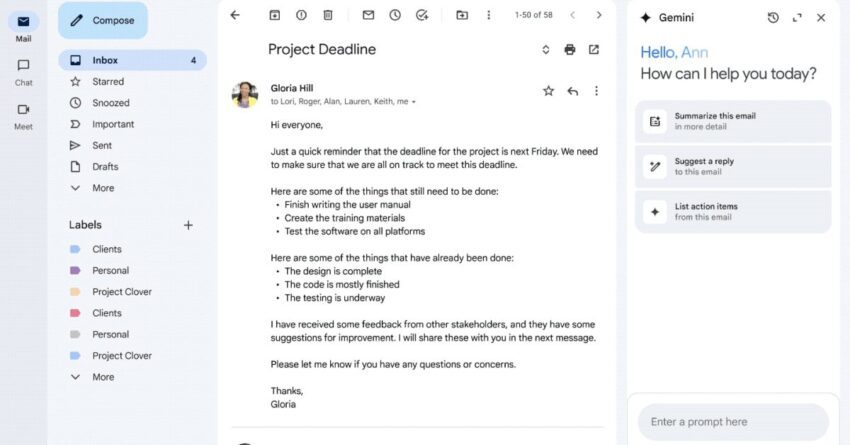
new gmail ai features replacing gemini side Google has announced the discontinuation of the Gemini side panel for AI Pro and Ultra subscribers in the United States, following the introduction of new “in-line AI experiences” in Gmail.
new gmail ai features replacing gemini side
Overview of the Changes
In a significant update to its email platform, Google has rolled out new features designed to enhance user experience through artificial intelligence. The company revealed that the Gemini side panel, which has been a staple for many users, will be phased out for subscribers of its AI Pro and Ultra tiers. This decision aligns with Google’s ongoing commitment to integrate advanced AI capabilities directly into its services, streamlining user interactions and improving productivity.
The Role of the Gemini Side Panel
The Gemini side panel was introduced as a tool to assist users in managing their emails more efficiently. It provided functionalities such as summarizing email threads, suggesting responses, and offering contextual information based on the content of the emails. While the side panel was well-received for its innovative approach to email management, Google has determined that the new in-line AI experiences will provide a more seamless and integrated solution.
In-Line AI Experiences Explained
The newly launched in-line AI experiences are designed to embed AI functionalities directly within the email interface. This means that users will no longer need to rely on a separate panel to access AI features. Instead, the capabilities will be integrated into the email composition and reading processes, allowing for a more fluid interaction with the platform.
Some of the key features of the in-line AI experiences include:
- Email Summarization: Users can receive concise summaries of lengthy email threads, making it easier to grasp the essential points without sifting through multiple messages.
- Contextual Suggestions: The AI will provide real-time suggestions based on the content of the email, helping users craft responses more efficiently.
- Task Management: The AI can identify actionable items within emails and suggest tasks, integrating with Google Tasks for better organization.
- Smart Replies: Enhanced smart reply options will allow users to respond quickly with contextually relevant suggestions.
Implications for Users
The transition from the Gemini side panel to in-line AI experiences represents a significant shift in how users will interact with Gmail. For AI Pro and Ultra subscribers, this change could lead to a more streamlined workflow, as the need to switch between panels is eliminated. However, it also raises questions about user adaptation and the overall effectiveness of the new features.
User Adaptation
As with any technological shift, user adaptation will play a crucial role in the success of these new features. While many users may welcome the convenience of in-line AI experiences, others may find it challenging to adjust to the new interface. Google has a history of implementing changes that initially meet with resistance, only to see acceptance grow as users become familiar with the new functionalities.
Feedback and Reactions
Initial reactions from users have been mixed. Some have expressed excitement about the potential for improved productivity and efficiency, while others have voiced concerns about losing the familiar Gemini side panel. Google has indicated that it will continue to gather user feedback to refine the in-line AI experiences further.
Stakeholder Perspectives
The decision to phase out the Gemini side panel has implications not only for users but also for various stakeholders involved in the development and deployment of these features.
Google’s Vision for AI Integration
From Google’s perspective, the integration of AI into its services is a strategic move aimed at enhancing user engagement and satisfaction. By embedding AI capabilities directly into Gmail, Google is positioning itself as a leader in the email service market, leveraging technology to meet evolving user needs.
Competitor Landscape
The shift away from the Gemini side panel also reflects broader trends in the technology landscape, where companies are increasingly focusing on AI-driven solutions. Competitors in the email service space, such as Microsoft with its Outlook platform, are also exploring similar integrations. This competitive pressure may drive Google to continually innovate and improve its offerings to maintain its market position.
Future Developments
Looking ahead, the discontinuation of the Gemini side panel may pave the way for further enhancements to Gmail’s AI capabilities. Google has a robust roadmap for AI development, and the feedback received from users regarding the in-line experiences will likely inform future updates.
Potential Features on the Horizon
While specific future features have not been disclosed, there are several areas where Google could expand its AI functionalities within Gmail:
- Advanced Personalization: Leveraging user data to provide more tailored email experiences, such as customized layouts or prioritized email displays.
- Enhanced Security Features: AI-driven tools to identify phishing attempts or suspicious emails, providing users with real-time alerts.
- Integration with Other Google Services: Seamless connectivity with Google Calendar, Google Meet, and other services to create a more cohesive user experience.
Conclusion
The transition from the Gemini side panel to in-line AI experiences in Gmail marks a pivotal moment in the evolution of Google’s email platform. While the change may present challenges for some users, the potential benefits of enhanced productivity and streamlined workflows are significant. As Google continues to refine its AI capabilities, the future of Gmail looks promising, with the possibility of even more innovative features on the horizon.
Source: Original report
Was this helpful?
Last Modified: January 10, 2026 at 1:51 am
4 views