new critique debunks claim that trees can A recent critique has challenged the claims that spruce trees can sense and respond to a solar eclipse, raising questions about the validity of the original research.
new critique debunks claim that trees can
Background of the Original Study
In October 2022, a team of scientists led by physicist Alessandro Chiolerio from the Italian Institute of Technology published a paper that suggested spruce trees in Italy’s Dolomite mountains exhibited synchronized bioelectrical activity in anticipation of a partial solar eclipse. This groundbreaking research proposed that trees could communicate and respond to environmental changes in a manner previously unrecognized.
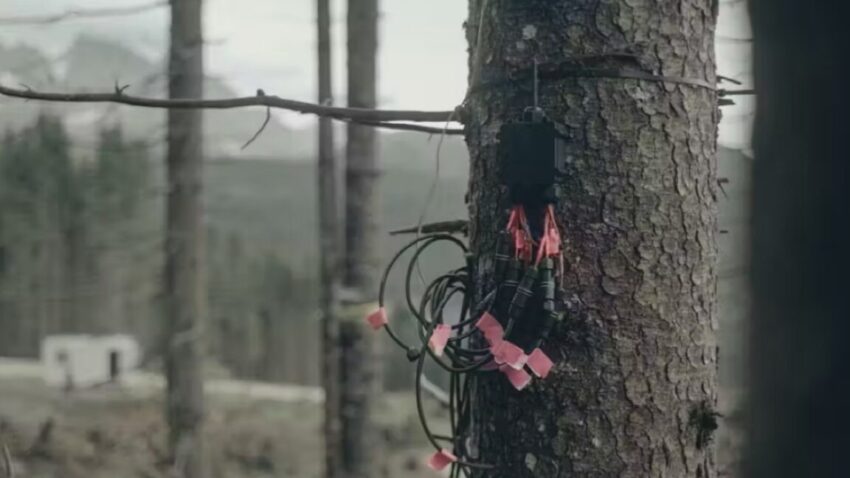
The study was conducted in the Costa Bocche forest, where Chiolerio collaborated with plant ecologist Monica Gagliano from Southern Cross University and other researchers. They aimed to explore the intricacies of plant communication by employing a novel approach: creating an electrocardiogram (EKG) for trees. To achieve this, they attached electrodes to three spruce trees, aged between 20 and 70 years, as well as five tree stumps in the area.
Methodology and Findings
The researchers recorded bioelectrical activity during the partial solar eclipse that occurred on October 22, 2022. Their findings indicated a significant increase in bioelectrical signals from the trees, peaking during the eclipse and diminishing afterward. Chiolerio and his team interpreted this spike as a coordinated response among the trees to the darkened conditions caused by the eclipse.
Age-Related Responses
One of the more intriguing aspects of the study was the observation that older trees exhibited a more pronounced and earlier spike in electrical activity compared to younger trees. This led the authors to theorize that older trees might possess a form of memory regarding environmental changes, potentially allowing them to transmit this knowledge to younger trees. The researchers suggested that bioelectrical waves could travel between trees, facilitating this communication.
Media Response and Public Interest
The initial findings captured the attention of both the scientific community and the general public. Media outlets reported on the study, framing it as a significant advancement in our understanding of plant behavior and communication. The excitement surrounding the research even inspired a documentary, further amplifying its reach and impact.
Criticism and Skepticism
However, the claims made in the original paper did not go unchallenged. Many researchers expressed skepticism regarding the methodology and conclusions drawn by Chiolerio and his team. Some critics questioned whether the paper should have been published in the first place, arguing that the evidence presented was not robust enough to support the claims of tree communication and memory.
New Critique in Trends in Plant Science
In response to the original study, a new critique has been published in the journal Trends in Plant Science. This critique outlines several key concerns regarding the methodology, data interpretation, and the broader implications of the findings. Critics argue that the observed bioelectrical activity could be attributed to other environmental factors rather than a direct response to the eclipse.
Methodological Concerns
One of the primary criticisms revolves around the experimental design. Critics contend that the sample size of three trees and five stumps is too small to draw definitive conclusions about tree behavior during an eclipse. Additionally, the lack of a control group raises questions about the validity of the findings. Without a comparison to trees not exposed to the eclipse, it is challenging to ascertain whether the observed changes in bioelectrical activity were indeed a response to the eclipse or simply a result of other variables.
Alternative Explanations
Furthermore, the critique suggests that the spikes in bioelectrical activity could be influenced by other factors such as temperature fluctuations, humidity changes, or even the natural circadian rhythms of the trees. Critics argue that the researchers did not adequately account for these variables, which could lead to misinterpretations of the data.
Implications of the Findings
The implications of the original study and the subsequent critique are significant for the field of plant science. If the claims of tree communication and memory were validated, it would represent a paradigm shift in our understanding of plant behavior. It would suggest that trees possess a level of awareness and responsiveness to their environment that has not been previously recognized.
On the other hand, if the critique holds merit, it underscores the importance of rigorous scientific methodology and the need for caution when interpreting data in the field of plant communication. The debate surrounding this research highlights the complexities of studying plant behavior and the necessity for further investigation.
Stakeholder Reactions
The reactions from the scientific community have been mixed. Some researchers support the original findings, arguing that they open up new avenues for exploring plant communication. They believe that even if the claims are not entirely substantiated, they encourage further research into the bioelectrical activity of plants and their responses to environmental stimuli.
Conversely, others emphasize the need for skepticism and rigorous validation of such claims. They argue that the scientific community must maintain high standards for evidence, especially when it comes to groundbreaking assertions about the capabilities of living organisms. The debate has sparked discussions about the balance between innovation and scientific rigor in research.
Future Directions in Plant Research
The ongoing discourse surrounding the original study and its critique points to the need for more comprehensive research in the field of plant communication. Future studies could benefit from larger sample sizes, controlled environments, and a more nuanced understanding of the various factors influencing plant behavior.
Researchers may also explore other methodologies to investigate the bioelectrical activity of plants, potentially incorporating advanced imaging techniques or real-time monitoring systems. These approaches could provide deeper insights into how plants interact with their environment and each other.
Conclusion
The debate over whether trees can sense and respond to a solar eclipse serves as a reminder of the complexities inherent in scientific research. While the original study proposed a fascinating perspective on plant communication, the subsequent critique highlights the importance of rigorous methodology and critical analysis in the scientific process. As research in this area continues to evolve, it will be essential for scientists to navigate the fine line between innovation and skepticism, ensuring that claims are substantiated by robust evidence.
Source: Original report
Was this helpful?
Last Modified: February 7, 2026 at 2:41 am
3 views