Meta is adding a new AI creator assistant to Facebook, a tool designed to help creators interpret performance data, understand audience feedback, and generate fresh content ideas without leaving the platform. The feature is rolling out first in the U.S., Canada, and India, as Meta looks to keep creators more active on Facebook while competing for their attention with TikTok, YouTube, and other platforms.
A conversational assistant for creators
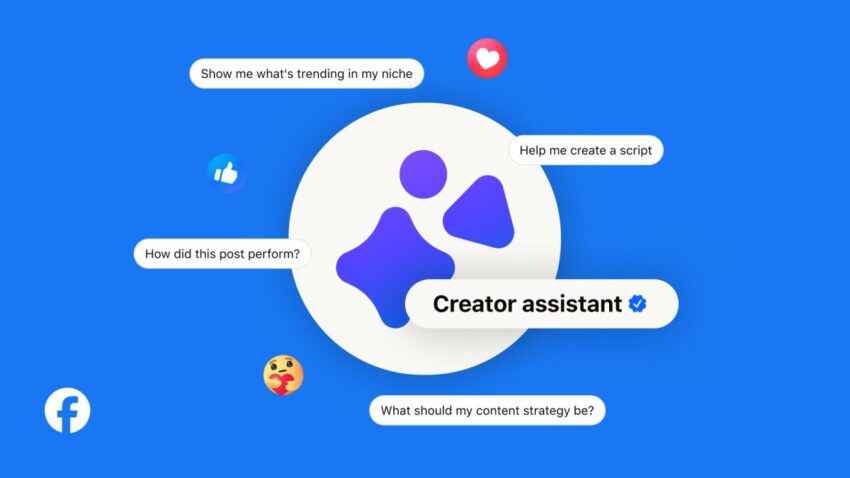
Meta said on Thursday that the new AI creator assistant will provide personalized recommendations based on a creator’s content style, performance, community, and goals. Instead of forcing creators to dig through charts and dashboards on their own, the assistant is meant to answer questions in a more direct, conversational way.
Examples Meta highlighted include prompts such as “When should I post?” and “What are people saying in my comments?” Because the assistant is conversational, creators can also follow up with more detailed questions. That could include exploring how their audience has changed over time or asking for guidance on what they might adjust to improve performance.
The answers are intended to be grounded in the creator’s own Facebook presence, with recommendations tailored to what that creator can do differently. Meta is positioning the feature as a practical tool for both analysis and planning, rather than a generic chatbot.
Help with brainstorming and content ideas
Beyond reviewing performance, the assistant will also help creators brainstorm new content by drawing on what is currently trending. Meta said the tool may suggest using trending audio or creating posts around cultural moments. That makes the feature part analytics tool and part creative partner, aimed at speeding up the process of deciding what to publish next.
For creators who regularly post video, short-form clips, or commentary, that kind of support could make Facebook feel more useful as a publishing hub. Meta’s move also suggests it wants creators to rely more heavily on built-in tools instead of turning to outside products when they want ideas or audience insight.
Why Meta is adding the assistant now
The launch reflects Meta’s broader effort to keep creators engaged on Facebook at a time when they have plenty of alternatives. TikTok and YouTube remain major destinations for creator attention, and Facebook has to compete not just for users, but for the people who regularly supply content that keeps the platform lively.
By offering an AI assistant directly inside Facebook, Meta is trying to remove some friction from the creator workflow. Creators often use third-party services, including ChatGPT, to brainstorm ideas or make sense of their performance data. A built-in assistant keeps those interactions inside Meta’s ecosystem, which could help the company retain creators and encourage them to post more often.
More posting can translate into more engagement, and more engagement can make Facebook a more attractive place for both creators and audiences. In that sense, the assistant is not only a convenience feature. It is also a strategic product designed to support Meta’s broader content and engagement goals.
Where the new tool is available
Meta said the AI creator assistant is starting to roll out to creators in the U.S., Canada, and India. The company also said it plans to add new capabilities and expand availability to more countries in the future.
Meta did not provide a detailed timeline for the broader launch in the source material, but the initial rollout suggests the company is testing the feature in major creator markets before extending it more widely.
AI translations get more languages
Alongside the creator assistant, Meta announced additional language support for AI translations on Facebook. The new languages include Arabic, Bahasa Indonesian, French, Thai, and Vietnamese.
The company said that with AI-translated Reels, a creator’s tone and sound are preserved while the content is automatically translated into another language. The feature, launched last year, is intended to help creators reach more audiences by reducing language barriers.
Meta also noted that creators can use a lip-sync feature that aligns the translation with their lip movements, which makes the video feel more natural. That combination of translation and visual matching is meant to improve the viewing experience and make the content appear less mechanically dubbed.
Meta’s push to broaden reach
The new translation capabilities fit into the same larger strategy as the creator assistant: make Facebook more valuable to the people who produce content, and in turn make the platform more attractive to everyone else. The more easily creators can understand their audience, produce content, and distribute it across languages, the more content Facebook can potentially host.
Meta said that more than half a billion users on Facebook are now watching AI-translated videos weekly. That figure suggests the company is seeing significant usage of the feature and is continuing to invest in making content more globally accessible.
For creators, that could mean a wider audience without the need to manually translate or localize each post. For Meta, it means another way to increase the amount of content people can understand and engage with on Facebook.
What creators can expect
Based on Meta’s description, the AI creator assistant appears aimed at making a few common creator tasks easier:
- Getting quick answers to performance questions without digging through analytics dashboards
- Asking follow-up questions for deeper insight into audience behavior
- Receiving recommendations tied to a creator’s own content and goals
- Brainstorming new post ideas based on trends, audio, and cultural moments
That combination could be especially helpful for creators who post frequently and want faster guidance on what is and is not working. It may also appeal to smaller creators who do not have dedicated analytics teams or social media managers.
At the same time, Meta’s broader business interest is clear: if the assistant helps creators post more often and stay on Facebook longer, the platform may benefit from stronger engagement. The feature is therefore both a creator tool and a retention strategy.
Meta’s latest updates show a continued emphasis on AI as a way to support content creation, improve discoverability, and reduce the effort required to publish across languages. The company is betting that giving creators faster feedback and more inspiration will help keep Facebook relevant in a crowded creator economy.
Source: Original report
Was this helpful?
Explore more: AI Automation Services More AI & Automation Tech News
Last Modified: July 7, 2026 at 9:26 pm
11 views