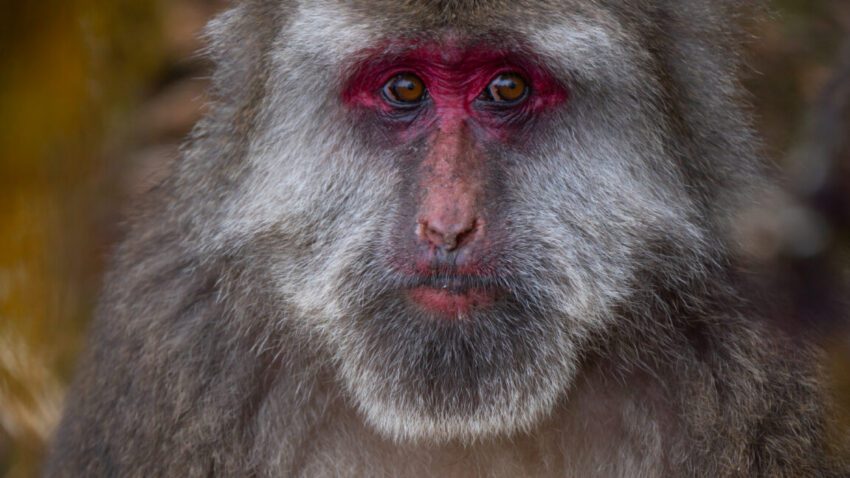
macaque facial gestures are more than just Recent research indicates that macaque facial gestures are more complex than previously understood, revealing insights that could influence future brain-computer interfaces.
macaque facial gestures are more than just
Understanding Facial Gestures in Primates
Facial gestures play a crucial role in communication, not only among humans but also in the primate world. While language is a significant aspect of human interaction, non-verbal cues, such as facial expressions, convey a wealth of information. Geena Ianni, a neuroscientist at the University of Pennsylvania, highlights this complexity by sharing a personal anecdote: “When my young nephew asks for ice cream before dinner and I say ‘no,’ the meaning is entirely dictated by whether the word is punctuated with a smirk or a stern frown.” This illustrates that the subtleties of communication often extend beyond spoken language, incorporating facial expressions that can dramatically alter the interpretation of words.
The Future of Neural Prostheses
As advancements in brain-computer interfaces (BCIs) continue to evolve, researchers are exploring the potential for these technologies to decode not only speech but also facial gestures from neural signals. Ianni envisions a future where neural prostheses designed for patients suffering from strokes or paralysis could interpret facial gestures in a manner similar to how they currently decode speech. This could significantly enhance communication for individuals who have lost the ability to speak or express themselves through traditional means.
Research Methodology
To lay the groundwork for developing these facial gesture decoders, Ianni and her colleagues conducted a study aimed at understanding the neural circuitry responsible for generating facial expressions. “Although in recent years neuroscience got a good handle on how the brain perceives facial expressions, we know relatively little about how they are generated,” Ianni states. This gap in knowledge prompted the team to investigate the underlying mechanisms that govern facial gestures in macaques, a species that shares a significant amount of facial musculature with humans.
Previous Assumptions in Neuroscience
Historically, neuroscientists have operated under the assumption that facial gestures in primates arise from a clear division of labor within the brain. Case studies involving patients with brain lesions suggested that specific brain regions were responsible for distinct types of emotional expressions, while other areas were linked to voluntary movements, such as speech. This understanding has been instrumental in mapping the neural pathways involved in speech production, but similar clarity regarding facial expressions has been lacking.
Key Findings of the Study
Through their research, Ianni and her team uncovered surprising insights that challenge long-held beliefs about facial gestures. The study revealed that the neural circuitry responsible for facial expressions is far more integrated and complex than previously thought. Rather than a simple division of labor, the brain regions involved in facial gestures are interconnected, suggesting that emotional expressions are not merely reflexive but are influenced by a variety of factors, including social context and individual intent.
Implications for Neuroscience and Communication
The implications of these findings extend beyond academic interest; they could have profound effects on the development of neural prostheses and BCIs. By understanding the intricate neural mechanisms that govern facial expressions, researchers can create more sophisticated devices that accurately interpret a range of non-verbal cues. This could lead to improved communication for individuals with speech impairments, allowing them to express emotions and intentions more effectively.
Broader Context of Facial Expressions
The study of facial gestures is not limited to macaques; it has broader implications for understanding human communication as well. Facial expressions are a fundamental aspect of social interaction, influencing everything from personal relationships to professional dynamics. By exploring the neural basis of these expressions in primates, researchers can gain insights into the evolutionary origins of human communication.
Social Dynamics and Emotional Expression
In social species like macaques, facial gestures serve as critical signals for establishing social hierarchies, forming alliances, and navigating complex social interactions. Understanding how these gestures are generated in the brain can provide valuable insights into the social dynamics of primate groups, including humans. For instance, researchers may uncover how certain facial expressions are used to convey dominance, submission, or even empathy within social contexts.
Future Directions in Research
The findings from Ianni’s study open up several avenues for future research. One potential direction is to explore how different social contexts influence the generation of facial expressions. For example, do macaques exhibit different facial gestures when interacting with familiar individuals compared to strangers? Understanding these nuances could further enhance the development of BCIs that accurately interpret emotional states based on facial expressions.
Technological Advancements and Ethical Considerations
As technology continues to advance, the ethical implications of using BCIs to decode facial gestures must also be considered. While the potential benefits for individuals with communication impairments are significant, there are concerns about privacy and consent. The ability to interpret facial expressions directly from neural signals raises questions about how this information could be used or misused. Researchers and ethicists will need to work together to establish guidelines that protect individuals’ rights while promoting the development of beneficial technologies.
Conclusion
The study conducted by Geena Ianni and her colleagues represents a significant step forward in our understanding of facial gestures in primates. By challenging existing assumptions and uncovering the complexities of the neural circuitry involved, this research lays the groundwork for future advancements in brain-computer interfaces. As we continue to explore the intricate relationship between facial expressions and communication, the potential for improving the lives of individuals with speech impairments becomes increasingly tangible. The journey from understanding the brain’s mechanisms to developing practical applications in technology is a promising frontier in neuroscience.
Source: Original report
Was this helpful?
Last Modified: January 21, 2026 at 4:39 am
3 views