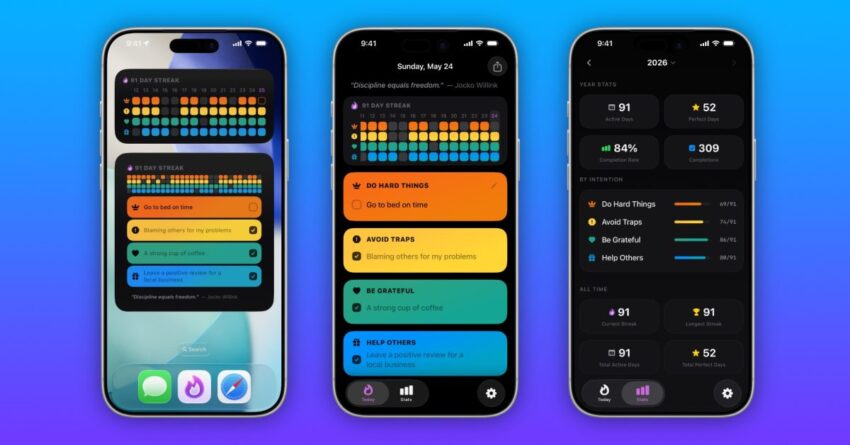
Grit Method is trying to do something a little different in the crowded habit-tracking space: instead of simply counting streaks or checking off tasks, it pushes users to think about character, resilience, gratitude and helping others each day.
A habit app with a broader goal
Habit tracking apps have become plentiful, but Grit Method stands out by asking for more intentional daily reflection. According to the app’s framing, users are prompted to set four clear goals around the same core ideas: Do hard things, Avoid traps, Be grateful, and Help others.
That structure gives the app a different emphasis from many productivity tools. Rather than focusing only on getting more done, Grit Method is built around helping users identify one meaningful objective, protect time and attention from distractions, stay mindful of what is going well, and consider a way to support someone else. The result is a system that tries to encourage consistency not just in work output, but in personal growth as well.
How the app is designed to work
The app’s daily flow is straightforward. Each day, it asks users what they want to do in those four areas. For most people, that could mean defining one genuine challenge they plan to tackle, deciding how they will avoid distractions or temptation, naming something they are grateful for, and choosing one way to help another person.
That approach is meant to move the idea of habits beyond mechanical tracking. In practice, Grit Method is aiming to help users build routines that support discipline, self-awareness, generosity, and mindfulness. The app description suggests the goal is not only to build better habits, but also to build character.
Four daily prompts
- Do hard things — focus on one real challenge or meaningful task.
- Avoid traps — identify distractions or behaviors that could derail progress.
- Be grateful — reflect on something positive in life.
- Help others — think of a practical way to support someone else.
By splitting the day into those categories, the app gives users a framework that is easy to understand but still deliberately thought-provoking. It is less about passively logging behavior and more about making users pause and decide what matters before the day gets away from them.
Habit-tracking features are still included
Although the app adds a philosophical layer, it still includes the kinds of features people expect from a habit tracker. The source material notes that Grit Method offers streaks and detailed stats, which means users can still monitor consistency over time.
There is also a graph that shows how consistent someone has been in each of the four areas. That visual breakdown can help users see where they are strong and where they may be slipping. For users who like quick access to information, the graph can also be added as a home screen widget.
Those elements matter because many habit apps live or die by their ability to make progress visible. Grit Method appears to lean into that familiar model while adding a more reflective layer on top.
Why it may appeal to more than productivity fans
The app’s framing may resonate with users who are interested in personal development but are tired of tools that focus only on output. The “do hard things” prompt encourages discipline. “Avoid traps” pushes users to think about what pulls them off course. “Be grateful” introduces a mindful or emotional-health element. “Help others” shifts attention outward, which is not always present in typical self-improvement apps.
That mix can make the app feel less like a timer or checklist and more like a daily practice. In the source material, the idea is described as shifting goals away from being fully productivity-based and toward making sure users are consistently a strong person. That is an unusual pitch in an App Store category that is often dominated by streak counters, reminders, and checkbox simplicity.
For people who already use habit trackers, the appeal may be the structure. For those who do not, the appeal may be the broader purpose. The app is essentially asking users to evaluate not just what they did, but who they are trying to become.
Availability and pricing
Grit Method is available on the App Store for devices running iOS 26.1 and later. The app requires a subscription, with pricing traditionally listed at $4.99/month or $24.99/year.
The source material also notes two special offers for 9to5Mac readers. One option is a discounted $14.99/year subscription with a 7 day free trial using code 9to5Mac15. Another offer provides three years for the price of one at $24.99 using code 9to5Mac.
According to the report, that longer offer is presented as a strong value for anyone feeling subscription fatigue. The article also notes that because AI has an ongoing cost, the developer says there cannot be a true lifetime purchase option. Instead, the developer, David Barnard, promises another offer once the first three years are up.
Developer context and the Indie App Spotlight series
The report appears as part of Indie App Spotlight, a weekly 9to5Mac series that highlights newer apps in the indie software world. The series invites developers to get in contact if they would like their app featured.
That context is important because it frames Grit Method as part of a wider effort to showcase smaller independent apps rather than only the biggest names in the App Store. In that setting, the app’s personality-driven design and subscription offers are part of what makes it notable enough for a feature.
The report also includes the recommendation that users looking to improve their habits or introduce change in their lives give Grit Method a try. Whether someone is focused on self-discipline, gratitude, or being more helpful to others, the app is clearly designed to nudge daily routines in a more intentional direction.
A different take on daily progress
Many habit apps focus on repetition and completion. Grit Method adds a values-based layer, using four simple prompts to build a broader daily structure. That makes it feel less like a productivity utility and more like a personal development companion.
Its combination of streaks, stats, consistency graphs, and widgets should feel familiar to anyone who has used a habit tracker before. What makes it different is the choice to organize those tools around character-building goals. In an app market full of reminders to do more, Grit Method is instead asking users to do better, stay mindful, and think beyond themselves.
Source: Original report
Was this helpful?
Explore more: Mobile App Development More Mobile Technology Tech News
Last Modified: July 7, 2026 at 9:28 pm
9 views