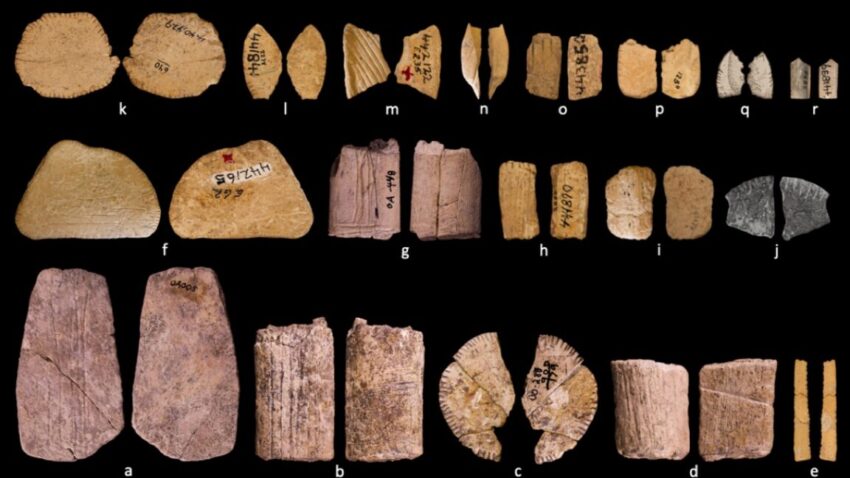
ice age dice show early native americans Recent research indicates that Native Americans have engaged in games of chance using dice for over 12,000 years, suggesting a sophisticated understanding of probability long before similar practices emerged in the Old World.
ice age dice show early native americans
Historical Context of Dice in Gaming
The concept of using dice in games of chance has been a part of human culture for millennia. Traditionally, historians have attributed the invention and use of dice primarily to Old World civilizations, such as those in Mesopotamia and Egypt. However, the findings presented in a recent paper published in the journal American Antiquity challenge this long-held belief. The research, led by Robert Madden, a graduate student at Colorado State University, reveals that ancient Native American groups were creating dice-like objects designed for random outcomes thousands of years before their Old World counterparts.
The Research Findings
Madden’s study highlights that the oldest known examples of Native American dice predate the earliest known dice from the Old World by several millennia. This revelation not only reshapes our understanding of the history of gaming but also emphasizes the cognitive and cultural sophistication of early Native American societies.
According to Madden, “Historians have traditionally treated dice and probability as Old World innovations.” His research indicates that this perspective overlooks the rich history of gaming among Native Americans. The archaeological record suggests that these ancient groups were not only creating objects for random outcomes but were also employing these outcomes in structured games, demonstrating a deliberate understanding of probability.
Types of Dice and Their Usage
The dice studied by Madden were rudimentary in design, typically consisting of two sides, which differentiates them from the six-sided dice commonly used today. These two-sided dice are often referred to as “binary lots.” Despite their simplicity, these dice were prevalent across virtually every Native American tribe, indicating a widespread cultural practice.
Archaeological Evidence
Prior to Madden’s research, archaeologists had traced the use of dice-like artifacts back approximately 2,000 years. However, many were hesitant to classify older artifacts as dice, often due to a lack of understanding of their purpose. Madden’s work provides a framework for interpreting these ancient objects as gaming tools rather than mere curiosities.
The archaeological evidence includes various materials used to create these dice, such as bone, wood, and stone. The diversity in materials suggests that the practice of gaming was not only widespread but also adapted to the resources available in different regions. This adaptability reflects the ingenuity of Native American cultures in utilizing their environment for recreational and social activities.
Cultural Significance of Gaming
Games of chance have played a significant role in many cultures, serving as a means of social interaction, entertainment, and even decision-making. For Native Americans, gaming was often intertwined with spiritual beliefs and community bonding. The use of dice in these games likely had implications beyond mere entertainment, potentially serving as a way to resolve disputes, make decisions, or even predict future events.
Implications for Understanding Probability
The findings from Madden’s research suggest that early Native Americans had a conceptual understanding of probability that parallels what is recognized in modern gaming. This understanding may have influenced not only their gaming practices but also their social structures and decision-making processes. The deliberate creation of dice for random outcomes indicates a level of cognitive sophistication that challenges previous assumptions about the intellectual capabilities of ancient societies.
Reactions from the Academic Community
The academic community has responded with interest to Madden’s findings. Many scholars recognize the importance of this research in reshaping narratives surrounding the history of gaming and probability. The implications extend beyond the realm of archaeology, prompting discussions in anthropology, history, and cognitive science.
Broader Implications for Indigenous Studies
This research also has broader implications for Indigenous studies, as it emphasizes the need to recognize and validate the contributions of Native American cultures to human history. By acknowledging the sophistication of their gaming practices, scholars can foster a more inclusive understanding of cultural development across different civilizations.
Future Directions for Research
Madden’s research opens up new avenues for exploration within the field of archaeology and anthropology. Future studies may focus on the specific contexts in which these dice were used, the types of games played, and the social dynamics surrounding gaming in Native American societies. Additionally, researchers may investigate how these practices evolved over time and their impact on contemporary Indigenous cultures.
Potential for Interdisciplinary Collaboration
The intersection of archaeology, anthropology, and cognitive science presents opportunities for interdisciplinary collaboration. By combining insights from various fields, researchers can gain a more comprehensive understanding of the role of gaming in human history. This collaborative approach may also lead to innovative methodologies for studying ancient practices and their implications for modern societies.
Conclusion
The discovery that Native Americans have been utilizing dice in games of chance for over 12,000 years significantly alters the narrative surrounding the history of gaming and probability. Robert Madden’s research not only highlights the cognitive sophistication of ancient Native American societies but also calls for a reevaluation of the contributions of Indigenous cultures to the broader tapestry of human history. As scholars continue to explore this rich history, it is essential to recognize and celebrate the diverse ways in which cultures have engaged with games, chance, and probability throughout time.
Source: Original report
Was this helpful?
Last Modified: April 4, 2026 at 4:36 am
0 views