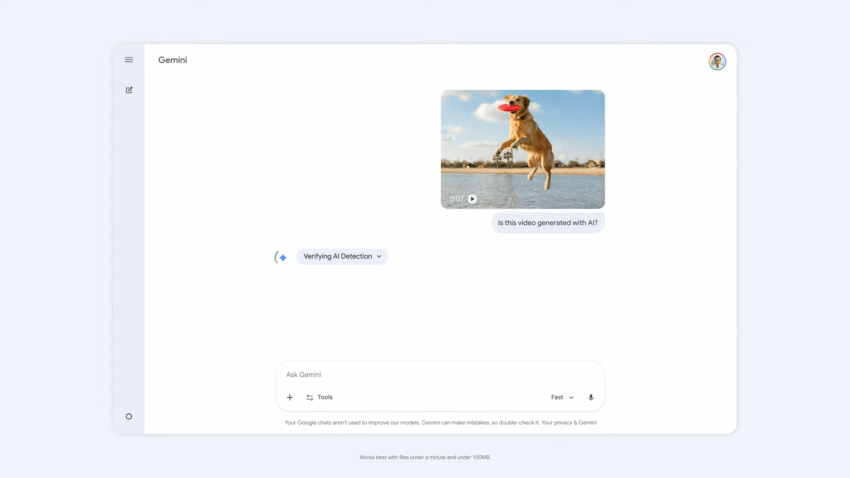
google s gemini app can check videos Google has enhanced its Gemini app with a new feature that allows users to verify whether videos were created or edited using the company’s AI technology.
google s gemini app can check videos
Introduction to Gemini’s AI Verification Feature
In a significant move to bolster transparency in the realm of artificial intelligence, Google has expanded the capabilities of its Gemini app. This latest update introduces a feature that enables users to verify if a video was generated or modified using Google’s AI models. By simply asking Gemini, “Was this generated using Google AI?” users can receive a detailed analysis of the video’s origin.
How the Verification Process Works
Gemini employs advanced algorithms to scrutinize both the visuals and audio of the uploaded video. At the core of this verification process is a proprietary watermark known as SynthID. This watermark serves as a digital fingerprint, indicating that the content has been created or altered by Google’s AI systems.
Understanding SynthID
SynthID is designed to be a robust watermark that is difficult to remove, thereby ensuring the integrity of AI-generated content. When a user uploads a video for verification, Gemini scans the content for instances of this watermark. The response provided by Gemini is not merely a binary yes or no; instead, it offers a more nuanced analysis. Users will be informed of specific timestamps within the video or audio where the SynthID watermark is detected.
Previous Implementations
This feature is not entirely new; Google initially rolled out similar capabilities for images back in November. The image verification tool also utilized the SynthID watermark to confirm whether images were created or edited using Google AI. This consistency in approach highlights Google’s commitment to maintaining a transparent ecosystem for AI-generated content.
Implications for Content Creators and Consumers
The introduction of this verification feature carries significant implications for both content creators and consumers. As AI-generated content becomes increasingly prevalent, the ability to verify its authenticity is crucial for maintaining trust in digital media.
Impact on Content Creators
For content creators, the ability to verify whether their work has been AI-generated can serve as a double-edged sword. On one hand, it provides a layer of credibility and assurance that their work is original. On the other hand, it raises concerns about the potential for misuse. If malicious actors can easily identify and manipulate AI-generated content, it could lead to a proliferation of misinformation.
Consumer Trust and Misinformation
For consumers, the ability to verify the authenticity of videos is paramount. In an age where misinformation can spread rapidly, having tools that can confirm the origins of content can help mitigate the risks associated with fake news and manipulated media. This feature could empower viewers to make more informed decisions about the content they consume, fostering a more trustworthy digital landscape.
Challenges and Limitations
Despite the promising capabilities of Gemini’s verification feature, challenges remain. One significant concern is that some watermarks, including those from other AI models, can be easily scrubbed or removed. This raises questions about the reliability of watermarking as a verification method.
Comparative Analysis with Other AI Models
OpenAI, for instance, has faced similar challenges with its watermarking techniques. As AI technology evolves, so too do the methods employed by individuals seeking to bypass these safeguards. This ongoing cat-and-mouse game between AI developers and malicious actors underscores the need for continuous innovation in verification methods.
Future Developments
Google’s commitment to enhancing Gemini’s capabilities suggests that further developments are likely on the horizon. As the landscape of AI-generated content continues to evolve, it will be essential for companies like Google to stay ahead of potential threats and challenges. This may involve refining existing watermarking techniques, exploring new verification methods, or even collaborating with other tech companies to establish industry-wide standards for content authenticity.
Stakeholder Reactions
The introduction of the video verification feature has garnered attention from various stakeholders, including content creators, digital rights advocates, and technology experts.
Content Creator Perspectives
Many content creators have expressed cautious optimism about the new feature. While they appreciate the potential for increased transparency and trust, some have voiced concerns about the implications for creative freedom. The fear is that stringent verification processes could stifle innovation and discourage the use of AI tools in creative endeavors.
Digital Rights Advocates
Digital rights advocates have welcomed the move as a step toward greater accountability in the digital space. They argue that as AI-generated content becomes more prevalent, mechanisms for verification and accountability are essential to protect consumers and uphold ethical standards in media production.
Technology Experts’ Insights
Technology experts have pointed out that while the verification feature is a positive development, it is only one piece of a larger puzzle. They emphasize the importance of ongoing research and development in the field of AI ethics and content verification. The consensus is that a multi-faceted approach will be necessary to address the complexities of AI-generated content.
Conclusion
The expansion of Gemini’s AI verification feature to include video content represents a significant advancement in the quest for transparency in digital media. By enabling users to verify the origins of videos created or edited with Google AI, the company is taking proactive steps to address the challenges posed by the rise of AI-generated content.
As the digital landscape continues to evolve, the importance of tools that can verify content authenticity cannot be overstated. While challenges remain, the introduction of features like Gemini’s video verification is a promising step toward fostering a more trustworthy and transparent online environment.
Source: Original report
Was this helpful?
Explore more: AI Automation Services More AI & Automation Tech News
Last Modified: December 19, 2025 at 11:50 am
18 views