Google is opening up the Fitbit Air’s swappable pebble design to outside makers, publishing hardware specifications and accessory design guidelines so independent designers, artisan makers, and third-party companies can build their own bands and attachments. The move follows community experimentation since the tracker launched last month, including owner-made bicep band solutions, and marks a notably open approach from a company that has often been more guarded about hardware ecosystems.
Google publishes Fitbit Air accessory blueprints
On June 2, 2026, Google said it was “officially releasing the hardware specifications and accessory design guidelines for the Fitbit Air tracker to the public.” That documentation is aimed not only at accessory brands, but also at “independent designers and artisan makers,” broadening access beyond the usual third-party licensing model.
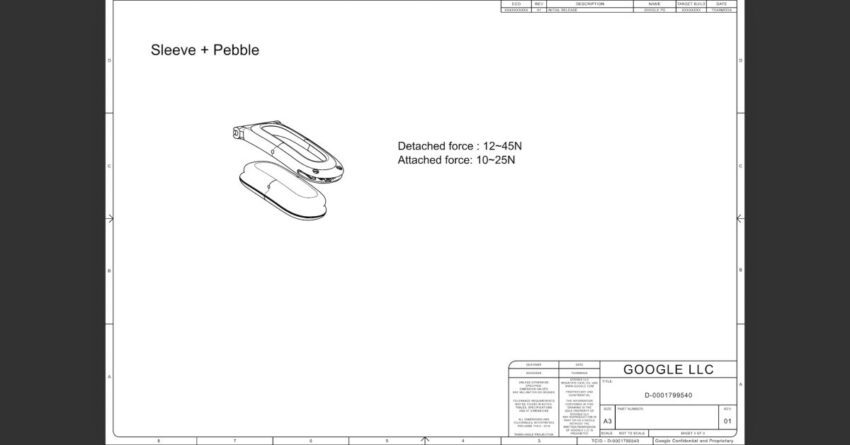
To support that effort, Google released Fitbit Air 2D CAD drawings in PDF form for the pill-shaped pebble that contains the sensor, along with the “sleeve” used by the Performance Loop Band. The company said the files include the key measurements needed to reproduce compatible accessories, including mating dimensions, tolerances, and mating force specifications such as attach and detach force.
Design guidance for builders
Google’s Store listing also lays out several technical points accessory makers need to keep in mind if they want the Fitbit Air to work properly and comfortably. The first priority is sensor access. Google recommends that the optical heart rate and SpO2 sensors on the underside of the tracker remain completely unobstructed and maintain “flush, consistent skin contact.”
For motion tracking and heart-rate performance, the company says accessory designs should keep a steady, gentle pressure against the skin in the sensing area. It adds that for optimal PPG performance in motion, accessories should be designed for sustained contact pressure in the sensing region, with a recommended pressure of 35 mmhg (0.68psi) minimum for nominal wear.
Google also emphasizes secure retention. The tracker uses a tension-based snap-in mechanism, and the enclosure must follow the published CAD tolerances so the sensor stays locked in place during vigorous movement while still remaining easy to remove when users want to swap bands.
Materials, safety, and testing matter too
Beyond fit and function, Google is telling makers to think about skin safety. The company says accessories should use skin-friendly materials to help prevent irritation or allergic reactions. Its guidance includes chemical limits, environmental standards, and testing requirements intended to keep third-party designs within acceptable safety boundaries.
That broader checklist suggests Google is not simply encouraging decorative customization. Instead, it is setting a framework for functional accessories that can preserve biometric accuracy, comfort, and durability even when made outside the company’s own manufacturing pipeline.
A more open hardware strategy
The release stands out because detailed hardware data like this is usually reserved for accessory partners rather than the public. By publishing it broadly, Google is effectively making it easier for smaller creators to enter the market, whether that means custom sport bands, niche mounting systems, or specialized straps for specific use cases.
The approach also fits the Fitbit Air’s design. The tracker’s swappable pebble format naturally lends itself to modular accessories, and the company appears to be leaning into that flexibility rather than limiting it to official add-ons. Google described the community response since launch as already “innovative and creative,” suggesting the public release is partly a response to user interest and experimentation.
What it could mean for Fitbit Air owners
For users, the upside is more choice. If the blueprints and guidelines result in a healthy ecosystem of compatible accessories, Fitbit Air owners may eventually have access to bands and mounts that better fit sports, work, fashion, or accessibility needs. The documentation may also help makers iterate more quickly, since the critical dimensions and performance constraints are now spelled out by Google itself.
At the same time, the guidance makes clear that compatibility is not just about snapping the pebble into place. Builders need to preserve sensor contact, maintain pressure where needed, and use materials that won’t compromise skin comfort or tracking performance. In other words, the public release lowers the barrier to entry, but it does not remove the engineering requirements.
Why this release is notable
The move feels especially in line with Google’s earlier, more open hardware era, when the company was often seen as more willing to give developers and makers direct access to platform details. In this case, that openness extends to the physical device layer, inviting a broader community to build around Fitbit Air rather than relying only on official accessories.
Whether the result is a wave of niche products or a small set of clever community-made designs, Google’s decision gives the Fitbit Air an unusually public foundation for customization. For a wearable, that could mean the difference between being just another fitness tracker and becoming a genuinely modular platform.
Source: Original report
Was this helpful?
Explore more: More Hardware & Devices Tech News Blog
Last Modified: July 7, 2026 at 9:20 pm
12 views